







Introduction: Small Changes, Real Impact
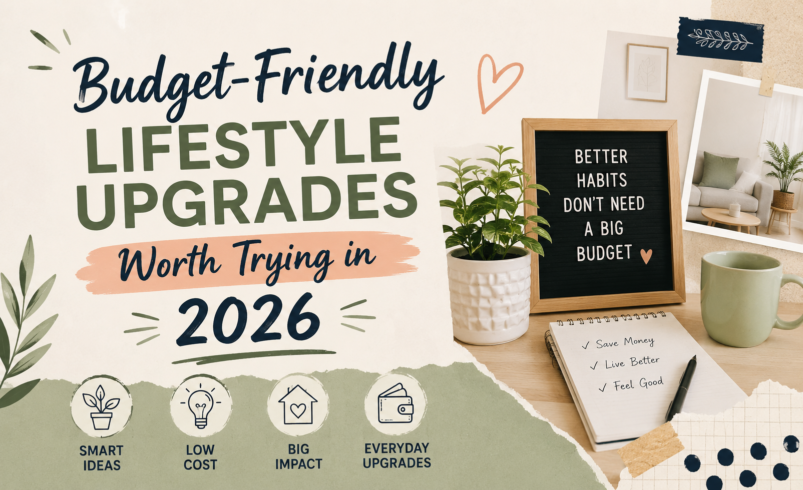
You don’t need a high income to live well. The most impactful budget-friendly lifestyle upgrades ideas are often the ones that cost next to nothing — a better morning habit, a smarter tool, a small swap at home.
This guide covers affordable lifestyle improvements for everyday life across five areas: your home, your routine, your tech, your health, and your finances. Each section includes comparisons, real-world costs, and a clear picture of what’s worth doing first.
No fluff, no $500 recommendations. Just practical upgrades that deliver real results on a tight budget.
People find waiting more tolerable when they can see the work being done on their behalf
“Labor Illusion” insight
Table of Contents
- Home Lifestyle Upgrades
- Personal Routine Upgrades
- Tech & Digital Upgrades
- Health & Wellness Upgrades
- Financial Lifestyle Upgrades
- Cheap vs. Expensive: Comparison Table
- Best Budget Upgrades Under ₹5,000 / $50
- FAQ
- Conclusion
1. Home Lifestyle Upgrades
Your home environment affects your mood, focus, and energy every single day. These low-cost home improvements deliver outsized results.
Lighting: The Highest-ROI Home Upgrade
Switching to LED lighting is one of the cheapest ways to improve quality of life at home. Better light = better mood, lower bills, fewer replacements. Here’s how the options compare:
|
Type |
Upfront Cost |
Monthly Cost |
Lifespan |
Best For |
|
LED Bulbs |
₹80–200 / $1–3 |
Very Low |
15–25 yrs |
Every room |
|
CFL Bulbs |
₹60–150 / $1–2 |
Low |
8–10 yrs |
Budget option |
|
Halogen |
₹50–120 / $0.80 |
Medium |
1–2 yrs |
Accent lighting |
|
Smart LED (WiFi) |
₹600–1500 / $8–20 |
Very Low |
20+ yrs |
Ambiance control |
Start with the rooms you use most. A ₹200 / $3 LED bulb in your workspace is a better investment than most productivity apps.
Decluttering as a Free Lifestyle Upgrade
Clutter increases cortisol. That’s not a wellness cliché — it’s consistently documented in stress research. Decluttering one room costs nothing and creates immediate psychological relief.
Start with the area you spend the most time in. You don’t need a storage system to begin — removing what you don’t use is the upgrade.
Organization: Cheap Hacks vs. Expensive Solutions
- Repurpose shoeboxes, jars, and trays before buying organizers
- Command hooks (₹80–200 / $1–3) replace expensive rack systems
- A whiteboard or printable calendar beats a $50 planning board
- Under-bed storage bags cost ₹150–400 / $2–5 vs. ₹3000+ furniture
The best home upgrade is removing what you don’t need. Everything else builds on that.
2. Personal Routine Upgrades
Low-cost self-improvement habits and upgrades often live in how you structure your day — not what you buy.
Morning Routine Optimization
A structured morning routine doesn’t require a paid course or a 5 AM alarm. The basics that actually work:
- Fixed wake time (free, highest-impact sleep/energy lever)
- 10 minutes of movement before checking your phone
- Water before caffeine — hydration affects cognitive function within 20 minutes
- One intention for the day, written down
The ‘free version’ of a morning routine outperforms any app that costs ₹500/month if you’re actually consistent with it.
Habit Stacking: The Zero-Cost Productivity Framework
Habit stacking means attaching a new habit to an existing one. It’s the most evidence-backed technique for building routines without willpower or apps.
- After I make coffee → I write one thing I want to accomplish
- After I sit at my desk → I do 2 minutes of breathing
- After dinner → I review tomorrow’s schedule
These require no tools, no money, and no motivation surge. They just require a trigger you already have.
Hydration, Sleep, Productivity — Comparison
|
Habit |
Cost |
Time/Day |
Impact Level |
Difficulty |
|
Drink 2L water daily |
₹0 |
0 min |
High |
Easy |
|
Consistent sleep schedule |
₹0 |
0 min |
High |
Medium |
|
10-min morning walk |
₹0 |
10 min |
High |
Easy |
|
Daily journaling |
₹20 (notebook) |
10 min |
Medium |
Easy |
|
Screen-free mornings |
₹0 |
0 min |
High |
Medium |
3. Tech & Digital Upgrades
The best tech upgrades for most people are free apps they’ll actually use — not premium subscriptions they won’t.
Productivity Tools Comparison
Here’s a practical breakdown of the most-used productivity tools for note-taking, task management, and planning:
|
Tool |
Free Plan? |
Best Feature |
Cost (Paid) |
Best For |
|
Notion |
Yes |
All-in-one workspace |
$10/mo |
Note-takers, planners |
|
Google Keep |
Yes |
Fast, syncs everywhere |
Free only |
Quick notes, lists |
|
Todoist |
Yes |
Task management |
$4/mo |
To-do focused users |
|
Obsidian |
Yes |
Linked thinking |
$8/mo sync |
Deep note-takers |
|
Microsoft To Do |
Yes |
Outlook integration |
Free only |
Office users |
Recommendation: Start with Google Keep for quick capture and Notion (free plan) for longer projects. You don’t need both a paid tool and a free one doing the same thing.
Free vs. Paid Apps: When the Upgrade Is Worth It
- Free is almost always sufficient for: note-taking, basic task management, budgeting, meditation basics
- Paid is worth it when: the free tier actively blocks a workflow you use daily
- Not worth it: paying for multiple overlapping apps (most people use 20% of features)
- Audit your subscriptions before adding new ones — most people are paying for apps they haven’t opened in 90+ days
Digital Detox as a Lifestyle Upgrade
Removing friction from your digital environment is a free upgrade with measurable effects on focus and mood:
- Turn off all non-essential notifications
- Remove social apps from your home screen (don’t delete — just move)
- Use grayscale mode in the evenings to reduce screen pull
- One screen-free hour before bed — free, and more effective than most sleep supplements
4. Health & Wellness Upgrades
Budget Fitness: Home Workouts vs. Gym Membership
|
Approach |
Monthly Cost |
Equipment Needed |
Flexibility |
Effectiveness |
|
Home bodyweight workouts |
₹0 / $0 |
None |
High |
High |
|
YouTube fitness programs |
₹0 / $0 |
None–minimal |
High |
High |
|
Budget gym membership |
₹500–1500 / $7–20 |
None |
Medium |
High |
|
Resistance bands |
₹300–600 / $4–8 (one-time) |
Bands |
High |
Medium-High |
|
Premium gym + PT |
₹3000–8000 / $40+ |
None |
Low |
High |
The honest verdict: YouTube workouts (Fitness Blender, Athlean-X, Yoga with Adriene) are free and effective. A gym adds accountability but isn’t necessary to get results.
Diet Improvements on a Low Budget
Eating better doesn’t require expensive superfoods. These are the most cost-effective nutrition upgrades:
- Eggs: one of the highest protein-per-rupee foods available
- Lentils and legumes: fibre, protein, and micronutrients at minimal cost
- Frozen vegetables: nutritionally equivalent to fresh, significantly cheaper
- Meal prep 2–3x a week: reduces both cost and decision fatigue
- Reduce ultra-processed snacks: often the biggest budget and health drain simultaneously
5. Financial Lifestyle Upgrades
Financial health is a lifestyle upgrade. These changes cost nothing to implement and compound over time.
Budgeting Tools Comparison
|
Tool |
Free? |
Best Feature |
Platform |
Rating |
|
YNAB |
Trial |
Zero-based budgeting |
iOS/Android/Web |
★★★★★ |
|
Walnut |
Yes |
SMS auto-tracking (India) |
Android/iOS |
★★★★☆ |
|
Google Sheets |
Yes |
Fully customizable |
Web/Mobile |
★★★★☆ |
|
Money Manager |
Yes |
Simple expense log |
Android/iOS |
★★★★☆ |
|
Mint |
Yes |
Auto categorization |
Web/iOS/Android |
★★★★☆ |
For most people, a simple Google Sheets tracker with income, fixed expenses, and a weekly discretionary limit is sufficient. Start simple before going to a complex app.
Subscription Audit: The Fastest Free Upgrade
Most people are spending ₹800–3000 / $10–40/month on subscriptions they barely use. A one-time audit takes 20 minutes and saves money every month after.
- List every subscription (bank statement is the fastest source)
- Mark each: Use weekly / Use monthly / Haven’t opened in 60+ days
- Cancel anything in the third category immediately
- Consolidate: one music app, one streaming service, one productivity tool
Saving vs. Spending Optimization
- Automate savings on payday — even ₹500/month builds a habit before a balance
- 48-hour rule on non-essential purchases over ₹1000 / $15
- Track spending weekly, not monthly — monthly reviews come too late to course-correct
- Use cash for discretionary spending — physical money creates more friction than cards
6. Cheap vs. Expensive: The Real Comparison
For most everyday life goals, the low-cost approach wins — especially in the first year when habits matter more than tools.
|
Goal |
Cheap Approach |
Expensive Approach |
Winner? |
|
Fitness |
YouTube workouts + bodyweight |
Gym membership + PT |
Cheap (if consistent) |
|
Focus/Productivity |
Google Keep + Notion free |
Premium apps + tools |
Cheap |
|
Better sleep |
Consistent sleep time + dark room |
Oura Ring + sleep supplements |
Cheap |
|
Home ambiance |
LED + declutter + plants |
Interior designer |
Cheap |
|
Healthy eating |
Meal prep at home |
Meal delivery kits |
Cheap |
|
Budgeting |
Google Sheets tracker |
Paid finance app |
Cheap/Tie |
Are expensive lifestyle upgrades worth it? In most categories, no — unless you’ve already mastered the free version and hit a clear ceiling.
7. Best Budget Upgrades Under ₹5,000 / $50 — Priority List
Here’s a full impact-and-effort matrix to help you decide what to do first:
|
Upgrade |
Cost |
Effort |
Impact |
Do It |
|
Swap to LED lighting |
₹200 / $3 |
Low |
High |
Week 1 |
|
Delete unused subscriptions |
₹0 / Free |
Low |
High |
Today |
|
Install productivity app |
₹0 / Free |
Low |
Medium |
Today |
|
Build a morning routine |
₹0 / Free |
Medium |
High |
Week 1 |
|
Home workout habit |
₹0–500 / $0–7 |
Medium |
High |
Week 2 |
|
Declutter one room |
₹0 / Free |
Medium |
High |
Week 2 |
|
Switch to a water bottle |
₹200 / $3 |
Low |
Medium |
Week 1 |
|
Meal prep 2x/week |
₹0 / Free |
Medium |
High |
Week 3 |
|
Digital detox evening |
₹0 / Free |
Low |
High |
Week 1 |
|
Desk/workspace upgrade |
₹500–2000 / $7 |
Medium |
High |
Month 1 |
Start with the free, high-impact upgrades first — morning routine, digital detox, subscription audit. Every one of them costs ₹0 and delivers immediate results.
8. FAQ — People Also Ask
What are the best budget-friendly lifestyle upgrades?
The most impactful ones are: building a consistent morning routine, switching to LED lighting, auditing and cancelling unused subscriptions, doing free home workouts, and using free productivity tools like Notion or Google Keep. All of these cost under ₹500 / $7 combined — most cost nothing.
How can I improve my lifestyle without spending much money?
Focus on habit changes first: consistent sleep and wake times, daily movement, proper hydration, and reducing screen time. These are free, science-backed, and more impactful than most paid products. Pair them with a decluttered space and a simple budget tracker and you’ve covered the core of affordable lifestyle improvements for everyday life.
What small changes make the biggest impact on daily life?
A fixed wake time, drinking water first thing in the morning, a 10-minute walk daily, and turning off non-essential notifications. These four changes — all free — consistently show up in research on productivity, mood, and energy. They’re also the easiest to implement with no upfront cost.
Are expensive lifestyle upgrades worth it?
Rarely, unless you’ve already built the habits that support them. A ₹15,000 standing desk doesn’t help if you don’t have a productive work routine. A premium gym membership doesn’t help if you’ve never built a regular workout habit. In almost every category, the cheap approach produces the same outcome — and often better ones, because lower friction means higher follow-through.
What are affordable lifestyle improvements I can start today?
Cancel one subscription you haven’t used this month. Set a consistent wake time for the next 7 days. Install Notion or Google Keep and capture three things you want to get done this week. Drink a glass of water before your morning coffee. None of these cost anything — and all of them qualify as genuine small lifestyle upgrades that make a big difference over time.
9. Conclusion
The best budget-friendly lifestyle upgrades ideas aren’t hidden behind premium products or expensive subscriptions. Most of them are free — they just require consistency.
Start with what costs nothing: a fixed sleep schedule, a cleaner workspace, a subscription audit, and one productive habit stacked onto something you already do. These are the upgrades that compound.
When you’re ready to spend, keep it small and purposeful. LED bulbs over mood lighting. A ₹300 resistance band over a gym membership you won’t use. One good app over five mediocre ones.
The gap between a good life and an expensive life is mostly habit. And habits are free.