







Introduction
Time is the one resource nobody has enough of. Between work, commute, health, and everything else, most people are running on less bandwidth than ever — and the right tech can genuinely give some of it back.
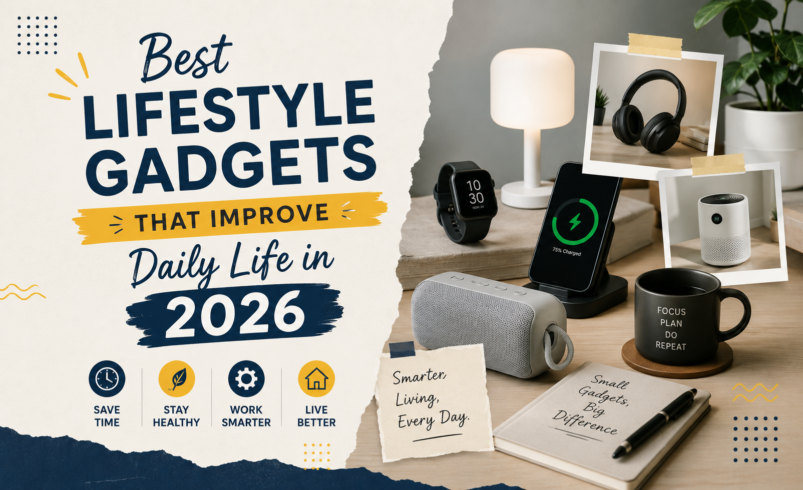
This article covers the best lifestyle gadgets for daily use in 2026: smart home devices, productivity tools, wellness trackers, and AI-powered assistants that solve real problems rather than create new ones. Every section includes honest comparisons so you know exactly what’s worth buying.
The question isn’t whether gadgets can improve your life. The right ones absolutely can. The question is which ones — and that’s what this guide answers.
People find waiting more tolerable when they can see the work being done on their behalf
“Labor Illusion” insight
Table of Contents
- Smart Home Lifestyle Gadgets
- Productivity & Work Gadgets
- AI-Powered Daily Life Gadgets
- Wellness & Health Gadgets
- Comparison Tables: Smartwatches, Assistants & Ecosystems
- Do Gadgets Actually Improve Life? (Critical Take)
- Practical Recommendations by User Type
- FAQ
- Conclusion
1. Smart Home Lifestyle Gadgets
Smart home devices are the most accessible entry point into lifestyle tech — many cost under ₹1,500 / $20 and deliver daily value immediately.
Smart Plugs: The Cheapest Useful Gadget You Can Buy
A TP-Link Tapo or Mi Smart Plug (₹800–1,200 / $10–15) turns any appliance into a scheduled, voice-controlled, or remotely operated device. Set your kettle to turn on before you wake up. Cut phantom energy drain from idle electronics. It sounds minor — until you’ve used one for a week.
- Schedule appliances without any rewiring
- Monitor energy usage in real time
- Control remotely via app — useful when you’ve left something on
- Works with Alexa, Google Assistant, and Apple HomeKit
Smart Lighting: Mood, Productivity, and Energy Bills
Philips Hue and Xiaomi smart bulbs let you automate lighting by time of day, activity, or voice command. Warm light in the evening for wind-down. Bright cool white during work hours. The impact on focus and sleep quality is real and well-documented.
Energy savings over traditional bulbs add up to ₹1,500–4,000 / $20–50 annually depending on usage. The bulbs pay for themselves within months.
Voice Assistants: The Glue of Smart Home Automation
Amazon Echo, Google Nest, and Apple HomePod Mini act as the central command layer for your smart home. Timers, reminders, shopping lists, music, smart device control — all hands-free. For busy professionals, removing friction from routine tasks is where these earn their place.
2. Productivity & Work Gadgets
The best time-saving gadgets for busy professionals aren’t always the most expensive. Often, a ₹2,000 peripheral outperforms a ₹30,000 device upgrade.
Noise-Cancelling Headphones
If you work in a shared space, noise-cancelling headphones are the single highest-ROI work gadget available. The Sony WH-1000XM5 (₹25,000 / $300) and Anker Soundcore Q45 (₹5,000 / $60) both deliver excellent ANC at very different price points.
- Reduce cognitive load in noisy environments
- Improve focus time by reducing interruptions
- Work as a social ‘do not disturb’ signal in shared offices
- Budget option: Anker Q45 — strong ANC, 40hr battery, fraction of the cost
Ergonomic Peripherals
Posture-related discomfort costs productivity and causes long-term damage. A vertical mouse (₹1,500–4,000 / $20–50) and laptop stand with external keyboard (₹800–3,000 / $10–40) are among the most underrated work upgrades.
The Logitech MX Vertical and ergonomic stands from Ugreen or Belkin consistently score high for daily usability at accessible price points.
Smart Scheduling Devices & Tools
The Amazon Echo Show 8 (₹8,000 / $100) doubles as a desk scheduler — calendar display, video calls, reminders, and smart home control in one device. For remote workers managing multiple time zones or dense calendars, it removes the friction of switching between apps.
3. AI-Powered Daily Life Gadgets
AI-powered smart home gadgets in 2026 have matured significantly. The best ones learn from your patterns and reduce the decisions you have to make manually.
AI Assistants and Home Automation
Google Nest and Amazon Echo now use on-device AI to personalise routines — adjusting lighting based on time and activity, suggesting reminders based on your schedule, and managing connected devices proactively.
The practical difference from older smart speakers: instead of you commanding the system, the system begins anticipating commands. Lights dim before your usual sleep time. Your morning briefing includes your commute before you ask.
AI Cameras and Security
Xiaomi and TP-Link Tapo cameras (₹2,500–6,000 / $30–80) now use on-device AI for person detection, pet recognition, and anomaly alerts — filtering out false triggers from shadows or vehicles that older cameras sent constantly. Genuinely useful, not just feature-listed.
Pros and Cons of AI Dependency in Gadgets
- Pro: reduces manual decisions and cognitive overhead
- Pro: systems improve over time with use
- Con: privacy exposure — most AI features require cloud processing
- Con: over-reliance means basic skills atrophy (navigation, scheduling)
- Con: ecosystem lock-in makes switching brands expensive
AI gadgets work best when they remove friction from tasks you already do — not when they add new tasks to manage the AI itself.
4. Wellness & Health Gadgets
Smart wellness and productivity gadgets in 2026 span fitness tracking, sleep monitoring, posture correction, and hydration — most at price points that make them genuinely accessible.
Fitness Trackers
The Fitbit Inspire 3 (₹8,000 / $100) and Xiaomi Smart Band 8 (₹3,000 / $35) cover the essentials: steps, heart rate, sleep stages, and stress scores. For most users, these two cover 90% of the utility of a ₹35,000 Apple Watch.
Sleep Tracking Devices
The Withings Sleep Analyzer (₹8,000 / $100) sits under your mattress and tracks sleep stages, breathing disturbances, and heart rate without wearing anything. For people who dislike wearing devices to bed, it’s the most accurate passive sleep tracker available.
Budget alternative: most fitness bands from Xiaomi or Fitbit include sleep tracking that’s sufficient for identifying broad patterns (bedtime consistency, light vs. deep sleep ratio).
Posture Correction Gadgets
Upright Go 2 (₹8,500 / $100) is a small adhesive device worn on your upper back that vibrates when your posture drops. Over 3–4 weeks of consistent use, most users report a measurable improvement in sitting posture — backed by the brand’s own research and consistent user reviews.
Hydration Reminders
HidrateSpark smart water bottles (₹5,000–8,000 / $60–100) sync with your phone and glow to remind you to drink based on your weight and activity level. A much cheaper alternative: set a recurring phone alarm every 90 minutes. Same outcome, zero cost.
5. Comparison Tables
Smartwatch Comparison: Apple Watch vs Fitbit vs Garmin vs Samsung
|
Device |
Price (approx) |
Usability |
Battery Life |
AI Features |
Best For |
|
Apple Watch S9 |
₹35,000 / $400 |
Excellent |
18 hrs |
High |
Apple ecosystem users |
|
Fitbit Sense 2 |
₹18,000 / $200 |
Very Good |
6+ days |
Medium |
Health-focused users |
|
Garmin Venu 3 |
₹30,000 / $350 |
Very Good |
14+ days |
Medium |
Athletes & outdoors |
|
Samsung Galaxy Watch 6 |
₹23,000 / $280 |
Very Good |
40 hrs |
High |
Android users |
Smart Home Assistants: Amazon Echo vs Google Nest vs Apple HomePod vs Xiaomi
|
Device |
Price |
Ecosystem |
AI Capability |
Privacy |
Best For |
|
Amazon Echo (Alexa) |
₹4,000 / $50 |
Amazon, wide 3rd party |
High |
Average |
Shopping, routines |
|
Google Nest Hub |
₹7,000 / $100 |
Google, Chromecast |
High |
Average |
Search, calendar, media |
|
Apple HomePod Mini |
₹9,000 / $99 |
Apple only |
High |
Strong |
Apple home users |
|
Xiaomi Smart Speaker |
₹2,500 / $30 |
Mi ecosystem |
Medium |
Limited |
Budget-first users |
Home Automation Ecosystems: Dyson vs Xiaomi vs Philips Hue vs TP-Link
|
Brand |
Price Range |
Device Range |
App Quality |
AI Automation |
Verdict |
|
Dyson |
₹20,000–70,000 / $200–700 |
Air, vacuum, fans |
Excellent |
High |
Premium, best quality |
|
Xiaomi |
₹1,500–15,000 / $20–180 |
Full smart home |
Very Good |
High |
Best value ecosystem |
|
Philips Hue |
₹3,000–25,000 / $40–300 |
Lighting only |
Excellent |
Medium |
Best smart lighting |
|
TP-Link Tapo |
₹800–5,000 / $10–60 |
Plugs, cameras, lights |
Good |
Medium |
Budget smart home |
6. Do Gadgets Actually Improve Life? (The Honest Take)
The Productivity Argument
Smart gadgets that improve productivity at home do so primarily by reducing friction in tasks you already repeat daily. A smart plug that turns off your office lights when you leave isn’t glamorous — but it removes one small decision from your day, and small decisions compound.
The research on decision fatigue supports this: reducing low-value choices preserves cognitive resources for higher-value ones.
The Minimalism Counter-Argument
More devices mean more apps, more chargers, more software updates, more things to troubleshoot. A tech-heavy lifestyle can create as much complexity as it removes — especially when devices from different ecosystems don’t communicate well.
The minimalist case: one good device used well beats five mediocre devices creating noise.
When Gadgets Become Distractions
- Buying a fitness tracker doesn’t create a fitness habit
- A smart scheduling device doesn’t fix poor time management
- A sleep tracker that increases anxiety about sleep scores is actively counterproductive
The honest measure: does this gadget remove a problem you have right now — or does it add a new thing to manage? That question filters most impulse tech buys effectively.
7. Practical Recommendations by User Type
|
User Type |
Top Gadget Picks |
Budget Range |
Priority |
|
Students |
Noise-cancelling earbuds, smart lamp, phone stand |
₹2,000–8,000 / $25–100 |
Focus + cost |
|
Remote Workers |
Ergonomic mouse, webcam, smart plug, ANC headphones |
₹5,000–20,000 / $60–250 |
Productivity + comfort |
|
Minimalists |
Smart bulb + plug, one fitness tracker, voice assistant |
₹3,000–10,000 / $40–120 |
Simplicity + utility |
|
Health-Focused |
Fitness tracker, sleep monitor, posture corrector |
₹4,000–25,000 / $50–300 |
Wellness + data |
8. FAQ — People Also Ask
What are the best lifestyle gadgets in 2026?
For most people: a smart plug (₹800–1,200), noise-cancelling earbuds (₹2,000–5,000 for good budget options), a fitness band (₹3,000–8,000), and a voice assistant (₹4,000–7,000). These four cover smart home convenience, work focus, health tracking, and daily automation — total spend under ₹20,000 / $250.
Do smart gadgets actually improve productivity?
Yes, with an important caveat: they improve productivity when they reduce friction in existing tasks. A noise-cancelling headphone eliminates real interruptions. A smart plug eliminates manual appliance management. But a gadget that requires a new app, a daily setup routine, or constant tweaking will reduce productivity. The simpler the implementation, the more reliably it delivers value.
Which smart home devices are worth buying first?
Start with smart plugs and smart bulbs — lowest cost, highest daily utility, and compatible with every major ecosystem. Add a voice assistant once you have two or more smart devices to make voice control worthwhile. Hold off on cameras, smart appliances, and full automation systems until you’ve used the basics for a month and understand what you actually want to control.
Are AI-powered gadgets worth the premium?
In some categories, yes. AI-powered noise cancellation in headphones (Sony, ANC earbuds) is measurably better than non-AI alternatives. AI person detection in security cameras genuinely reduces false alerts. Smart wearables with AI health insights (WHOOP, Garmin) add real value for people who act on the data. In other categories — AI-generated shopping lists, AI lighting ‘moods’ — the premium is mostly marketing.
9. Conclusion
The best lifestyle gadgets for daily use in 2026 share one quality: they solve a real problem you already have, with minimal new complexity added.
Start with the highest-ROI, lowest-cost options — smart plugs, budget earbuds, a basic fitness band. Build from there as you identify genuine friction points in your daily life. Don’t buy the ecosystem before you’ve bought the basics.
The goal isn’t a smart home full of devices. It’s a daily life with slightly less friction, a bit more clarity, and time returned to things that actually matter.
Buy intentionally. Use consistently. That’s when gadgets actually improve life.