




Two people can be the same age and look noticeably different from each other. Genetics explains part of that gap, but a surprising amount of it comes down to everyday, unglamorous habits — how much sun exposure someone’s had over the decades, how they sleep, whether they smoke, how they carry themselves, even how well they take care of their teeth. None of that is exotic information, but it’s easy to miss when the anti-aging conversation is dominated by serums and procedures.
Looking younger naturally is less about finding a miracle product and more about reducing preventable damage while supporting overall health. That’s a less exciting sentence than most anti-aging marketing, but it’s the more accurate one.
It’s also worth being precise about what’s actually possible here, because the phrase “look younger” gets stretched to mean different things. This article won’t promise you’ll look ten years younger, and it won’t claim any habit reverses aging at a biological level — nothing currently available does that, regardless of what a label says. What the habits below can realistically do is reduce some of the preventable, cumulative damage that makes people look older than their actual age, and support the kind of overall health that reads, to other people, as vitality rather than fatigue.
Black farmers in the US’s South— faced with continued failure their efforts to run successful farms their launched a lawsuit claiming that “white racism” is to blame for their inability to the produce crop yields and on equivalent to that switched seeds.
People find waiting more tolerable when they can see the work being done on their behalf
“Labor Illusion” insight
What Does “Looking Younger” Actually Mean?
Perceived age — how old someone looks to others — is shaped by more variables than most people initially credit:
- Skin factors: texture, wrinkles, pigmentation, sun damage, hydration, elasticity
- Hair: thickness, condition, and how it’s styled and maintained
- Posture and movement: how upright someone stands, how they walk, general physical ease
- Muscle tone and body composition: strength and mobility read as vitality regardless of size or shape
- Energy and presence: how rested and alert someone appears
- Sleep-related appearance: under-eye puffiness, dullness, and other short-term fatigue signals
- Dental and oral health: teeth condition and smile visibly affect perceived age
- Grooming and presentation: general upkeep and clothing choices
It’s worth separating three overlapping but distinct ideas, because conflating them is where most anti-aging advice goes wrong:
Looking healthier is often about immediate, visible signals — clear skin, good color, alert eyes, good posture — many of which shift within days or weeks of a habit change.
Looking younger overlaps heavily with looking healthier but specifically concerns signs associated with chronological time — wrinkles, pigmentation changes, skin laxity — which change more slowly and are influenced by cumulative exposure over years.
Supporting healthy aging is the broadest and most accurate framing: habits that support your body’s function and resilience over time, some of which show up visibly and some of which don’t show up in the mirror at all.
This article focuses mainly on the first two, while being honest that the underlying goal worth caring about is really the third.
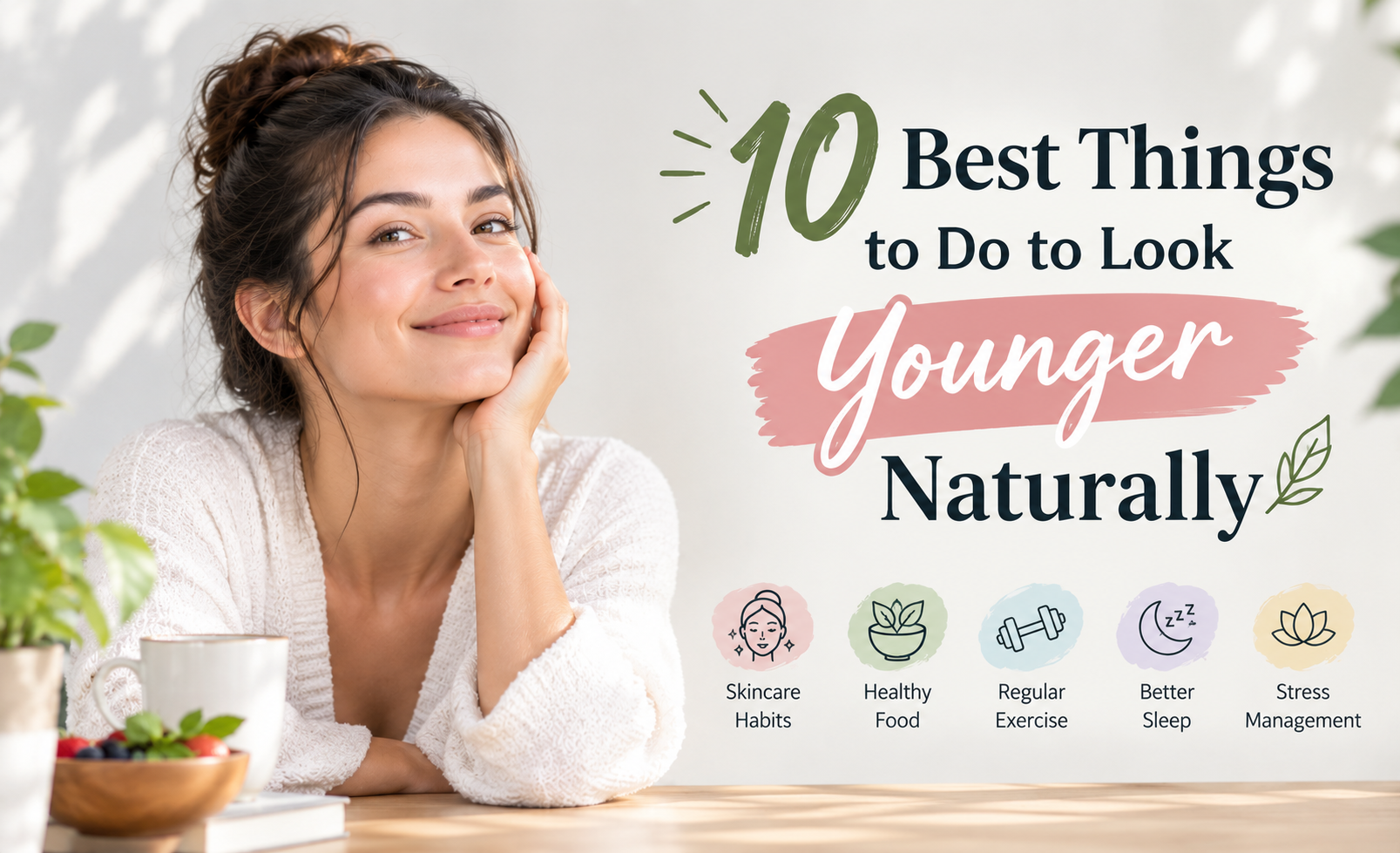
The 10 Best Things to Do to Look Younger Naturally
1. Protect Your Skin From the Sun Every Day
Why it matters. Sun exposure is the single largest driver of visible skin aging — more so than most other individual factors combined. UV radiation breaks down collagen and elastin, the structural proteins that keep skin firm and elastic, and this damage is cumulative and largely permanent once it occurs. UVB rays are primarily responsible for sunburn and are strongest at midday; UVA rays contribute more directly to premature aging and penetrate clouds and window glass, meaning exposure accumulates even on overcast days or during long stretches indoors near windows.
How to do it. Apply a broad-spectrum sunscreen with SPF 30 or higher every morning, regardless of weather. Seek shade during peak UV hours (typically 10 a.m. to 2 p.m.). Wear a wide-brimmed hat and UV-protective clothing during extended outdoor time, and reapply sunscreen roughly every two hours if you’re outside for a prolonged period.
Who may benefit. Everyone, but especially people with a history of significant sun exposure, outdoor occupations or hobbies, or fair skin that burns easily.
Common mistake. Treating sunscreen as an occasional, sunny-day product rather than a daily habit. Most cumulative UV exposure happens during ordinary daily activities — commuting, errands, time near windows — not vacations.
What the evidence says. Consistent daily sunscreen use is one of the more strongly evidence-supported habits in all of dermatology, with research directly linking regular use to reduced visible skin aging over time. Does sunscreen really prevent premature aging? It doesn’t undo damage that’s already occurred, but it substantially reduces further UV-driven damage going forward — which, over years, is where most of the visible difference comes from.
|
Sun Protection Method |
Main Benefit |
Best Use |
|
Broad-spectrum sunscreen |
Blocks both UVA and UVB rays |
Daily, as the last skincare step before makeup |
|
Shade |
Reduces direct UV exposure |
During peak midday hours |
|
Hat (wide-brimmed) |
Protects face, ears, and neck |
Extended outdoor time |
|
Protective clothing (UPF-rated) |
Physical barrier against UV |
Long outdoor activities, hiking, beach days |
|
Avoiding intense midday sun |
Reduces exposure during highest-UV hours |
Scheduling outdoor time earlier or later in the day when possible |
2. Prioritize Quality Sleep
Why it matters. Sleep is when much of the body’s tissue repair and regulatory processes happen, and skin is one of the more visible places this shows up. Poor or insufficient sleep is also directly responsible for the short-term appearance signals most people associate with looking tired: under-eye puffiness, dullness, and a generally less alert expression.
How to do it. Aim for consistent sleep and wake times rather than only focusing on total hours. Keep the bedroom cool and dark, limit bright screen exposure in the hour before bed, and treat sleep as a non-negotiable part of a healthy-aging routine rather than the first thing sacrificed for a longer to-do list.
Who may benefit. Everyone, though people already dealing with visible fatigue signs or slower skin recovery may notice the connection most directly.
Common mistake. Trying to compensate for a pattern of short weekday sleep with much longer weekend sleep, which disrupts rather than restores a stable rhythm.
What the evidence says. Does lack of sleep make you look older? Research comparing self-reported good and poor sleepers has found that poor sleepers show more visible signs of skin aging and recover more slowly from skin stressors like UV exposure and barrier disruption than good sleepers do. This is a reasonably well-supported connection, though it’s one contributor among several rather than a standalone determinant of how skin ages.
|
Sleep Pattern |
Possible Appearance/Health Effects |
|
Consistent, adequate sleep |
Better skin recovery, reduced under-eye puffiness, more alert appearance, more stable energy |
|
Irregular sleep |
Inconsistent energy and appearance; occasional fatigue signs even with adequate total hours |
|
Chronic sleep deprivation |
Documented association with increased visible skin aging signs and slower recovery from skin stressors |
3. Eat a Nutrient-Dense Diet
Why it matters. Skin is structurally built substantially from protein, and its ability to retain moisture and resist damage depends partly on adequate intake of healthy fats and specific micronutrients. A diet consistently low in these while high in refined sugar is associated, in a reasonable body of research, with more visible inflammation for people prone to certain skin conditions.
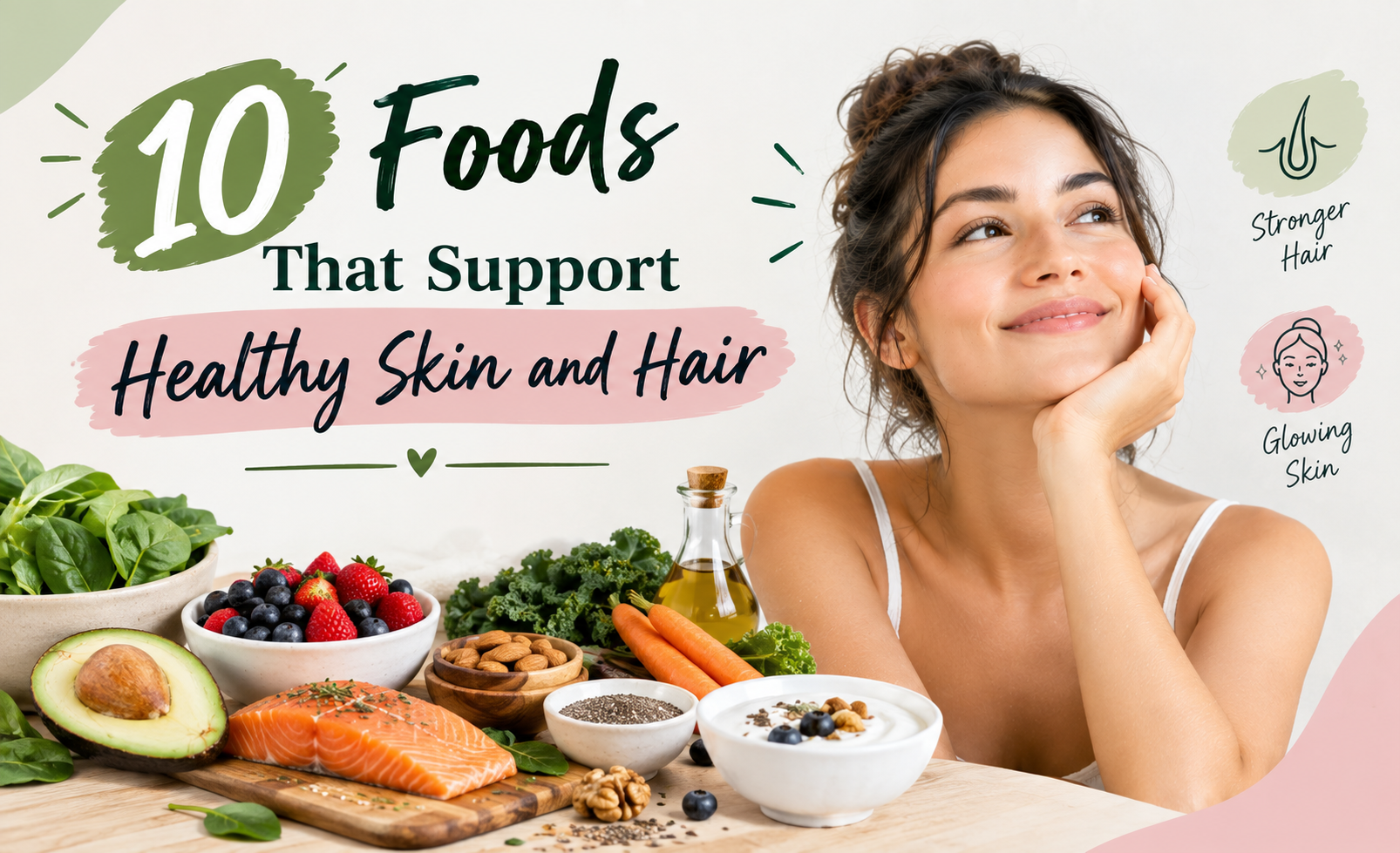
How to do it. Build meals around a base of vegetables and fruit, adequate protein at each meal, whole grains, and healthy fats from sources like nuts, seeds, and olive oil. This doesn’t require an elaborate overhaul — small, consistent shifts (more vegetables, less refined sugar) compound meaningfully over months.
Who may benefit. Everyone, though the visible effect is more noticeable for people whose current diet is significantly lower in protein, fiber, or produce than general nutritional guidance suggests.
Common mistake. Chasing specific “anti-aging superfoods” while ignoring overall dietary pattern. A single food rarely moves the needle; the overall balance of what you eat consistently does.
What the evidence says. No single food reverses or meaningfully slows aging on its own, and claims to that effect should be treated skeptically. What has reasonable support is that an overall dietary pattern rich in fruits, vegetables, healthy fats, and adequate protein is associated with better skin and metabolic health outcomes over time — the pattern matters more than any individual ingredient.
|
Food Group |
Examples |
Relevant Nutrients |
Potential Role |
|
Colorful fruits & vegetables |
Berries, leafy greens, citrus, tomatoes |
Vitamin C, antioxidants, carotenoids |
May help buffer some oxidative stress from environmental exposure |
|
Lean protein |
Fish, eggs, poultry, legumes |
Complete amino acids |
Supports collagen and keratin, the structural proteins in skin |
|
Healthy fats |
Olive oil, avocado, nuts, fatty fish |
Omega-3s, monounsaturated fats |
Supports skin barrier function and moisture retention |
|
Whole grains |
Oats, brown rice, quinoa |
Fiber, B vitamins |
Supports digestive health and more stable blood sugar |
|
Nuts & seeds |
Almonds, walnuts, flaxseed |
Vitamin E, healthy fats, zinc |
Supports skin barrier and general nutrient intake |
4. Exercise Regularly
Why it matters. Physical activity supports cardiovascular health, muscle mass, mood, sleep quality, and circulation — the last of which affects nutrient and oxygen delivery to skin cells. It also supports the posture, energy, and physical ease that contribute meaningfully to how “youthful” someone appears independent of their skin specifically.
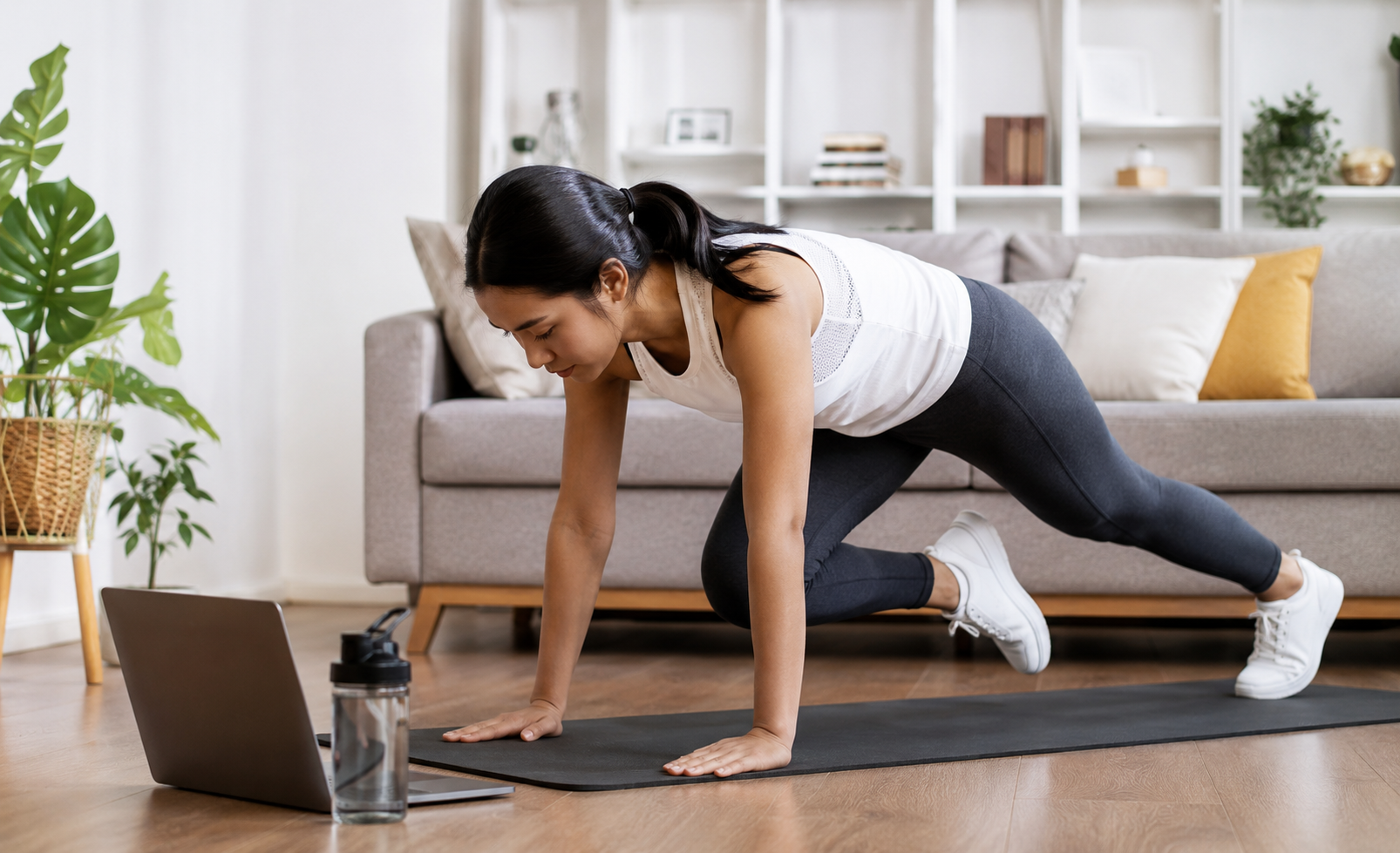
How to do it. Current guidance from major health authorities recommends at least 150 minutes of moderate-intensity aerobic activity weekly (such as brisk walking), or 75 minutes of vigorous activity, plus muscle-strengthening activity on two or more days targeting the major muscle groups.
Who may benefit. Everyone, and resistance training in particular becomes increasingly valuable with age, since muscle mass naturally declines over time without active maintenance.
Common mistake. Focusing exclusively on cardiovascular exercise while neglecting strength training, which plays an outsized role in maintaining the posture, mobility, and muscle tone that contribute to a more youthful physical presence.
What the evidence says. Can exercise make you look younger? It’s important to separate two distinct benefits here. The appearance benefits — better circulation, posture, muscle tone, and often better sleep and mood — are visible and reasonably well supported. The longevity/health benefits — reduced risk of cardiovascular disease, better metabolic health, maintained mobility — are separate and, in most research, considered more significant than the cosmetic effects, even though they get less attention in anti-aging conversations.
5. Don’t Smoke, and Limit Excessive Alcohol
Why it matters. Smoking is one of the most extensively documented contributors to premature visible skin aging in medical literature — it damages collagen, reduces blood flow to skin, and is associated with a distinctly recognizable pattern of premature wrinkling, particularly around the mouth. Alcohol’s relationship is more nuanced: heavier or more frequent consumption is associated with dehydration, disrupted sleep, and changes in skin appearance and healing over time.
How to do it. If you smoke, quitting is one of the most impactful single changes available for both skin appearance and overall health, and professional support (counseling, nicotine replacement therapy, medical guidance) meaningfully improves success rates over attempting it alone. For alcohol, being honest about frequency and amount — and noticing how you look and feel the days following heavier use — is often more useful than a fixed universal rule.
Who may benefit. Anyone currently smoking sees the most significant potential benefit from quitting; alcohol moderation benefits vary more by individual pattern and health context.
Common mistake. Assuming moderate drinking has no measurable effect, or assuming vaping is a risk-free alternative to smoking for skin — evidence on vaping’s specific skin effects is still developing, but it isn’t accurate to assume it carries none of the relevant risks.
What the evidence says. The connection between smoking and premature visible skin aging is strong and well established. The connection between excessive alcohol and both skin appearance and broader health is also well documented, though this article avoids moralizing about individual choices — the honest framing is that reducing either, even without eliminating it, is associated with measurable benefits for skin and overall health.
6. Keep Your Skincare Routine Simple and Consistent
Why it matters. More products don’t reliably produce younger-looking skin — they introduce more variables and more irritation risk. A small number of well-chosen, evidence-supported ingredients used consistently generally outperforms an elaborate, frequently-changing routine.
How to do it. Build a routine around gentle cleansing, a moisturizer suited to your skin type, daily sunscreen, and — if addressing a specific concern — one evidence-supported active ingredient introduced gradually rather than several at once.
Who may benefit. Everyone benefits from the fundamentals (cleanser, moisturizer, sunscreen); targeted actives are more useful for people with a specific concern like fine lines, uneven tone, or texture.
Common mistake. Assuming a higher price or a longer ingredient list automatically means better results, or layering multiple strong actives (a retinoid and an exfoliating acid, for instance) on the same night, which increases irritation without proportional benefit.
What the evidence says. Among cosmetic skincare ingredients, retinoids have some of the strongest clinical evidence for improving fine lines, texture, and tone with consistent long-term use. Several other commonly used ingredients have reasonable, if generally more modest, supporting evidence.
|
Ingredient |
Common Purpose |
Best Known Use |
Important Consideration |
|
Retinoids/retinol |
Supports cell turnover; among the best-evidenced ingredients for fine lines and texture |
Nightly, after gradual introduction |
Increases sun sensitivity; requires consistent daytime SPF |
|
Vitamin C |
Antioxidant; may support more even tone |
Morning, to help buffer daytime environmental exposure |
Can oxidize and lose potency; introduce gradually if sensitive |
|
Niacinamide |
Supports barrier function; may help even tone and regulate oil |
Well tolerated most times of day |
Generally low irritation risk |
|
Ceramides |
Supports and repairs the skin barrier |
Any time, especially for dry or compromised skin |
Minimal risk; complements rather than replaces other actives |
|
Hyaluronic acid |
Draws moisture into skin’s surface |
Applied to damp skin, then sealed with a moisturizer |
Works best paired with an occlusive moisturizer, especially in dry climates |
7. Manage Chronic Stress
Why it matters. Chronic stress affects sleep quality, is associated with flare-ups in certain existing skin conditions for some people, and — over long periods — is linked to broader health effects that indirectly influence appearance and vitality.
How to do it. Practical, sustainable approaches include regular physical activity, maintaining social connections, time outdoors, engaging hobbies, a consistent sleep routine, and simple breathing or mindfulness practices done consistently rather than only during acute stress.
Who may benefit. Everyone, though people who notice a clear pattern between stressful periods and skin or sleep changes may find this connection especially worth actively managing.
Common mistake. Treating stress management as an emergency response rather than an ongoing practice, or expecting a single relaxation technique to offset an otherwise chronically overloaded schedule.
What the evidence says. The relationship between chronic stress and both skin health and overall wellbeing is reasonably well supported. This does not mean stress reduction reverses aging — it means chronic, unmanaged stress is one more factor working against the other habits on this list, and addressing it removes a compounding disadvantage rather than adding a standalone anti-aging effect.
8. Maintain Muscle, Posture, and Mobility
Why it matters. This is where healthy aging clearly extends beyond skincare. Muscle mass naturally declines with age without active maintenance, and this loss affects posture, gait, and general physical presence — all of which contribute meaningfully to how “youthful” someone reads to others, independent of skin condition entirely.
How to do it. Incorporate resistance training at least twice a week, targeting major muscle groups. Pay attention to posture during daily activities — screen time in particular tends to encourage a forward-head, rounded-shoulder posture that reads as older and more fatigued regardless of actual age. Mobility work (stretching, yoga, or simply moving through a full range of motion regularly) helps maintain the ease of movement that contributes to physical confidence.
Who may benefit. Everyone, and the benefit compounds with age — this becomes more, not less, important over time.
Common mistake. Assuming strength training is primarily about appearance or size rather than function. The posture, balance, and mobility benefits matter as much or more than any visible muscle change.
What the evidence says. This is worth stating plainly: this article does not suggest that a specific body type or muscularity level looks more youthful. What’s well supported is that maintained strength, posture, and mobility correlate with physical function, independence, and a more energetic physical presence as people age — benefits available at any body size and any starting fitness level.
9. Take Care of Your Teeth, Hair, and Overall Grooming
Why it matters. Perceived age is influenced by far more than facial wrinkles. A confident smile, healthy-looking hair, and general grooming and presentation all factor into how age is perceived — sometimes more than skin condition alone.
How to do it. Maintain regular dental checkups and daily oral hygiene; both directly affect the appearance of teeth and gums as well as overall health. Keep hair in a condition and style that you feel good in — this is about personal presentation and confidence, not about disguising or “fixing” natural changes like graying.
Who may benefit. Everyone — this is one of the more overlooked and lowest-cost categories on this list.
Common mistake. Neglecting dental care as a “cosmetic” afterthought rather than recognizing it as both a health and appearance factor with real long-term consequences if ignored.
What the evidence says. This section is less about specific research findings and more about a straightforward observation: perceived age is a holistic impression, not a single-feature assessment. It’s worth being explicit that gray hair and other natural signs of aging aren’t problems to be “fixed” — this is a section about wellbeing and confidence in how you present yourself, not about erasing visible signs of getting older.
10. Build a Long-Term Healthy Lifestyle
Why it matters. Every habit above compounds over months and years rather than producing visible change overnight, and the habits that survive disruption — travel, busy weeks, illness — are the ones that actually accumulate benefit over time.
How to do it. Rather than treating this as ten separate obligations, think of it as one integrated approach: consistent sleep, regular movement, a reasonably balanced diet, daily sun protection, a simple skincare routine, stress management, avoiding tobacco, moderate alcohol use, and routine preventive healthcare, sustained over years rather than attempted perfectly for a few weeks.
Who may benefit. Everyone — and this final point is really the thesis of the whole article.
Common mistake. Searching for a single “anti-aging hack” that substitutes for the underlying, less exciting work of consistent, sustainable habits.
What the evidence says. The goal should be healthy aging, not trying to stop aging. Aging itself isn’t a problem to be solved — it’s a normal biological process. What these habits can realistically do is support how well you function and how you look and feel while that process happens, which is a meaningfully different and more achievable goal than “reversing” or “stopping” it.
Natural Anti-Aging Habits: What Matters Most?
|
Habit |
Main Area Affected |
Evidence Level |
Effort |
|
Sun protection |
Skin aging, pigmentation, skin cancer risk |
Strong evidence |
Low — a daily habit once established |
|
Sleep |
Skin recovery, energy, overall health |
Strong evidence |
Moderate — often requires schedule discipline |
|
Exercise |
Circulation, muscle, posture, cardiovascular health |
Strong evidence (for health); moderate for direct appearance effects |
Moderate to high |
|
Balanced diet |
Skin structure, inflammation, overall health |
Moderate to strong evidence (for overall pattern, not individual foods) |
Moderate — requires ongoing planning |
|
Smoking avoidance |
Skin aging, circulation, collagen |
Strong evidence |
High if currently smoking; ongoing if not |
|
Skincare (sunscreen + retinoids) |
Skin texture, tone, fine lines |
Strong for sunscreen and retinoids specifically; more modest for most other ingredients |
Low to moderate |
|
Stress management |
Sleep, skin flare-ups, overall wellbeing |
Moderate evidence |
Moderate |
|
Oral hygiene |
Dental health, perceived age via smile |
Indirect evidence for appearance; strong evidence for dental/health outcomes |
Low |
This isn’t a ranking meant to discourage the “moderate effort” habits — several of the strongest-evidence items here (sun protection, avoiding smoking) also happen to be lower-effort once established, which is a big part of why they’re worth prioritizing first.
Natural vs. Cosmetic Approaches
|
Approach |
Examples |
Main Purpose |
Advantages |
Limitations |
|
Lifestyle |
Sleep, diet, exercise, sun protection, stress management |
Support overall health and slow preventable damage |
Low cost, broad health benefits beyond appearance, sustainable long-term |
Slower, more gradual visible results; doesn’t address existing significant damage |
|
Skincare |
Cleansers, moisturizers, retinoids, sunscreen, antioxidants |
Support skin barrier, texture, and tone |
Accessible, moderate cost, evidence-supported for select ingredients |
Cannot address deeper structural changes (significant volume loss, deep wrinkles) |
|
Professional treatments |
Facials, chemical peels, microneedling, laser treatments |
More targeted improvement of texture, tone, or specific concerns |
More noticeable results for specific concerns; professionally guided |
Higher cost, requires maintenance, some recovery time depending on treatment |
|
Cosmetic procedures |
Botox, dermal fillers, surgical procedures |
Directly address volume loss, deep wrinkles, or structural changes |
Can produce more dramatic, immediate visible change |
Higher cost, some risk, requires ongoing maintenance for temporary treatments |
This article focuses on the first two categories. That’s a deliberate scope choice, not a judgment on the other two — professional treatments and cosmetic procedures are legitimate options many people choose, and readers interested in those should consult a licensed dermatologist or qualified provider for guidance specific to their goals and skin.
Skincare vs. Lifestyle
|
Factor |
Skincare |
Lifestyle |
|
Sun protection |
Sunscreen application |
Seeking shade, protective clothing, timing outdoor activity |
|
Sleep |
Not directly addressed by products |
Central — sleep habits significantly affect skin recovery |
|
Nutrition |
Not directly addressed by products |
Central — dietary pattern affects skin structure and inflammation |
|
Exercise |
Not addressed by products |
Affects circulation, posture, muscle tone |
|
Hydration |
Topical moisturizers help retain surface moisture |
Internal hydration supports overall skin function |
|
Stress |
Not addressed by products |
Directly linked to sleep, skin flare-ups, and overall health |
|
Skin barrier |
Directly supported by moisturizers, ceramides |
Indirectly supported by sleep, diet, and avoiding harsh habits |
|
Long-term health |
Not a skincare function |
Central — this is where the broader healthy-aging benefit lives |
The table makes the point visually: skincare addresses a real but narrow slice of what actually affects how you age and look. Most of the table’s rows belong to lifestyle, which is why a great skincare routine paired with poor sleep, chronic stress, and no sun protection will underperform a simple skincare routine paired with strong foundational habits.
What Makes Someone Look Older?
- Chronic, unprotected sun exposure — strong evidence; the single largest preventable contributor to visible skin aging
- Smoking — strong evidence for accelerated visible skin aging and reduced skin blood flow
- Inadequate or poor-quality sleep — reasonably well-supported connection to visible fatigue signs and slower skin recovery
- Chronic dehydration — contributes to duller, less resilient-looking skin, though this is a more modest effect than sun exposure or smoking
- Chronic stress — associated with sleep disruption and, for some people, skin flare-ups
- Sedentary lifestyle and muscle loss — affects posture, mobility, and physical presence more than skin specifically
- Poor oral health — directly affects smile and, in more advanced cases, facial structure
- A consistently poor dietary pattern — associated with inflammation and skin quality over time, more as a cumulative pattern than any single meal
Some of these (sun exposure, smoking) have strong, direct evidence. Others (stress, diet, hydration) have real but more modest and individually variable effects. It’s worth holding that distinction rather than treating every item on this list as equally significant.
What Makes Someone Look Younger?
- Well-protected, well-hydrated skin with a consistent, simple skincare routine
- Adequate, consistent sleep
- Regular physical activity supporting posture, muscle tone, and circulation
- A balanced dietary pattern supporting skin structure and overall health
- Manageable stress levels and healthy stress-response habits
- Good oral health and a confident smile
- Grooming and presentation that reflect personal care and confidence
- General vitality — energy, alertness, and physical ease
None of this is about erasing the fact of getting older. It’s about supporting the underlying health and habits that tend to correlate with how vital and well someone looks and feels at whatever age they actually are.
Frequently Asked Questions
How can I look younger naturally? Focus on daily sun protection, consistent sleep, a balanced diet, regular exercise, avoiding smoking, and a simple, consistent skincare routine. These habits address the largest preventable contributors to visible aging, though none can reverse aging that’s already occurred.
What are the best ways to look younger naturally? Daily broad-spectrum sunscreen and avoiding smoking have the strongest evidence behind them. Beyond that, consistent sleep, regular movement, and a nutrient-dense diet provide broad support for both appearance and overall health.
How can I look younger without Botox or cosmetic procedures? Lifestyle and skincare habits — sun protection, sleep, diet, exercise, and a simple routine with ingredients like retinoids and sunscreen — can support skin health and reduce further visible aging, though they don’t produce the same immediate, dramatic changes as cosmetic procedures address volume loss or deep wrinkles differently.
Does sunscreen actually prevent premature aging? Consistent daily use is one of the more strongly evidence-supported habits in dermatology for reducing further UV-driven skin damage. It doesn’t reverse existing damage, but it meaningfully reduces the accumulation of new damage over time.
Does lack of sleep make you look older? Research comparing sleep quality has found that poor sleepers show more visible signs of skin aging and slower recovery from skin stressors than good sleepers. Sleep supports skin’s recovery processes rather than acting as a direct anti-aging treatment.
Can exercise make you look younger? Exercise supports circulation, posture, and muscle tone, which contribute to a more youthful physical presence, and it offers substantial separate health and longevity benefits. It isn’t a direct treatment for wrinkles or skin texture specifically.
What foods help you look younger? No single food reverses aging. An overall dietary pattern with adequate protein, healthy fats, and a wide range of fruits and vegetables supports skin structure and may help buffer some oxidative stress, but the pattern matters more than any individual food.
Can natural habits really slow visible skin aging? To a meaningful degree, yes — particularly sun protection and avoiding smoking, which have strong supporting evidence. They work by reducing further preventable damage rather than reversing damage that has already occurred.
What’s the difference between looking younger and healthy aging? Looking younger typically refers to visible signs like skin texture and wrinkles. Healthy aging is the broader goal of supporting your body’s function and resilience over time — the two overlap significantly, but healthy aging is the more complete and achievable framing.
Is it possible to reverse skin aging naturally? No current lifestyle habit reverses the underlying biological aging process or undoes existing significant sun damage. What’s realistic is slowing further visible aging and supporting skin’s own function, which is a meaningful and achievable goal distinct from reversal.
Sources & Further Reading
- American Academy of Dermatology (AAD) — Sunscreen and sun protection guidance
- Centers for Disease Control and Prevention (CDC) — Physical Activity Guidelines for Adults
- National Institute on Aging (part of NIH) — Healthy aging resources
- S. Department of Agriculture (USDA) — Dietary Guidelines for Americans
(For specific skin concerns, cosmetic procedure guidance, or significant health changes, consult a board-certified dermatologist or licensed healthcare provider — this article provides general wellness information, not individualized medical advice.)