



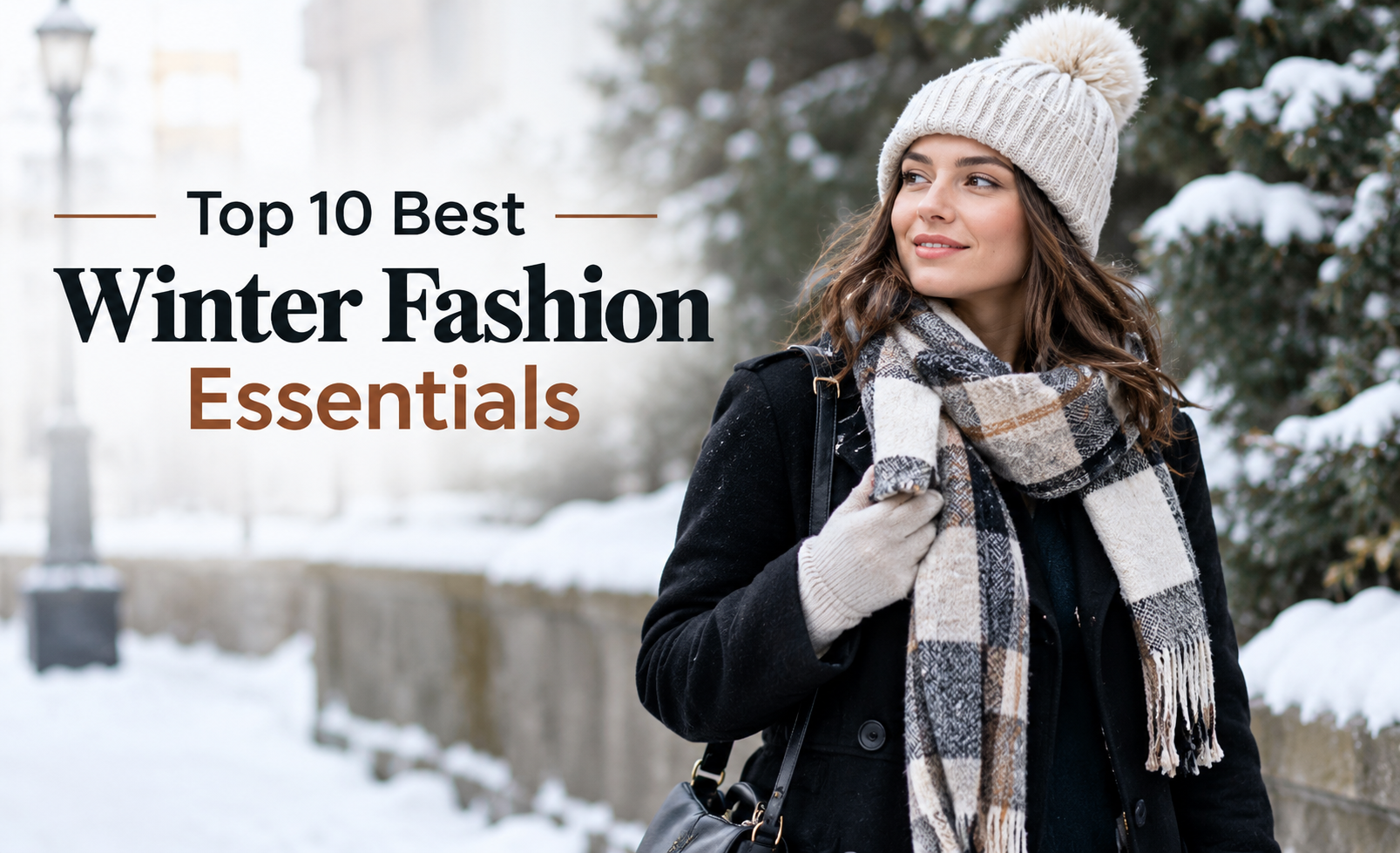




Building a winter wardrobe that actually keeps you warm — without buying more than you need — comes down to a handful of essentials rather than an endless shopping list. The right coat, the right base layer, and the right pair of boots do more for comfort and style than a closet full of trend pieces that don’t work together. These winter fashion essentials cover warmth, versatility, and everyday practicality, from the outer layer that fights the cold down to the small accessories that finish an outfit. Each piece below is broken down by warmth, comfort, style versatility, and budget, along with what to look for before buying and how it compares to common alternatives. By the end, you’ll have a clear list of what’s actually worth owning this winter, how to layer it, and several ready-to-wear outfit ideas for everyday life, work, and travel.
A quick answer: the best winter fashion essentials are an insulated coat, a wool sweater, a thermal base layer, insulated boots, and core accessories — scarf, hat, and gloves — because together they cover outerwear, mid-layer warmth, moisture management, and the extremities that lose heat fastest.
People find waiting more tolerable when they can see the work being done on their behalf
“Labor Illusion” insight
Winter Essentials Comparison Table
|
Essential |
Warmth |
Versatility |
Best For |
Budget |
Layering |
Key Benefit |
|
Winter Coat/Puffer |
High |
Medium |
Outdoor, commuting, travel |
Mid-Premium |
Outer layer |
Core protection from cold & wind |
|
Wool Sweater |
Med-High |
High |
Everyday, work, weekend |
Budget-Mid |
Mid layer or standalone |
Warm and works alone or layered |
|
Thermal Base Layer |
Medium |
Low |
Outdoor activity, extreme cold |
Budget-Mid |
Foundation layer |
Traps warmth, manages moisture |
|
Winter Boots |
High |
Medium |
Snow, slush, commuting |
Mid-Premium |
N/A |
Keeps feet warm and dry |
|
Scarf |
Medium |
High |
Everyday, travel |
Budget-Mid |
Outer accessory |
Adds warmth and color easily |
|
Beanie/Winter Hat |
High |
Medium |
Outdoor, very cold days |
Budget |
Outer accessory |
High warmth for low cost |
|
Gloves |
Medium |
Medium |
Commuting, outdoor errands |
Budget-Mid |
Outer accessory |
Protects hands & dexterity |
|
Turtleneck |
Medium |
High |
Work, everyday, layering |
Budget-Mid |
Mid layer |
Clean layering under sweaters |
|
Winter Trousers |
Medium |
Medium |
Work, everyday, travel |
Mid |
Outer/mid layer |
Warmer fabric without bulk |
|
Accessories |
Low |
High |
Any occasion |
Budget-Premium |
N/A |
Varies outfits without new clothing |
No single item on this list does everything — a puffer jacket outperforms a wool coat for pure warmth and wind resistance, but the wool coat is far more versatile for work and dressier occasions. Boots and a base layer matter most once temperatures drop below freezing, while a sweater and layering shirt do the most work in milder cold. Accessories cost the least but often make the biggest visible difference in how an outfit reads.
Top 10 Best Winter Fashion Essentials
1. Winter Coat or Puffer Jacket
The outermost insulating layer — a down or synthetic puffer, a parka, or a tailored wool overcoat — that protects against cold, wind, and precipitation. It’s the single piece that determines whether the rest of a winter outfit actually keeps you warm outdoors.
Best materials/fabrics: down or synthetic (PrimaLoft-type) insulation for puffers; wool or wool-blend for tailored coats
Warmth level: high for a well-filled puffer; medium-high for a wool coat, which relies more on layering underneath
Comfort: down is lightweight for its warmth; wool coats are heavier and more structured but breathe better
Style versatility: puffers read sporty-casual; wool coats read polished and move between casual and office wear
Best occasions: everyday wear, commuting, travel, outdoor activities, and work (wool coat)
Best temperatures/weather: puffers for very cold, wet, or windy conditions; wool coats for cold-to-mild, less wind-exposed climates
Layering compatibility: sits over a full system — base layer, mid layer, then coat
Durability: down loses loft if repeatedly compressed or soaked; wool holds its shape for years with basic care
Maintenance/care: puffers are often machine washable with the right settings; wool coats usually need dry cleaning or spot cleaning
Budget category: mid to premium — typically the highest single cost, but also strong cost-per-wear if worn most of the season
Who should consider buying it: anyone in a cold-winter climate who spends real time outdoors
Who may not need it: people in consistently mild climates may only need a mid-weight jacket
What to Look For Before Buying
- Fill power or insulation weight rated for your climate
- Wind and water resistance on the outer shell
- Hood, coverage length, and room for a mid layer underneath
Common Mistakes to Avoid
- Choosing a coat for looks alone without checking its actual warmth rating for local winters
Styling Suggestions
- Layer a scarf and beanie for extra warmth without adding bulk
- Size the coat to fit over a sweater, not just a T-shirt
Puffer Jacket vs. Wool Coat: a puffer generally wins on warmth-to-weight ratio and weather resistance in very cold or wet climates; a wool coat wins on versatility for work and dressier occasions in milder cold.
[Affiliate Product Link – Winter Jacket]
2. Warm Wool Sweater
A mid-layer knit — crewneck, cardigan, or turtleneck — in wool or a wool blend that adds insulation while still looking finished on its own.
Best materials/fabrics: merino wool, lambswool, or a wool-cashmere blend for softness against the skin
Warmth level: medium to high depending on gauge; a chunky knit is warmer than a fine-gauge one
Comfort: merino wool is soft and less itchy than standard wool, and it regulates temperature well
Style versatility: works as a standalone top or as a mid layer under a coat — one of the most versatile pieces in a winter wardrobe
Best occasions: everyday wear, work, weekend, casual dinner
Best temperatures/weather: cold to very cold when layered; comfortable alone indoors or in mild cold
Layering compatibility: sits over a base layer or shirt and under a coat
Durability: a tightly knit, higher wool-content sweater resists pilling better than loosely spun blends
Maintenance/care: hand wash or gentle cycle in cold water, lay flat to dry — wool loses shape in a hot dryer
Budget category: budget to mid-range for acrylic blends; mid to premium for merino or cashmere blends
Who should consider buying it: almost everyone — it’s one of the highest-value pieces in a winter capsule
Who may not need it: people who run warm indoors may prefer a lighter cotton knit for everyday wear
What to Look For Before Buying
- Wool content percentage (higher generally means better warmth and durability)
- A gauge and weight that suits both layering and standalone wear
Common Mistakes to Avoid
- Buying only synthetic-blend sweaters that pill quickly and lose shape after a few washes
Styling Suggestions
- Tuck a fine-gauge sweater into trousers for a polished look
- Wear a chunky knit oversized over a collared shirt for contrast
Wool Sweater vs. Fleece: wool breathes better and looks more polished for everyday and office wear; fleece is warmer for its weight and better for high-activity outdoor use but reads more casual/technical.
[Affiliate Product Link – Wool Sweater]
3. Thermal or Base Layer
A close-fitting top and bottom worn directly against the skin, designed to trap warmth and move moisture away from the body.
Best materials/fabrics: merino wool, silk, or synthetic thermal knits (polyester/spandex blends)
Warmth level: medium on its own; its real value is how much it improves everything layered on top of it
Comfort: merino and silk feel softer against skin than synthetic; synthetic dries faster if you sweat
Style versatility: invisible under other clothing — a functional layer, not a style statement
Best occasions: outdoor activities, very cold commutes, winter travel, cold-weather work
Best temperatures/weather: most useful below freezing or in wind; less necessary for mild winter days
Layering compatibility: the foundation layer — everything else goes over it
Durability: merino wool thermals last many seasons if hand washed; synthetic thermals are more wash-and-wear durable
Maintenance/care: cold wash, air dry — high heat can degrade both wool and synthetic base layers
Budget category: budget to mid-range; a worthwhile investment for anyone regularly outdoors in the cold
Who should consider buying it: anyone spending extended time outside in freezing temperatures
Who may not need it: people who are mostly indoors or in mild winters may not need a dedicated thermal layer
What to Look For Before Buying
- A snug (not tight) fit so it works as an actual insulating layer
- Moisture-wicking performance if used for active outdoor wear
Common Mistakes to Avoid
- Wearing a base layer that’s too tight, which restricts the trapped-air insulation that makes it work
Styling Suggestions
- Choose a neutral color if any of it will peek out at the collar or cuffs
Thermal Layer vs. Regular T-Shirt: a thermal layer is built to trap warmth and manage moisture, while a cotton T-shirt holds moisture against the skin and cools you down faster once you sweat or step outside.
4. Winter Boots
Insulated, weather-resistant footwear built to keep feet warm and dry in snow, slush, or freezing rain.
Best materials/fabrics: leather or waterproof synthetic uppers with insulated linings and rubber or lugged soles
Warmth level: high when properly insulated and sized to allow room for thicker socks
Comfort: look for cushioned insoles and a slightly roomier fit than regular shoes to accommodate warm socks
Style versatility: ranges from utilitarian snow boots to sleeker leather boots that work with both casual and smart-casual outfits
Best occasions: everyday wear, commuting, travel, outdoor activities, snow-prone weekends
Best temperatures/weather: essential below freezing or in snow and slush; less necessary in dry, mild winters
Layering compatibility: pairs with thicker wool or thermal socks for the coldest days
Durability: leather boots with proper care last many seasons; fully synthetic boots are lighter but wear out faster
Maintenance/care: waterproof leather boots need periodic conditioning and reproofing; synthetic boots are typically wipe-clean
Budget category: mid-range for reliable everyday boots; premium for full leather with a long lifespan
Who should consider buying it: anyone dealing with snow, slush, or consistently freezing temperatures
Who may not need it: people in dry, mild winters may get by with regular boots and a warm sock
What to Look For Before Buying
- A waterproof or water-resistant rating
- Insulation weight appropriate for local winter lows
- Traction/tread suited to ice or snow
Common Mistakes to Avoid
- Wearing fashion boots with no real insulation or grip in icy conditions
Styling Suggestions
- Pair sleeker leather boots with trousers or a midi skirt for smart-casual days
- Save the more technical snow boot for actual snow days
Ankle Boots vs. Winter Boots: ankle boots are more versatile for mild cold and everyday outfits; true winter boots are necessary once temperatures drop below freezing or snow and slush are involved.
[Affiliate Product Link – Winter Boots]
5. Winter Scarf
A wool, cashmere, or knit wrap worn around the neck for warmth and, often, as a visual focal point for an otherwise simple outfit.
Best materials/fabrics: wool, cashmere, or acrylic knit; silk or lighter blends for milder days
Warmth level: medium to high depending on thickness — a chunky knit scarf adds meaningful warmth at the neck
Comfort: cashmere and merino are softest against the skin; acrylic can feel scratchier but costs less
Style versatility: one of the easiest ways to add color or texture to a neutral winter outfit
Best occasions: everyday wear, commuting, travel, outdoor activities
Best temperatures/weather: useful anytime it’s cold enough for a coat, more essential as wind increases
Layering compatibility: worn over a coat collar or tucked inside for extra wind protection
Durability: a tightly knit wool or cashmere scarf holds up for years if stored folded, not hung
Maintenance/care: hand wash wool and cashmere; acrylic can typically go in a gentle machine cycle
Budget category: budget to mid-range for most options; cashmere sits at the premium end
Who should consider buying it: almost everyone — it’s a low-cost, high-impact addition to a winter wardrobe
Who may not need it: people who primarily wear high-collar coats may need it less often
What to Look For Before Buying
- Length and thickness suited to how you plan to wear it (looped vs. wrapped)
Common Mistakes to Avoid
- Choosing a scarf color that clashes with the rest of a otherwise neutral winter capsule
Styling Suggestions
- Repeat one neutral tone from the coat or sweater to keep the outfit cohesive
Wool Scarf vs. Silk Scarf: wool and cashmere scarves are warmer and better suited to true cold; silk scarves are more of a style accessory for milder days or indoor wear.
6. Beanie or Winter Hat
A close-fitting knit hat that reduces heat loss from the head, one of the most exposed areas in cold weather.
Best materials/fabrics: wool, merino, or acrylic knit; some styles add a fleece lining
Warmth level: high relative to its size and cost — head coverage makes a noticeable difference in perceived warmth
Comfort: look for a soft interior, especially merino-lined, if sensitive to scratchy wool
Style versatility: a plain, fitted beanie in a neutral tone works with almost any winter outfit
Best occasions: outdoor activities, commuting, travel, very cold everyday wear
Best temperatures/weather: most useful below freezing or in wind; optional in milder, sunny winter weather
Layering compatibility: worn alone or under a coat hood for extra wind protection
Durability: a tightly knit wool beanie holds its shape for years; loosely knit acrylic stretches out faster
Maintenance/care: hand wash or gentle cycle, reshape and lay flat to dry
Budget category: budget-friendly — one of the lowest-cost, highest-impact winter pieces
Who should consider buying it: anyone regularly outside in freezing or windy conditions
Who may not need it: people who are mostly indoors or drive everywhere may only need it occasionally
What to Look For Before Buying
- A snug, not overly tight, fit and a fold-over cuff for adjustable coverage
Common Mistakes to Avoid
- Skipping head coverage on very cold days and wondering why the rest of the outfit doesn’t feel warm enough
Styling Suggestions
- Match the beanie to the scarf or gloves for a coordinated, intentional look
Beanie vs. Ear Warmers: a beanie provides more complete coverage and warmth; ear warmers are a lighter option for milder cold or for anyone who prefers not to flatten their hair.
7. Warm Gloves
Insulated hand coverings, ranging from simple knit gloves to technical touchscreen-compatible or waterproof styles.
Best materials/fabrics: wool or fleece-lined knit for everyday wear; leather or technical shells with insulation for harsher conditions
Warmth level: medium for knit gloves; high for insulated or lined technical gloves
Comfort: look for a lining that doesn’t bunch, and enough dexterity to still use your hands comfortably
Style versatility: leather gloves read more polished for work or dressier outfits; knit gloves are more casual
Best occasions: commuting, travel, outdoor activities, everyday errands in the cold
Best temperatures/weather: essential below freezing, especially with wind chill
Layering compatibility: worn as the outermost layer on the hands, sometimes over thin liner gloves in extreme cold
Durability: leather gloves with proper conditioning last many seasons; knit gloves wear out faster with heavy use
Maintenance/care: leather gloves need occasional conditioning; knit gloves are typically machine washable
Budget category: budget for basic knit pairs; mid to premium for leather or technical touchscreen gloves
Who should consider buying it: anyone who’s outside for more than a short walk in freezing temperatures
Who may not need it: people with very short outdoor exposure may get by without a dedicated pair
What to Look For Before Buying
- Touchscreen compatibility if you’ll use your phone outdoors
- A snug wrist fit to keep cold air out
Common Mistakes to Avoid
- Buying gloves too bulky to comfortably use keys, zippers, or a phone
Styling Suggestions
- Match glove color to the coat or bag rather than treating it as an afterthought
Leather Gloves vs. Knit Gloves: leather is more polished and wind-resistant for work or dressier days; knit is more casual, often warmer for the price, and easier to wash.
8. Turtleneck or Layering Shirt
A fitted, higher-neck top — turtleneck, mock neck, or long-sleeve base shirt — that works alone or as an under-layer.
Best materials/fabrics: cotton, merino wool, or a cotton-blend jersey
Warmth level: medium — adds meaningful coverage at the neck and layers cleanly under sweaters and coats
Comfort: a soft jersey or fine-gauge knit turtleneck is comfortable enough to wear all day
Style versatility: a neutral turtleneck under a blazer or sweater is one of the simplest ways to look put-together in winter
Best occasions: work, everyday wear, casual dinner, layering under sweaters and coats
Best temperatures/weather: useful anytime it’s cold enough for layering, most valuable in cold-to-very-cold conditions
Layering compatibility: sits between a base layer and a sweater or blazer
Durability: a well-made cotton or merino turtleneck holds its shape through many washes
Maintenance/care: machine washable on cold for cotton blends; wool versions do best hand washed
Budget category: budget to mid-range
Who should consider buying it: almost everyone — it’s a flexible layering piece worth having in a couple of neutral colors
Who may not need it: people who don’t like a fitted neckline may prefer a crewneck base layer instead
What to Look For Before Buying
- A fit that layers smoothly without bunching under a sweater or coat
Common Mistakes to Avoid
- Choosing a bulky-knit turtleneck that adds too much volume under other layers
Styling Suggestions
- Let the turtleneck collar peek out from under a crewneck sweater for a finished, layered look
Turtleneck vs. Crewneck Base Layer: a turtleneck adds neck coverage and a more polished line under a blazer; a crewneck is more versatile if you plan to wear it visibly on its own.
9. Winter Trousers or Insulated Jeans
Bottoms built with heavier fabric, a wool blend, or a thermal lining to hold warmth better than standard summer-weight trousers or jeans.
Best materials/fabrics: wool-blend trousers, heavyweight denim, or jeans with a brushed thermal lining
Warmth level: medium — trousers alone won’t keep you warm in extreme cold, but the right fabric makes a real difference
Comfort: look for a little stretch in the fabric so heavier material doesn’t restrict movement
Style versatility: wool-blend trousers read more polished for work; heavyweight or lined denim stays casual
Best occasions: work, everyday wear, travel, weekend
Best temperatures/weather: useful for cold-to-very-cold days, especially combined with thermal leggings underneath on the coldest days
Layering compatibility: can be worn over thin thermal leggings in very cold conditions without looking bulky if properly fitted
Durability: heavier wool-blend and denim fabrics tend to outlast lightweight summer fabrics
Maintenance/care: wool-blend trousers often need dry cleaning; lined denim is typically machine washable
Budget category: mid-range for most quality options
Who should consider buying it: anyone who spends significant time outdoors or in unheated spaces during winter
Who may not need it: people who are mostly in heated indoor environments may not need a dedicated winter-weight pair
What to Look For Before Buying
- Fabric weight and any thermal lining
- A fit that still allows a thin base layer underneath if needed
Common Mistakes to Avoid
- Wearing thin summer-weight trousers or jeans as the only lower-body layer in freezing weather
Styling Suggestions
- Pair wool-blend trousers with boots and a knit for an easy cold-weather work outfit
Wool-Blend Trousers vs. Lined Jeans: wool-blend trousers are warmer and more polished for work; lined jeans are more casual and generally easier to care for.
10. Versatile Winter Accessories
The smaller finishing pieces — a structured bag, a good watch, sunglasses, or a wide leather belt worn over a coat — that pull a winter outfit together without adding bulk.
Best materials/fabrics: leather, metal, or wool depending on the piece
Warmth level: low direct warmth, but coordinated accessories improve overall wind coverage (e.g., a belted coat) and reduce the temptation to skip other layers
Comfort: choose pieces that don’t interfere with gloves, scarves, or a coat’s fit
Style versatility: one or two intentional accessories can make repeated winter basics feel like different outfits day to day
Best occasions: work, travel, weekend, date night, everyday wear
Best temperatures/weather: relevant in any winter condition, though function matters more than fashion below freezing
Layering compatibility: worn over or alongside the coat and other layers rather than under them
Durability: leather goods generally outlast trend-driven accessories
Maintenance/care: leather needs occasional conditioning; metal pieces need only basic cleaning
Budget category: budget to premium depending on the piece chosen
Who should consider buying it: anyone who wants to vary a small winter wardrobe without buying more clothing
Who may not need it: not essential for warmth, so lower priority if budget is limited
What to Look For Before Buying
- Pieces in colors that repeat across your existing winter basics
Common Mistakes to Avoid
- Adding several competing accessories at once instead of one clear focal point
Styling Suggestions
- Belt a wool coat at the waist for more shape on dressier days
Structured Bag vs. Backpack: a structured bag looks more polished for work and dinner; a backpack is more practical for travel and everyday commuting in bad weather.
How to Choose the Right Winter Fashion Essentials
The right winter essentials depend on your actual climate and how you spend time outdoors, not just personal style preference. These factors matter most when choosing any piece:
Climate & temperature: Match warmth level to your area’s actual winter lows, not just the coldest day you can imagine.
Layering: Choose pieces that fit comfortably over or under each other rather than each being maximally warm alone.
Fabric/material: Natural fibers like wool generally breathe better; technical insulation often wins on warmth-to-weight.
Fit: A coat sized to fit over a sweater; boots sized to fit a thicker sock — fit changes function, not just looks.
Comfort & breathability: A garment that traps too much moisture will feel cold rather than warm.
Water resistance: Matters more in wet climates than in dry, cold ones.
Wind protection: A tightly woven or treated outer shell matters as much as insulation thickness in windy areas.
Durability: Higher-quality natural fibers and construction usually cost more upfront but last longer per wear.
Style: Pick pieces that work with what you already own so the wardrobe stays versatile, not just warm.
Budget: Prioritize the outer layer and footwear first — they affect warmth the most.
Frequency of use: Items worn daily (coat, boots) justify a higher budget than occasional-use pieces.
Maintenance: Dry-clean-only pieces cost more to maintain over a season than machine-washable ones.
Dressing for Different Winter Climates
Mild Winter: A wool sweater, a mid-weight coat, and a scarf usually cover the season without needing a full technical wardrobe.
Cold Winter: Add a proper insulated coat, winter boots, and a base layer for regular outdoor exposure.
Very Cold Winter: A high-fill puffer or heavy wool coat, thermal base layers, insulated boots, and full accessory coverage (hat, scarf, gloves) become non-negotiable.
Wet/Rainy Winter: Prioritize water-resistant or waterproof outer layers and boots over pure warmth ratings, since wet insulation loses effectiveness.
Windy Winter: Wind resistance on the coat’s outer shell and full head/neck coverage matter more than raw insulation thickness.
Winter Fabric and Material Guide
No single fabric is best for every situation — each balances warmth, breathability, durability, and cost differently.
|
Material |
Warmth |
Breathability |
Durability |
Moisture Handling |
Maintenance |
Price |
|
Wool |
High |
Medium |
High |
Good (repels some moisture) |
Dry clean or hand wash |
Mid |
|
Merino wool |
High |
High |
High |
Very good |
Hand wash, cold |
Mid-Premium |
|
Cashmere |
Very high |
High |
Medium |
Good |
Dry clean or gentle hand wash |
Premium |
|
Fleece |
Medium-High |
Medium |
Medium |
Dries fast, absorbs less water |
Machine washable |
Budget |
|
Down |
Very high |
Medium |
Medium (loses loft if wet) |
Poor when wet |
Special down wash or dry clean |
Mid-Premium |
|
Synthetic insulation |
High |
Medium |
High |
Performs better than down when wet |
Machine washable |
Budget-Mid |
|
Cotton |
Low-Medium |
High |
Medium |
Poor (holds moisture) |
Machine washable |
Budget |
|
Thermal fabrics |
Medium-High |
Medium-High |
Medium |
Wicks moisture well |
Machine washable, cold |
Budget-Mid |
|
Leather |
Medium |
Low |
Very high |
Water-resistant if treated |
Conditioning needed |
Mid-Premium |
|
Faux fur |
Medium |
Low |
Medium |
Fair |
Spot clean or gentle wash |
Budget-Mid |
Best Winter Fashion Essentials on a Budget
Prioritizing purchases matters more than spending the most possible — the coat and boots affect warmth the most, so they’re worth the largest share of any budget.
Budget-Conscious Wardrobe
Prioritize one well-insulated coat, one pair of real winter boots, and a wool sweater — these three items affect warmth the most. Fill in with budget scarves, a beanie, and knit gloves. Skip trend pieces and buy fewer, better basics.
Mid-Range Wardrobe
Add a merino base layer, a second sweater in a different weight, and wool-blend trousers. This tier usually offers the best cost-per-wear, balancing durability with reasonable prices.
Premium Wardrobe
Invest in a cashmere or high-fill-power coat, full-grain leather boots and gloves, and merino-heavy knitwear. These last the longest and often justify the higher price if worn for many winters.
How to Build a Winter Capsule Wardrobe
A practical winter capsule uses a limited set of pieces that combine into many outfits rather than a separate look for every day. An example capsule of about 13 pieces:
- 1 insulated winter coat (neutral color)
- 1 wool-blend blazer or structured cardigan
- 2 wool or merino sweaters (one fitted, one oversized)
- 1 turtleneck or long-sleeve base layer
- 1 thermal base-layer set for the coldest days
- 2 pairs of trousers (1 wool-blend, 1 heavyweight denim)
- 1 pair of winter boots
- 1 pair of everyday leather or clean sneakers for milder days
- 1 scarf in a neutral or accent color
- 1 beanie
- 1 pair of gloves
- 1 structured bag
- 1 belt
With this set, a coat over any sweater-and-trouser combination covers most cold days, the base layer adds warmth on the coldest ones without changing the outfit, and swapping the scarf, bag, or belt varies the look without buying anything new.
Easy Winter Outfit Ideas
Casual Everyday Wear: Wool sweater + jeans + winter boots + beanie and scarf.
Office/Work: Turtleneck + wool-blend trousers + wool coat + leather gloves.
Weekend: Oversized sweater + jeans + sneakers (mild days) or boots (cold/wet days) + puffer jacket.
Date Night: Fitted turtleneck + tailored trousers + wool coat + one statement accessory.
Travel: Thermal base layer + sweater + trousers + puffer jacket, worn as the bulkiest layer to save luggage space.
Outdoor Activities: Thermal base layer + fleece or wool mid layer + wind/water-resistant outer shell + insulated boots, hat, and gloves.
Very Cold Weather: Full layering system: thermal base layer, sweater, high-fill puffer or heavy wool coat, insulated boots, beanie, scarf, and lined gloves.
Winter Wardrobe Essentials by Gender
Winter Wardrobe Essentials for Women
Wool coats, midi-length options, and fitted turtlenecks tend to offer the most outfit flexibility; a slightly oversized sweater balances more fitted bottoms. Boots with a small heel or block sole add a dressier option alongside a flatter, more technical pair.
Winter Wardrobe Essentials for Men
A structured wool or puffer coat, a slim-to-regular fit sweater, and boots that work with both trousers and jeans cover most situations. A quality scarf and a leather glove are easy ways to add polish to a simple base outfit.
Common Winter Fashion Mistakes to Avoid
- Buying style over warmth — choosing a coat or boots that look good but aren’t actually rated for local winter lows
- Poor layering — wearing one thick layer instead of several thinner ones that trap warmth more effectively
- Wrong fabric choices — cotton against the skin in very cold, damp conditions holds moisture and cools you down
- Incorrect sizing — a coat too tight to fit a sweater underneath defeats the point of layering
- Buying too many trendy pieces instead of a few durable basics that combine into more outfits
- Ignoring footwear — an otherwise warm outfit fails quickly if boots aren’t insulated or grippy enough
- Forgetting accessories — skipping a hat, scarf, or gloves undercuts the rest of a well-planned outfit
- Poor color coordination — accumulating pieces that don’t combine with anything else already owned
- Choosing clothing that’s difficult to maintain — too many dry-clean-only pieces raises the real cost of a wardrobe
- Buying items unsuitable for the local climate — a lightweight puffer built for mild cold won’t hold up in a harsh winter
Frequently Asked Questions
What are the most important winter wardrobe essentials?
A well-insulated coat, a wool sweater, a thermal base layer, insulated boots, and basic accessories (scarf, hat, gloves) form the core of a functional winter wardrobe. These pieces cover warmth, layering, and everyday versatility before anything else.
What clothes should everyone have for winter?
At minimum: one warm coat suited to your climate, one or two sweaters, a pair of insulated boots, and a hat, scarf, and gloves. Everything else — extra trousers, a base layer, accessories — depends on how cold and how active your winters are.
What is the best material for winter clothing?
There isn’t a single best material — wool and merino balance warmth and breathability well for everyday wear, down offers the highest warmth-to-weight ratio for outerwear, and synthetic insulation performs better than down when wet.
How many winter clothes do I really need?
A functional winter capsule can work with around 10–15 pieces: one coat, two to three sweaters, a couple of layering shirts, one or two pairs of trousers, boots, and a small set of accessories, mixed and matched across the season.
What should I wear in extremely cold weather?
A full layering system: a thermal base layer, an insulating mid layer like a wool sweater, a high-fill-power coat or heavy wool overcoat, insulated boots, and full head, neck, and hand coverage.
How do you build a winter capsule wardrobe?
Start with one versatile coat and boots, add two to three sweaters and a base layer, choose trousers or jeans that pair with everything, then round out with a few accessories in colors that repeat across the other pieces.
What are the best winter clothes for everyday wear?
A wool sweater, a turtleneck or layering shirt, wool-blend trousers or jeans, a reliable coat, and boots cover most everyday situations without needing separate outfits for every activity.
How can I stay warm while still looking stylish?
Stick to a coordinated neutral palette, invest in one polished coat, and let texture (wool, knit, leather) do the visual work instead of adding more colors or trend pieces on top of your warm layers.
What are the best winter essentials for women?
A tailored wool coat, a fitted turtleneck, one or two sweaters in different weights, boots with some styling flexibility, and a scarf offer warmth along with outfit variety for work and casual wear alike.
What are the best winter essentials for men?
A structured coat (wool or puffer), a versatile sweater, boots that work with both trousers and jeans, and a quality scarf and gloves cover most everyday and work situations.
Is a puffer jacket or a wool coat better for winter?
It depends on the climate: a puffer wins on warmth-to-weight and weather resistance in very cold or wet conditions, while a wool coat offers more versatility for work and dressier occasions in milder cold.
How much should I budget for winter fashion essentials?
Prioritize spending on the coat and boots first, since they affect warmth the most, then build out sweaters and accessories at whatever budget tier makes sense — durable basics usually cost less per wear than frequently replaced cheap pieces.
Conclusion
A functional, stylish winter wardrobe doesn’t require buying everything at once. Starting with the coat, boots, and a base layer covers the warmth that matters most, and building out sweaters, layering pieces, and accessories from there keeps the wardrobe versatile without becoming cluttered. Prioritizing fit, fabric, and climate-appropriate warmth over trend pieces tends to pay off across more than one season, which is ultimately what makes a winter wardrobe worth the investment.