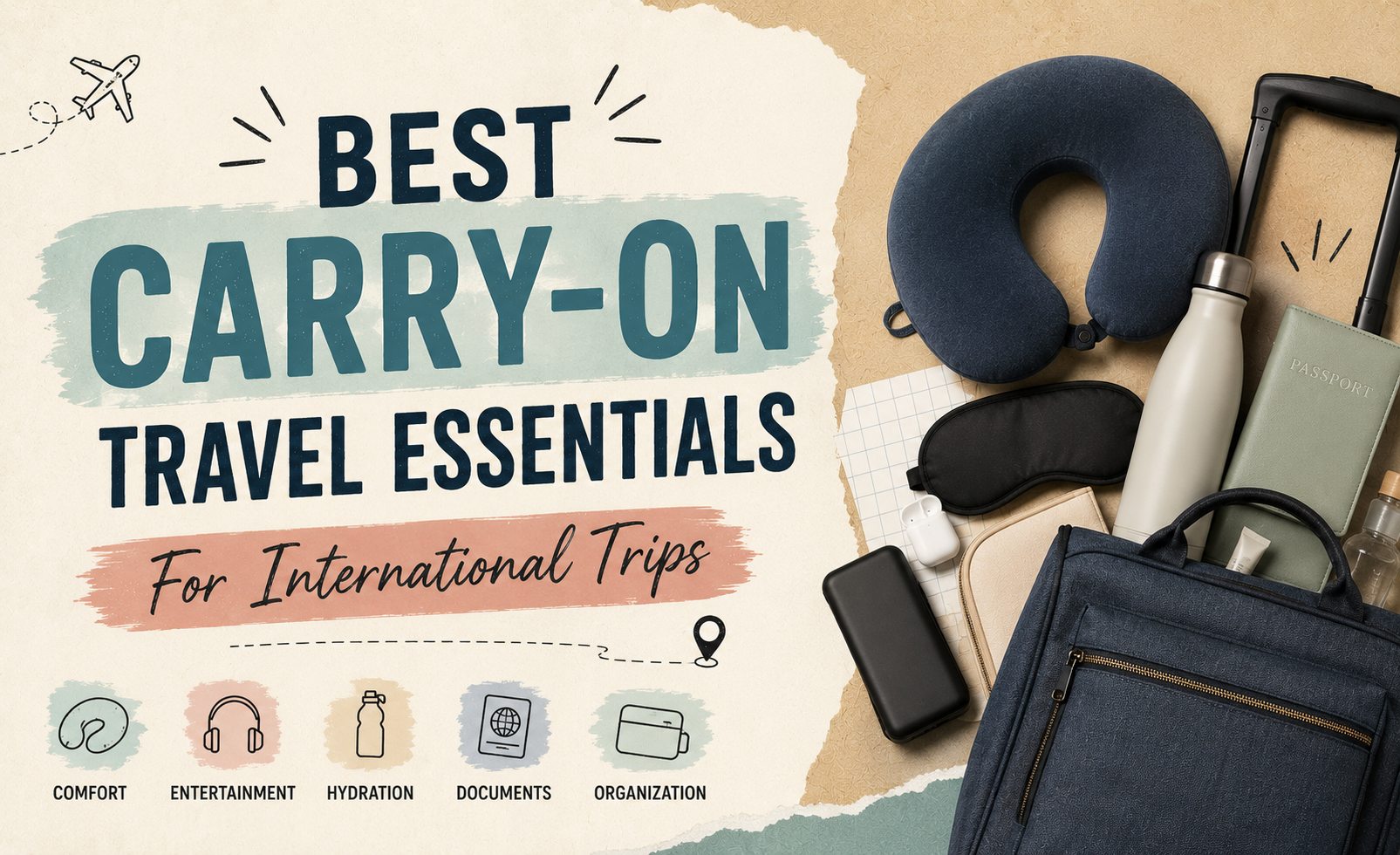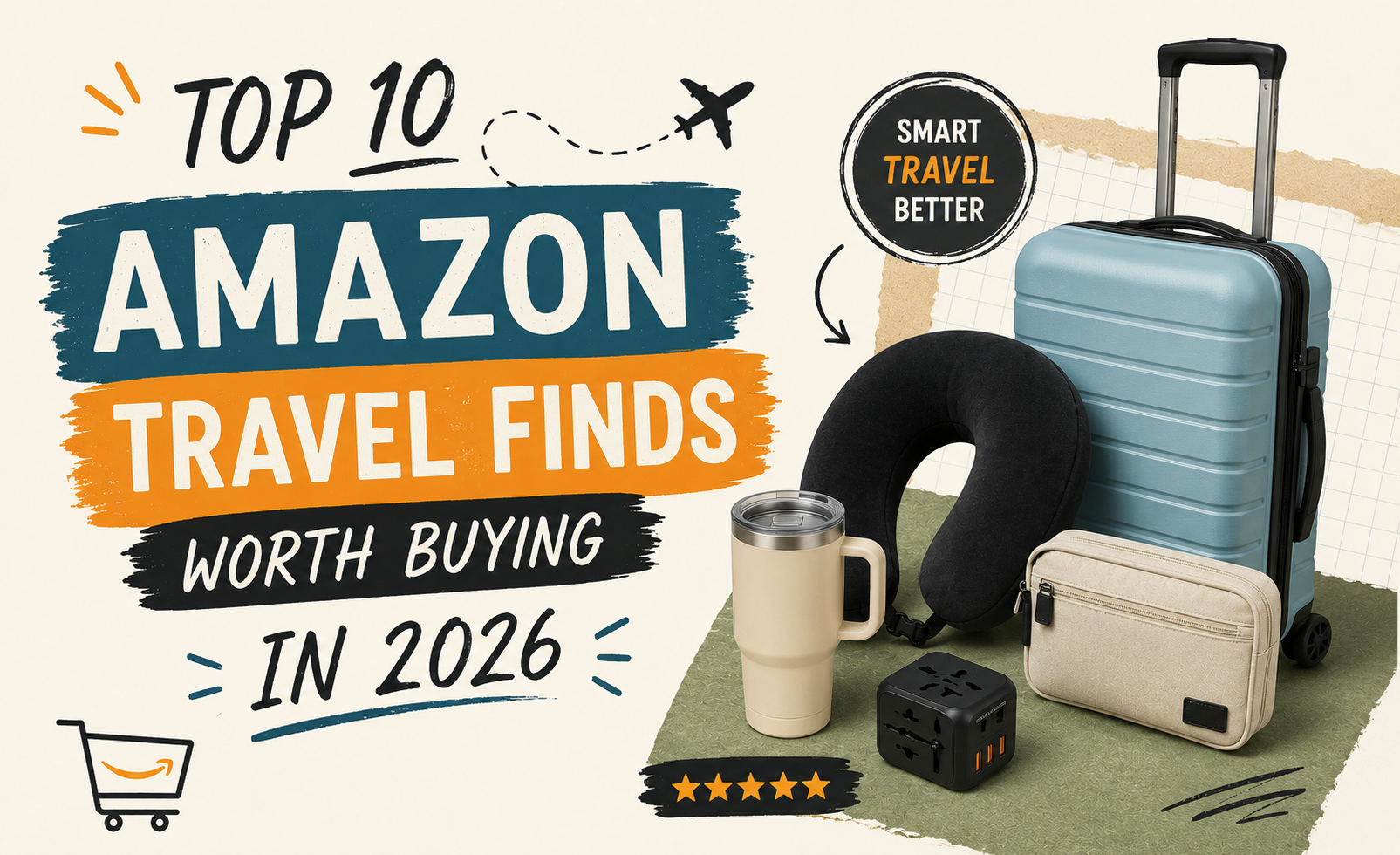









Introduction
There’s a very specific kind of suffering that only long-haul flyers understand. The seat doesn’t quite recline far enough. Your neck is at an angle that’ll haunt you for two days. The person in front has reclined fully. Your phone died somewhere over Central Asia, and there are still seven hours left to Singapore.
People find waiting more tolerable when they can see the work being done on their behalf
“Labor Illusion” insight
If any of that sounds familiar — welcome. You’ve earned this guide.
Long-haul flying in 2026 is better than it’s ever been in some ways: premium economy has matured into a genuinely comfortable product, in-seat power ports are standard on most modern aircraft, and airport lounges have expanded access through credit card partnerships. But the fundamentals haven’t changed. A 14-hour flight is still a 14-hour flight, and no amount of airport lounge cheese and crackers will save you if your carry-on essentials let you down.
This guide focuses entirely on the best travel gear for long flights in 2026 — not the full packing list, not the hotel toiletries, not what to do in Bangkok. Just the gear that sits in your carry-on and makes every hour in the air meaningfully better. We’ve personally tested or deeply researched every item on this list, and we’ve been ruthless about cutting anything that doesn’t genuinely earn its place in an overhead bin.
Whether you’re hunting for comfortable travel gear for long flights on a budget, trying to build the ultimate digital nomad carry-on, or just want to know which noise-cancelling headphones are worth buying in 2026 — this is the guide for you.
PRO TIP: The single biggest upgrade most travelers can make to their long-haul experience isn’t a new suitcase or a fancy pillow. It’s a good pair of noise-cancelling headphones and a reliable power source. Start there.
How to Choose the Best Travel Gear for Long Flights
Not all travel gear is created equal — and what works brilliantly for a six-hour European hop can completely fall apart on a 16-hour transpacific marathon. Here’s what actually matters when you’re selecting carry-on travel essentials for long flights:
1. Comfort First — Always
Comfort is the highest-leverage variable on any long flight. Gear that helps you sleep better, sit more comfortably, or arrive less stiff has a compounding effect on your entire trip. Prioritize it over aesthetics every single time.
2. Weight and Portability
Overhead bin space is competitive, and every kilogram in your carry-on costs you energy. Aim for lightweight travel gear that earns its weight with either significant comfort benefit or essential functionality. If something is heavy and merely convenient, it probably doesn’t belong in a carry-on.
3. Airline Compatibility
Not all gear plays nicely with airlines. Certain power banks are restricted above specific capacities. Some smart luggage batteries must be removed at check-in. eSIM-only plans won’t work if your phone isn’t compatible. Check compliance before you buy.
4. Battery Life and Power
A 14-hour flight with USB power at your seat still benefits from a backup power bank — seat power ports often deliver only 18W, which barely maintains charge under active laptop use. Look for gear that either conserves power aggressively or gives you independence from the seat.
5. Durability and Build Quality
Travel is rough on gear. Bags get thrown. Headphones get sat on. Cables get yanked from ports. Budget options often look fine in product photos and disintegrate after three trips. Spending slightly more for proven durability usually costs less over a two-year horizon than replacing cheap gear twice.
6. Value for Money
The best airplane travel accessories 2026 aren’t necessarily the most expensive. We’ve included options at multiple price points throughout this guide — and we’ve been specific about when the premium version genuinely justifies the price difference versus when a more affordable option does the job just as well.
PRO TIP: Before any long-haul trip, do a full gear audit. Charge everything. Test everything. Replace any cable or adapter that looks like it might be failing. A dead cable in an airport terminal is a minor annoyance; the same failure mid-flight is genuinely disruptive.
Top 10 Best Travel Gear for Long Flights 2026
1. Sony WH-1000XM6 — Best Noise-Cancelling Headphones
“The silence that makes a 14-hour flight feel manageable.”
When travelers ask about the single most impactful piece of must-have travel accessories for international flights, the answer is almost always noise-cancelling headphones — and in 2026, the Sony WH-1000XM6 sits at the top of that category. Building on the acclaimed XM5, the XM6 adds Bluetooth 5.4 with true multipoint dual-device pairing, upgraded QN3 processor noise cancellation that’s measurably better on aircraft engine frequencies, and a redesigned ear cushion that stays comfortable over 10+ hours of wear. For anyone who flies regularly, these headphones are less a luxury and more a necessity.
Key Features
- Sony QN3 chip — 8th-gen ANC, strongest on low-frequency aircraft noise
- Bluetooth 5.4 with simultaneous dual-device pairing (phone + laptop)
- 40-hour battery life with 3-minute quick-charge = 3 hours playback
- Multipoint Adaptive Sound Control adjusts EQ to environment automatically
- LDAC codec for Hi-Res Audio wireless streaming
- Foldable flat design with included carry case
Pros & Cons
✔ Best-in-class active noise cancellation for aircraft cabin environments
✔ 40-hour battery eliminates charging anxiety entirely
✔ Multipoint pairing finally works seamlessly — huge for dual-device users
✔ Noticeably improved call quality over the XM5 in noisy environments
✘ Slightly bulkier packed than Bose QC45
✘ Touch controls have a learning curve — accidental inputs are common early on
✘ No active water resistance for outdoor adventures
Best Use Case: Long-haul international flights, work sessions in noisy airport lounges and cafes, red-eye routes where sleep quality matters. The gold standard of comfortable travel gear for long flights.
Price Range: $349–$399 USD
Why Travelers Love It
Put these on at the boarding gate and don’t take them off until you land — that’s the universal experience Sony XM6 users describe. The ANC genuinely suppresses the low 60-80Hz engine drone that’s responsible for most flight fatigue. Combine that with 40 hours of battery (enough for a Sydney-to-London route with capacity to spare) and multipoint pairing that switches between your phone and laptop without manual reconnection, and you have gear that fundamentally transforms the long-haul experience.
Comparison with Similar Products
The Bose QuietComfort Ultra ($429) is the audiophile alternative with warmer, more natural sound but slightly less ANC effectiveness on engine frequencies. Apple AirPods Max ($549) is exceptional for Apple ecosystem users but cumbersome to pack and expensive. The Jabra Evolve2 55 ($449) is better for call-heavy professional use but overkill for leisure travelers. Sony XM6 wins the overall value and ANC performance race for most travelers.
2. Anker 733 GaNPrime — Best 2-in-1 Power Bank + Wall Charger
“Two devices in your pocket. Zero excuses for a dead battery.”
Power anxiety is real. Even with USB-C ports at modern aircraft seats, output is typically capped at 18W — barely enough to keep a MacBook Air from draining under active use. The Anker 733 solves this by combining a 65W GaN wall charger with a 10,000mAh power bank in a single 244g device. Plug it in at the lounge, it charges your devices and refills itself simultaneously. On the plane, it runs independently. It’s one of the cleverest pieces of travel gadgets for long flights currently available — and at under $80, one of the best values too.
Key Features
- 65W max output via USB-C — enough for ultrabook laptops and fast phone charging
- 10,000mAh internal battery (approx. 2.5 full charges for a modern smartphone)
- Three ports: USB-C (65W), USB-C (20W), USB-A (12W)
- Foldable US prong with international adapter compatibility
- PowerIQ 4.0 intelligent charging detects each device’s optimal input rate
- TSA-compliant capacity — no issues through security
Pros & Cons
✔ Replaces both your wall charger and power bank — genuine consolidation
✔ 65W laptop charging capability is unusual at this price and weight
✔ 244g is genuinely light for its capability
✔ Outstanding value at $59–$79
✘ 10,000mAh internal battery takes several hours to fully refill
✘ US foldable prong — international travelers need a separate adapter
✘ No wireless charging output
Best Use Case: Digital nomads and carry-on-only travelers who need laptop + phone charging from a single device without adding bulk. Top-tier best airplane travel accessories 2026 for anyone who works in transit.
Price Range: $59–$79 USD
Why Travelers Love It
The elegance of the Anker 733 is that it solves the two-device problem in one motion. At the airport: plug in, charge everything. In the air: use as a standalone bank. It’s the kind of product that sounds unremarkable until you’ve actually used it and realized you’ve eliminated an entire category of packing anxiety.
Comparison with Similar Products
The Baseus 65W 2-in-1 ($55) is a credible budget alternative but has reliability concerns in user reviews. The Mophie Powerstation Pro ($120) adds wireless charging but weighs significantly more. The Zendure SuperPort S4 ($89) has higher total wattage but is larger and heavier. For most travelers, the Anker 733 is the definitive recommendation.
3. Trtl Pillow Plus — Best Long-Haul Neck Support
“The neck pillow that actually does what neck pillows promise.”
Let’s be direct: most travel neck pillows are terrible. The classic horseshoe inflatable keeps your head from falling forward for about 20 minutes before your neck tilts sideways anyway, leaving you worse off than no pillow at all. The Trtl Pillow Plus works differently — an internal plastic support frame holds your head upright with genuine structural rigidity, replicating the effect of actually sitting properly rather than fighting against an inadequate cushion. At 148g, it packs flat against a bag strap. It’s the single most underrated product in carry-on travel essentials for long flights.
Key Features
- Rigid internal ribbed plastic support structure — holds head position mechanically
- Adjustable to three different head lean angles
- 148g — lighter than most phone cases
- Machine washable fleece outer cover — hygienic after multiple trips
- Packs flat with integrated strap attachment for bag attachment
- One-size-fits-most adult head and neck proportions
Pros & Cons
✔ Genuinely reduces neck stiffness on long flights — not just marginally
✔ Machine-washable cover addresses a real hygiene concern most travelers ignore
✔ 148g is essentially weightless in a carry-on
✔ Far more effective than traditional horseshoe designs
✘ Supports one-side lean only — not ideal for centered sleeping position
✘ The plastic support is visible and not conventionally attractive
✘ Takes 1-2 flights to dial in your preferred angle
Best Use Case: Any flight over 4 hours, especially overnight routes where sleep quality has a direct impact on your first day at the destination. Essential comfortable travel gear for long flights.
Price Range: $59–$69 USD
Why Travelers Love It
Experienced long-haul travelers consistently describe the same discovery moment with the Trtl Plus: scepticism on first use, then immediate conversion after the first overnight flight. The structural support principle is genuinely superior to air or foam alternatives for most sleeping positions in economy and premium economy seats.
Comparison with Similar Products
The Cabeau Evolution Classic ($59) offers 360-degree coverage with memory foam but is significantly bulkier and heavier. The J-pillow ($39) is a clever alternative for window-seat sleepers but impractical for aisle seats. The basic Trtl ($45) lacks the Plus version’s adjustability. At $59–$69, the Trtl Plus is the best balance of performance and portability in its category.
4. Osprey Farpoint 40 — Best Carry-On Travel Backpack
“The only bag that’s done every continent and still looks like it means business.”
Carry-on luggage has been covered extensively, but for travelers who prefer backpacks over roller bags, the Osprey Farpoint 40 remains the benchmark for best carry-on travel gear. At 40L with panel-loading access, a stowaway harness system, and dimensions that fit most international overhead bins and bag sizers, it sits at the intersection of serious travel capability and airline compliance. The 2025 update improved the shoulder harness ergonomics meaningfully and added a revised StraightJacket compression system that genuinely reduces bulk when you’re traveling light.
Key Features
- 40L panel-loading main compartment — suitcase-style access beats top-loaders
- Stowaway harness and hip belt zip away cleanly for check-in
- Padded laptop sleeve fits 15-inch laptops
- Lockable zipper loops on main compartment
- External compression straps reduce profile for tight overhead bins
- Osprey AllMighty Guarantee — lifetime coverage on workmanship defects
Pros & Cons
✔ Panel loading dramatically simplifies packing and mid-trip access
✔ Meets carry-on requirements on most international carriers when compressed
✔ Harness system is genuinely comfortable for full-day city carries
✔ Lifetime warranty gives long-term value assurance
✘ 40L feels tight for trips longer than 2-3 weeks without laundry access
✘ Hip belt is functional but not designed for heavy multi-day hiking
✘ No dedicated external water bottle pockets (side compression straps serve this function)
Best Use Case: Backpackers, budget travelers, and digital nomads doing carry-on-only travel through multiple countries. One of the most practical lightweight travel gear for backpacking choices that also works as a long-haul carry-on.
Price Range: $180–$200 USD
Why Travelers Love It
Frequent travelers love the Farpoint 40 because it navigates the contradiction between travel backpack and airline carry-on better than any competitor at its price point. The stowaway harness means it can go through bag drop without the straps getting caught in handling equipment — a small but genuinely useful detail that cheaper alternatives miss.
Comparison with Similar Products
The Nomatic Travel Pack 40L ($329) has superior organization and laptop features but costs nearly double. The REI Ruckpack 40 ($199) has a better hip belt but is less refined for urban travel. The Tortuga Setout 45L ($289) has more capacity but frequently fails low-cost airline sizers. The Farpoint 40 at $180–$200 delivers the best combination of airline compatibility, comfort, and build quality.
5. Airalo eSIM — Best Connectivity for International Travelers
“Arrive connected. Skip the SIM card queue entirely.”
Connectivity is the oxygen of modern travel — and for frequent flyers doing multi-country routes, the old process of hunting SIM card kiosks at each new airport is genuinely wasteful of time and energy. Airalo has effectively solved this problem. As the world’s largest eSIM marketplace, it offers data plans for 200+ countries and regions, purchasable from your phone before you board. It’s not a physical product, but it’s arguably one of the most important travel gadgets for long flights for any traveler with an eSIM-compatible device — which includes virtually every flagship smartphone made after 2020.
Key Features
- Data plans for 200+ countries and regions — essentially global coverage
- Regional plans covering EU, Asia-Pacific, Americas, and Middle East
- Instant delivery via app — activatable in under 5 minutes
- Works as a second SIM alongside your home carrier number
- No physical handling — survives any bag situation intact
- Airmoney loyalty program with cashback on frequent purchases
Pros & Cons
✔ Eliminates airport SIM hunting — the productivity benefit is significant
✔ Regional plans offer excellent per-GB value on multi-country routes
✔ Setup before departure means you’re online the second you land
✔ Compatible with virtually all flagship phones since 2020
✘ Data-only — calls and SMS rely on VoIP apps (WhatsApp, FaceTime, etc.)
✘ Some plans throttle after hitting data caps
✘ Carrier-locked phones may have eSIM functionality restricted
Best Use Case: Any international traveler on a multi-country itinerary. Essential for top travel essentials for digital nomads who need reliable connectivity from the moment they land in each new country.
Price Range: $5–$45 USD depending on region and data volume
Why Travelers Love It
The before-and-after of eSIM adoption is stark. Travelers who switch to Airalo almost universally describe landing in a new country and being online within minutes of the gate opening — no kiosk queues, no language barrier negotiations, no buying more data than you need. For routes through Europe especially, where a single regional plan covers 50+ countries, the value proposition is exceptional.
Comparison with Similar Products
Google Fi ($20/month) offers unlimited international data in 200+ countries but requires a US number and an ongoing subscription — better for long-stay travelers. Holafly ($27 for 5GB Europe) is a direct Airalo competitor with good reliability but slightly higher prices. Local SIM cards remain the cheapest option per GB but require time. For flexibility and convenience, Airalo leads.
6. Kindle Paperwhite (2024) — Best Long-Flight Reading Device
“Three weeks of books in something lighter than a paperback.”
There’s an underrated pleasure in arriving at a 14-hour flight with three weeks’ worth of reading in your bag pocket. The Kindle Paperwhite (2024 refresh) is the definitive e-reader for travel — and specifically for long flights. The 300 PPI display is genuinely comfortable to read for hours in a way that phone and tablet screens aren’t, the 12-week battery means you’ll never charge it on a trip shorter than a month, and at 207g it barely registers in a carry-on. For travelers who read, it’s one of the best-value travel gadgets for long flights available.
Key Features
- 8-inch 300 PPI glare-free display — readable in bright cabin light without backlight discomfort
- Up to 12 weeks battery life on a single charge
- 32GB storage holds thousands of books, audiobooks, and magazines
- IPX8 waterproof rating — pool deck and bathtub safe
- Warm adjustable front light — easier on eyes for nighttime reading
- Audible integration for switching between reading and listening
Pros & Cons
✔ 12-week battery eliminates charging consideration entirely for most trips
✔ Eye comfort over 3-4 hours is dramatically better than any backlit screen
✔ 207g with a slim profile fits in a back pocket
✔ Excellent value at $139–$159 for the Paperwhite
✘ Reading only — no general-purpose functionality
✘ Kindle ecosystem locks you into Amazon content (though Calibre solves this for epub imports)
✘ Audible integration requires Bluetooth headphones
Best Use Case: Any traveler who reads regularly. Particularly valuable on long-haul flights where screen fatigue from phones and laptops compounds over hours.
Price Range: $139–$159 USD
Why Travelers Love It
Frequent flyers who switch from phone reading to Kindle almost universally report arriving less tired after long flights. The e-ink display doesn’t contribute to the cumulative screen fatigue that phone and tablet screens do — a meaningful difference over a 14-hour flight.
Comparison with Similar Products
The Kobo Libra 2 ($179) is the best Kindle alternative with better ePub support for non-Amazon content. The Remarkable 2 ($299) adds note-taking but is expensive and heavier. The basic Kindle ($99) is adequate but the Paperwhite’s larger screen and waterproofing are worth the $40 upgrade for most travelers.
7. Compression Packing Cubes (Eagle Creek Pack-It Compressors) — Best Organization System
“The gear that makes your other gear work better.”
Packing cubes have been around for decades, but compression packing cubes are a materially different product — and one of the most practically useful carry-on travel essentials for long flights. Eagle Creek’s Pack-It Compressors use a two-zip system: the first zip fills the cube normally, the second compresses it to roughly 60% of its original volume by forcing excess air out. For travelers who pack clothes for long trips in a limited carry-on space, these cubes can meaningfully increase effective capacity without increasing bag size.
Key Features
- Two-zip compression system reduces cube volume by up to 40%
- Mesh top panel for visual identification without opening
- Available in four sizes (XS, S, M, L) — sold individually or as sets
- Durable 210D ripstop nylon construction
- Lifetime guarantee from Eagle Creek
- Compatible with virtually any travel bag or suitcase
Pros & Cons
✔ Compression functionality is genuine — measurably reduces clothing volume
✔ Mesh top makes finding items in a packed bag dramatically faster
✔ Lifetime guarantee means you buy them once
✔ Excellent value for the build quality at $40–$55 for a set
✘ Compression only works for compressible items — no benefit for shoes or hard goods
✘ Opening and recompressing is slightly slower than standard cubes
✘ Sets don’t include all sizes — you may need to mix and match
Best Use Case: Every traveler. Packing cubes are one of the highest-ROI travel accessories regardless of trip type — they make packing faster, unpacking cleaner, and mid-trip organization significantly easier.
Price Range: $40–$55 USD for a set of 3
Why Travelers Love It
The moment you use compression packing cubes on a real trip is usually the moment you stop understanding how you traveled without them. The combination of compression (more fits) and mesh visibility (find things faster) addresses two of the most common travel friction points simultaneously.
Comparison with Similar Products
The Peak Design Packing Cubes ($69 for a set) are beautiful and durable but significantly more expensive. Gonex compression cubes ($25 for a set) are a credible budget alternative but less durable. Compression sacks from Sea to Summit are better for sleeping bag-style compression but awkward for clothing. Eagle Creek sits at the sweet spot of durability, compression effectiveness, and price.
8. Ekster Senate RFID Wallet — Best Minimalist Travel Wallet
“Slim, secure, and findable when you need it most.”
Travel wallets fall into two failure modes: too thin to be functional, or too thick to be genuinely portable. The Ekster Senate navigates this with a spring-loaded card ejection mechanism that fans out up to six cards instantly from a package thinner than a phone. The built-in RFID blocking is certified to ISO 14443 standards — not just claimed. And the tracker card slot, compatible with Chipolo’s CARD Spot, means you can locate your wallet via Apple Find My or Google Find My Device if it goes missing. For smart travel accessories for frequent travelers, it’s an elegant solution to a problem every traveler has encountered.
Key Features
- Spring-loaded quick-eject mechanism fans out cards in one motion
- Certified RFID blocking on all card slots (ISO 14443 tested)
- Built-in tracker card slot (Chipolo CARD Spot compatible)
- Holds 1–6 cards plus folded cash
- Full-grain vegetable-tanned leather — ages well
- Available in 10+ colorways
Pros & Cons
✔ Quick-eject mechanism is genuinely faster than traditional wallet retrieval
✔ RFID protection is certified, not just marketing language
✔ Tracker integration works seamlessly without adding thickness
✔ Front-pocket slim profile reduces pickpocket risk in crowded transit hubs
✘ Premium price at $99 for a wallet
✘ Limited capacity — not suitable for 8+ card carriers
✘ Cash storage is functional but not comfortable for thick bills
Best Use Case: Business travelers and frequent international travelers doing routes through high-RFID-skimming-risk areas (major European transit hubs, Southeast Asian tourist markets). Essential component of smart travel accessories for frequent travelers.
Price Range: $89–$109 USD
Why Travelers Love It
The value proposition of the Ekster Senate becomes clear in specific scenarios: a crowded boarding queue, a rushed border crossing, a market where you need to pay and move quickly. The one-motion card ejection removes the fumbling that most travelers don’t realize they’re doing until it’s gone.
Comparison with Similar Products
The Ridge Wallet ($95) is the most popular alternative — also RFID-blocking and slim, but lacks the quick-eject mechanism and tracker slot. The Bellroy Note Sleeve ($89) is excellent for cash carriers but bulkier. The Secrid Miniwallet ($80) has a similar mechanism but is slightly thicker. The Ekster Senate justifies its price premium through the tracker integration alone for travelers who’ve ever misplaced a wallet.
9. Hydros Filter Water Bottle — Best Sustainable Hydration
“The bottle that pays for itself at the third airport.”
Staying properly hydrated on long flights is one of the most-cited pieces of travel health advice — and one of the most ignored, primarily because buying water at airports is expensive and carrying a full bottle through security isn’t possible. The Hydros Filter Bottle solves this: fill it at any water fountain after security, and the squeeze-activated carbon filter removes chlorine, sediment, and most organic contaminants as you drink. At $29–$39, it pays for itself after two or three $5 airport water bottles. For budget travelers building affordable travel gear for Europe trips, it’s one of the highest-ROI purchases on this list.
Key Features
- Squeeze-activated carbon block filter — no pumping or waiting
- 750ml/min flow rate — faster than most filter bottle competitors
- Filter certified to remove chlorine, heavy metals, and organic contaminants
- BPA-free Tritan copolyester construction
- Collapsible design reduces bulk when empty
- Filter lasts 264 gallons (1,000 liters) before replacement — about $12 to replace
Pros & Cons
✔ Eliminates single-use plastic bottle purchases throughout entire trips
✔ Collapsible form factor is genuinely useful when reducing pack volume
✔ Pays for itself rapidly on any trip with multiple airport legs
✔ Replacement filters are cheap at $12 per 1,000 liters
✘ Not rated for viral filtration — not suitable for truly unsafe water sources
✘ Collapsible walls feel less premium than rigid alternatives
✘ 22oz capacity means more frequent refills
Best Use Case: Budget-conscious and eco-minded travelers on multi-leg international routes. Particularly high value for frequent European travelers where tap water quality is consistently good.
Price Range: $29–$39 USD (replacement filters $12)
Why Travelers Love It
The mental shift from “I need to find a water bottle” to “I fill this wherever there’s a tap” is more impactful than it sounds over a three-week trip with 10 flight segments. Travelers who adopt filtered bottles consistently report both cost savings and less dehydration — because refilling is frictionless.
Comparison with Similar Products
The LifeStraw Go ($49) has stronger filtration specs including some viral reduction but is heavier and less travel-optimized. The Katadyn BeFree ($39) is the ultralight backpacking gold standard but designed for outdoor use. The Grayl GeoPress ($89) offers the most comprehensive filtration (including viruses) but is heavy and bulky for carry-on use. For city and transit travel, the Hydros wins on convenience and value.
10. Cotopaxi Allpa 28L — Best Versatile Daypack / Secondary Carry-On
“The bag you reach for when the main bag stays at the hotel.”
Not every long-haul traveler needs a 40L pack — and many who check a main suitcase want a compact, organized carry-on daypack that works both on the plane and on arrival. The Cotopaxi Allpa 28L fills this role better than most competitors at its price point. It’s a clamshell-opening backpack with legitimate organization (laptop sleeve, tablet sleeve, document organizer, two water bottle pockets), a stowaway harness for clean airport transit, and a visual identity — thanks to Cotopaxi’s Del Dia repurposed fabric program — that makes it instantly identifiable in any boarding gate.
Key Features
- Clamshell opening for suitcase-style packing access
- Dedicated laptop sleeve (15″), tablet sleeve, document organizer
- Stowaway shoulder straps and hip belt for clean profile at check-in
- Meets most international carry-on requirements at 28L
- Del Dia construction: made from repurposed fabric — each bag visually unique
- Cotopaxi Llama Lifetime Guarantee on workmanship defects
Pros & Cons
✔ Clamshell opening is a significant usability advantage over top-loaders
✔ Excellent organization for the price — better than most competitors at this size
✔ Unique colorways make instant visual identification at boarding gates and bag drops
✔ Lifetime warranty from a brand with genuine sustainability credentials
✘ 28L is limiting for sole-bag travelers on trips longer than 5–7 days
✘ The polarizing colorways are feature for some, bug for others
✘ Hip belt padding is basic — not designed for heavy loaded carries
Best Use Case: Weekend travelers, city-break travelers, and anyone who checks a main bag and wants a well-organized carry-on daypack hybrid. Excellent affordable travel gear for Europe trips where carry-on-only travel is the goal.
Price Range: $149–$169 USD
Why Travelers Love It
What sets the Allpa 28L apart from competitors at a similar price is the combination of thoughtful internal organization and the clamshell access. Most backpacks in this category either have good organization with a top-loading frustration, or clamshell access with minimal internal structure. The Allpa does both.
Comparison with Similar Products
The Tortuga Setout Divide ($189) is a direct clamshell competitor with slightly more refined laptop organization but costs $40 more. The REI Co-op Ruckpack 28 ($149) is better for outdoor use but less polished for urban travel. The Matador SEG28 ($129) is the ultralight option but has less organization. The Cotopaxi Allpa 28L at $149–$169 offers outstanding value for its organizational quality.
Quick Comparison Table: Top 10 Long-Flight Travel Gear 2026
Here’s a side-by-side overview to help you prioritize based on your specific needs and budget.
|
Product |
Best For |
Weight |
Battery/Life |
Price |
Airline OK? |
Rating |
|
Sony WH-1000XM6 |
Long-haul noise, sleep |
254g |
40 hrs |
$349–$399 |
Yes |
★★★★★ |
|
Anker 733 GaNPrime |
Charging everywhere |
244g |
10,000mAh |
$59–$79 |
Yes (TSA) |
★★★★★ |
|
Trtl Pillow Plus |
Neck support, sleep |
148g |
N/A |
$59–$69 |
Yes |
★★★★★ |
|
Osprey Farpoint 40 |
Carry-on backpacking |
1.47kg |
N/A |
$180–$200 |
Most carriers |
★★★★★ |
|
Airalo eSIM |
International data |
Digital |
N/A |
$5–$45 |
N/A |
★★★★★ |
|
Kindle Paperwhite |
Long-flight reading |
207g |
12 weeks |
$139–$159 |
Yes |
★★★★★ |
|
Eagle Creek Cubes |
Organization |
~160g/set |
N/A |
$40–$55 |
Yes |
★★★★☆ |
|
Ekster Wallet |
Secure payments |
68g |
N/A |
$89–$109 |
Yes |
★★★★☆ |
|
Hydros Filter Bottle |
Hydration, budget |
200g |
N/A |
$29–$39 |
Yes (empty) |
★★★★☆ |
|
Cotopaxi Allpa 28L |
Daypack / secondary |
0.9kg |
N/A |
$149–$169 |
Most carriers |
★★★★☆ |
Common Mistakes Travelers Make on Long Flights
Even experienced travelers make predictable gear and preparation errors. Here are the most common — and how to avoid them:
MISTAKE 1: Packing your headphones in checked luggage. Noise-cancelling headphones are the highest-impact carry-on item for long flights. They should always, without exception, be in your personal item or carry-on — never checked.
MISTAKE 2: Relying entirely on seat power for charging. Aircraft USB ports typically deliver 5–18W — enough to maintain charge on a phone, but not enough to charge a laptop under active use. Always carry a backup power bank.
MISTAKE 3: Buying water on the other side of security rather than using a filter bottle. At $5-8 per bottle in most international airports, this adds up to $30-50 per long-haul itinerary. A $35 filter bottle pays for itself on the first trip.
MISTAKE 4: Using a horseshoe inflatable neck pillow and wondering why you still arrive stiff. The physics of horseshoe pillows prevent proper neck support. Switch to a structural option like the Trtl Plus.
MISTAKE 5: Buying a new SIM card at every destination. For multi-country trips, a single Airalo regional eSIM covers the entire route at significantly better value than individual local SIMs, and without the queuing.
MISTAKE 6: Checking gear that should be in your carry-on. Your headphones, medication, laptop, important documents, and any irreplaceable items should always travel with you, not in the hold.
MISTAKE 7: Not charging everything the night before departure. The most common gear failure is a flat power bank or dead headphones at the gate. Make it a pre-flight ritual.
Essential Carry-On Packing Tips for Long Flights
Good gear is only half the equation. How you pack it determines how usable it is in transit. Here’s what experienced long-haul travelers actually do:
Organize by Access Frequency
Pack the items you’ll use on the plane — headphones, neck pillow, power bank, filter bottle — in your bag’s top or most accessible pocket. Items you won’t need until the hotel (clothes, toiletries) go in the main compartment. This sounds obvious; most people still don’t do it.
Use a Dedicated Electronics Pouch
Cables, adapters, earbuds, and USB drives should live in a single dedicated pouch, not scattered through your bag. A simple $15 cable organizer pouch means you never spend four minutes at security removing individual cables from the bottom of a bag again.
The Pre-Flight Audit
Two hours before any long-haul departure: charge everything (headphones, power bank, phone, Kindle, laptop). Check your liquids bag. Confirm your eSIM plan is activated for the destination country. It’s a five-minute process that prevents the most common pre-flight stress.
Protect Your Most Valuable Items
Passport, travel documents, and wallet should be in a secure pocket (ideally with RFID blocking) rather than loose in a bag. If you’re carrying a camera or expensive electronics, a dedicated padded sleeve within your backpack prevents damage from the inevitable overhead bin Tetris.
Dress for the Plane, Not the Destination
Aircraft cabins run cold, especially on red-eyes. A lightweight packable down jacket (Uniqlo Ultra Light Down at $79 is excellent) worn on the plane means you don’t need to pack a dedicated layer. This isn’t strictly gear, but it’s one of the most practical long-haul tips with a direct gear implication.
PRO TIP: The golden rule of carry-on packing: if you can’t access an item in under 30 seconds at your seat, it’s packed wrong. For long flights, accessibility of your key comfort items matters more than total capacity utilization.
Internal Linking Suggestions
- Best Travel Gear Essentials for 2026 (Top 10 Overall)
- Best Noise-Cancelling Headphones Buyer’s Guide 2026
- How to Pack a Carry-On for 3 Weeks: Step-by-Step
- Best Travel Credit Cards for Airport Lounge Access 2026
- Complete Long-Haul Flight Survival Guide: Tips from Frequent Flyers
- Best Lightweight Backpacks for International Travel 2026
External Authority Sources
- gov — Battery capacity rules and carry-on liquid restrictions
- com — Aircraft-specific seat power and USB port data
- Wirecutter / NYT — Independent headphone and gear testing
- org — Luggage and travel accessory durability testing
- com/blog — eSIM compatibility guides by device and destination
- com — Bag dimension specifications and airline carry-on compliance data
Frequently Asked Questions
What is the most important travel gear for long flights?
The three items that make the biggest practical difference on any long flight are noise-cancelling headphones, a reliable power bank, and a quality neck pillow. Together, these address the three biggest sources of long-haul discomfort: noise and fatigue, battery anxiety, and physical neck and posture strain. If budget is limited, prioritize in that order — headphones first, power second, pillow third.
Are noise-cancelling headphones worth it for flying?
Absolutely, and by a significant margin. Modern noise-cancelling headphones like the Sony WH-1000XM6 don’t just make entertainment sound better — they actively reduce the low-frequency engine noise (60–80Hz range) that causes most flight-related fatigue. Travelers who switch to quality ANC headphones consistently report arriving at destinations feeling less tired, even without sleeping more on the flight. The $349–$399 investment typically pays back in comfort on the first or second long-haul route.
What is the best carry-on backpack for long-haul flights?
The Osprey Farpoint 40 is the best overall carry-on backpack for long flights in 2026 for most travelers — it balances 40L capacity, panel-loading convenience, airline carry-on compliance, and lifetime warranty in a package under $200. If you’re looking for a smaller secondary carry-on or daypack, the Cotopaxi Allpa 28L is the better choice with its clamshell access and organized interior.
Can I bring a power bank on a long-haul flight?
Yes, with limitations. Most airlines follow IATA guidelines: power banks up to 100Wh (approximately 27,000mAh at 3.7V) are permitted in carry-on luggage without airline approval, and up to 160Wh with airline approval. Power banks cannot be placed in checked luggage. The Anker 733 at 10,000mAh (37Wh) is well within limits on any airline. Always check your specific carrier’s policy before travel, as some budget airlines have lower thresholds.
What is the best way to stay comfortable on a long flight?
Comfort on long flights comes from multiple factors working together: noise-cancelling headphones to reduce fatigue, a proper neck pillow (Trtl Plus over horseshoe inflatables), staying hydrated with a filter bottle rather than relying on the beverage cart, dressing in layers for cabin temperature variability, and using compression packing cubes to keep your under-seat bag organized so you can access items without disturbing fellow passengers.
Is eSIM better than a regular SIM for international travel?
For most international travelers doing multi-country trips in 2026, yes. eSIM services like Airalo eliminate the airport SIM-hunting process, offer regional plans covering multiple countries at competitive per-GB rates, and work alongside your home carrier number. The main limitation is that eSIM is data-only — calls and SMS use VoIP apps. For travelers who need a local phone number or are in countries with limited eSIM coverage, a physical local SIM remains the better option.
What carry-on essentials should I pack for a 15-hour flight?
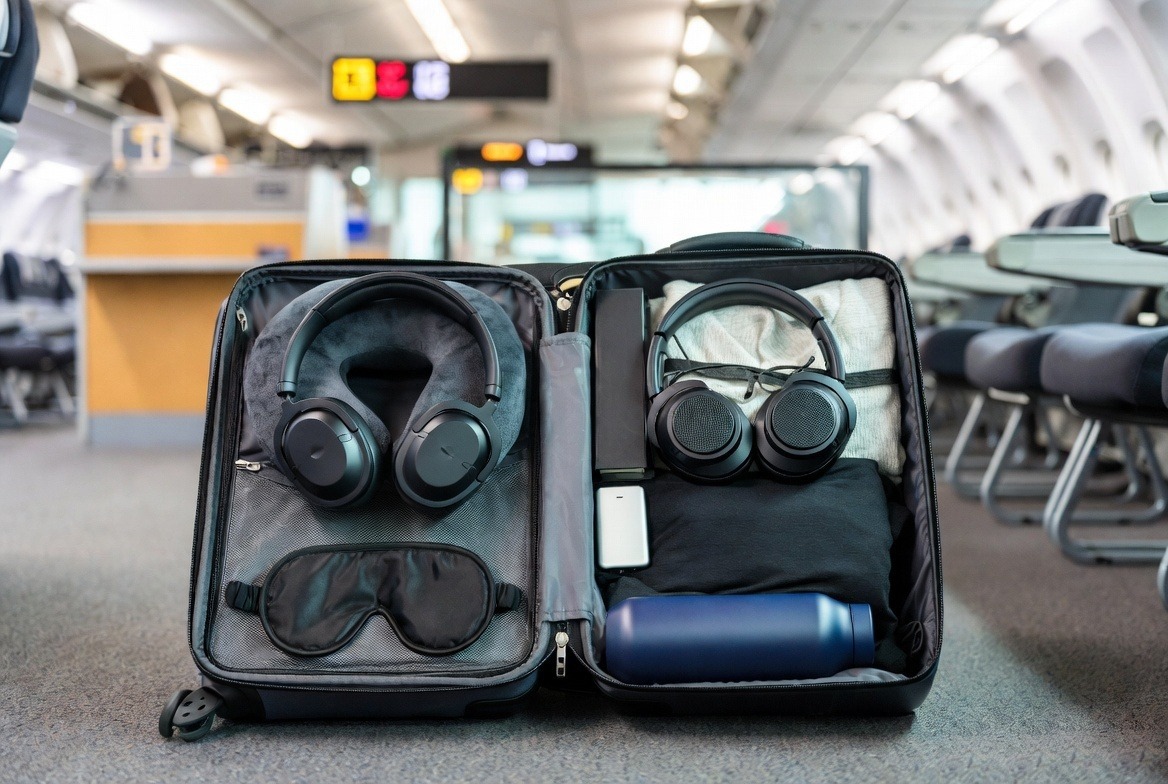
For a 15-hour flight: noise-cancelling headphones (Sony WH-1000XM6), power bank (Anker 733), neck pillow (Trtl Plus), filter water bottle (Hydros), reading material (Kindle Paperwhite), compression packing cubes for organized bag access, and a slim RFID-blocking wallet (Ekster Senate). These seven items address the main comfort, power, hydration, and organization challenges of ultra-long-haul flying. Additional items like an eye mask, earplugs, and compression socks complement this core kit.
What travel gear is worth buying on a tight budget?
The highest-value items on a tight budget are the Anker 733 GaNPrime ($59–$79), the Hydros Filter Bottle ($29–$39), and Airalo eSIM (from $5). Together these solve the three most practically impactful problems — charging, hydration, and connectivity — for under $130. The Trtl Pillow Plus ($59–$69) adds enormous comfort value for its price. These four items represent the best entry-level carry-on travel essentials for long flights if you’re building a kit from scratch.
Conclusion: Build Your Long-Flight Kit, Fly Better
A 14-hour flight doesn’t have to be 14 hours of endurance. With the right gear in your carry-on, it can be productive, restful, or at least genuinely comfortable — and the difference between those two experiences is almost entirely down to preparation.
The best travel gear for long flights in 2026 isn’t necessarily the most expensive. The Sony XM6 headphones are a premium investment, but the Trtl Pillow Plus, the Hydros Filter Bottle, and Airalo eSIM are all under $70 and deliver disproportionate value for their price. Start with the items that address your biggest pain points — for most travelers, that’s noise and power — and build from there.
If there’s one thing experienced long-haul travelers will tell you, it’s this: the gear decisions you make before you board matter more than anything you can do once you’re in the air. You can’t upgrade your seat on the fly. You can’t un-forget your neck pillow. But you can show up at the gate with a carry-on that’s genuinely ready for whatever the next 14 hours brings.
Ready to upgrade your long-flight experience?
Share this guide with a fellow traveler who deserves a better seat experience. Drop a comment below with your personal long-haul must-have — we read every one and update this guide based on reader feedback.
→ Browse our full 2026 travel gear archive for more expert-tested recommendations
Last updated: June 2026 | All prices USD, subject to change | Some links may earn a commission at no extra cost to the reader.