






Introduction
There’s a specific kind of dread that comes with international travel – not the flight itself, but the what-if-it-goes-wrong scenarios. What if your checked bag doesn’t make the connection in Frankfurt? What if your phone dies during a 6-hour layover and you can’t find your hotel confirmation? What if you land after 16 hours of travel with dry skin, a stiff neck, and nothing to freshen up with before an important meeting?
People find waiting more tolerable when they can see the work being done on their behalf
“Labor Illusion” insight
Every one of those problems has the same root cause: too much depending on your checked luggage, and not enough thought going into your carry-on.
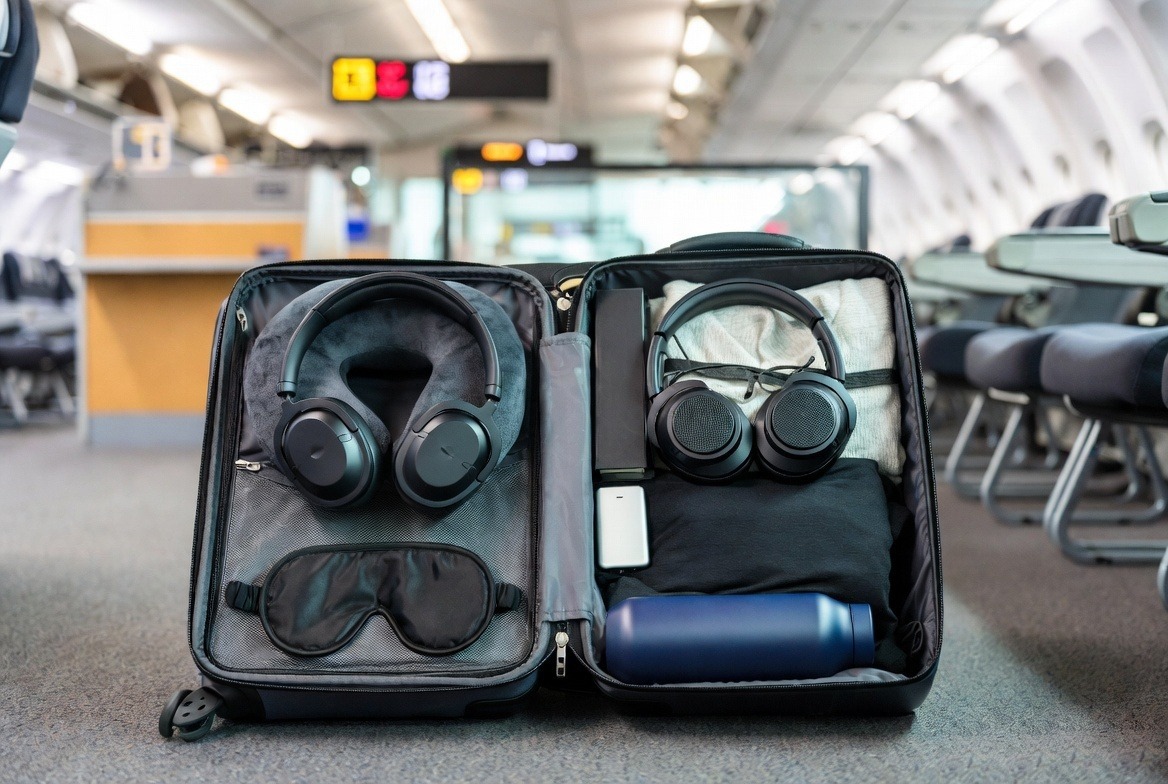
Smart carry-on packing isn’t about cramming more stuff into a bag. It’s about making sure the things you’ll actually need – during the flight, during a layover, or in the first few hours after landing – are within arm’s reach, not buried in a suitcase that’s currently somewhere over the Atlantic without you.
This guide covers the best carry-on travel essentials for international trips across 16 categories, from the obvious (noise-cancelling headphones, a good neck pillow) to the items most people only think to pack after their first bad experience without them (sanitizing wipes, a passport wallet, a universal adapter that actually works in the socket you’re staring at). For each one, we’ll cover what it does, who it’s genuinely useful for, and where the budget and premium options diverge – because not every item on this list needs the expensive version.
Whether you’re a first-time international flyer or someone who’s done this often enough to have opinions about it, there’s something here worth reconsidering about your current carry-on setup.
Tip: Before you pack anything else, separate your carry-on mentally into two groups: things you need during the flight, and things you need if your checked bag is delayed. If an item fits both categories, it goes in your carry-on without debate.
Quick Comparison Table
Here’s the full lineup at a glance – use this to figure out what’s missing from your current kit, then jump to the detailed sections for the items that matter most to your trip.
|
Product |
Best For |
Key Features |
Pros |
Cons |
Price Range |
|
Trtl Pillow Plus |
Side-sleepers, red-eyes |
Rigid internal neck support frame |
Real support, 148g |
One-side lean only |
$59-69 |
|
Sony WH-1000XM6 |
Noise, focus, sleep |
Best-in-class ANC, 40hr battery |
Transformative quiet |
Bulkier than earbuds |
$349-399 |
|
Anker 733 GaNPrime |
Charging anxiety |
65W charger + 10,000mAh bank |
Two devices, one item |
Slow self-refill |
$59-79 |
|
Eagle Creek Pack-It Folders |
Document & flat-item organization |
Padded folders for documents/tech |
Keeps papers crease-free |
Adds rigid bulk |
$25-40 |
|
Physix Gear Compression Socks |
DVT prevention, swelling |
20-30mmHg graduated compression |
Medical-grade, cheap |
Tight at first wear |
$14-22 |
|
Hydros Filter Bottle |
Hydration, savings |
Squeeze-filter, 750ml/min |
Pays for itself fast |
22oz capacity |
$29-39 |
|
Ekster Senate Wallet |
Passport & card security |
RFID-blocking, quick-eject cards |
Certified RFID, slim |
Premium price |
$89-109 |
|
Chipolo CARD Spot Tracker |
Locating lost items |
Apple Find My / Google compatible |
Thin, long battery |
Needs Bluetooth range |
$25-35 |
|
Bagsmart Electronic Organizer |
Cable management |
EVA clamshell, elastic loops |
Ends security fumbling |
Rigid when empty |
$18-28 |
|
Epicka Universal Travel Adapter |
All-country plug compatibility |
150+ country compatibility, USB ports |
One adapter, everywhere |
Bulkier than single-country |
$25-35 |
|
Cocoon Mini Toiletry Kit |
Skin/hygiene during flights |
TSA-size hydration essentials |
Combats cabin dryness |
Needs refilling |
$15-35 |
|
Osprey Farpoint 40 |
Carry-on backpackers |
40L panel-loading, stowaway harness |
Airline-friendly size |
Tight for 3+ weeks |
$180-200 |
|
Eagle Creek Compression Cubes |
Packing organization |
Two-zip compression system |
Fits more, finds faster |
Compression has limits |
$40-55 |
|
Kindle Paperwhite 2024 |
Long-flight reading |
300 PPI, 12-week battery |
No screen fatigue |
Reading only |
$139-159 |
|
Manta Sleep Mask Pro |
Overnight flights |
Contoured eye cups, 100% blackout |
No eye pressure |
Slight bulk |
$30-45 |
|
PURELL Travel Wipes + Mini Hand Sanitizer |
Hygiene on the move |
TSA-compliant, individually wrapped |
Cheap peace of mind |
Single-use waste |
$5-12 |
16 Best Carry-On Travel Essentials for International Trips
1. Trtl Pillow Plus
Neck pillow — the best neck pillow for long haul flights, built around structure rather than stuffing
Most travel pillows give your head somewhere to flop, not somewhere to stay. The Trtl Pillow Plus is different – a rigid internal support frame wrapped in soft fleece holds your head in a more upright position the way a properly adjusted headrest would, if airplane headrests were ever adjusted properly. At 148g, it’s one of the lightest genuinely effective options available.
Why it’s useful for international travel
On a 10+ hour flight, your neck spends hours fighting gravity every time your head drifts forward or sideways. That low-grade muscular tension compounds – it’s a big part of why people land feeling like they slept in a car. The Trtl’s structural support actually reduces that fight, rather than just cushioning the fall.
Key features
- Rigid ribbed plastic support structure under a fleece exterior
- Three adjustable head-lean angles via velcro
- 148g – among the lightest effective travel pillows
- Machine washable cover
- Folds flat and straps to a bag handle
Pros and cons
✔ Noticeably reduces neck stiffness on arrival
✔ Machine washable – solves the hygiene issue most inflatable pillows ignore
✔ 148g means it’s essentially free to carry
✘ Only supports a lean to one side – less ideal for centered sleepers
✘ Visible plastic structure isn’t to everyone’s taste
✘ Takes a flight or two to dial in your preferred angle
Best for: Side-sleepers on red-eyes and long-haul international routes, and anyone who’s given up on inflatable pillows after one too many disappointing flights.
Budget vs premium: Budget pick: the basic horseshoe inflatable ($8-12) packs flatter but provides essentially no real support. Premium pick: the Cabeau Evolution Classic ($59) offers 360-degree memory foam coverage for centered sleepers, but it’s noticeably bulkier in a carry-on than the Trtl.
Real-world usage example
On a 13-hour flight to Tokyo, you angle the Trtl toward the window two hours after dinner service. Your head stays roughly where you put it through several sleep cycles, and you wake for landing without the usual neck crick that used to take half a day to wear off.
2. Sony WH-1000XM6
Noise-cancelling headphones — the single highest-impact item on this entire list
If frequent international flyers agree on one thing, it’s this: noise-cancelling headphones change how a long flight feels more than almost anything else you can pack. The Sony WH-1000XM6’s 8th-generation QN3 chip is particularly effective against the low-frequency engine drone that dominates cabin noise, and the 40-hour battery means you won’t think about charging them for the entire trip.
Why it’s useful for international travel
Cabin noise sits mostly in a low-frequency range that’s exhausting over many hours even when you’re not consciously aware of it. Good ANC doesn’t just improve your in-flight movie – it removes a steady physical stressor your body has been responding to since takeoff. Travelers who switch to quality ANC consistently report feeling less wiped out on arrival, independent of how much they slept.
Key features
- QN3 noise-cancelling chip tuned for low-frequency suppression
- 40-hour battery, 3-minute quick charge for 3 hours playback
- Bluetooth 5.4 with true multipoint pairing (phone + laptop)
- Adaptive Sound Control adjusts automatically to environment
- Foldable design with included case
Pros and cons
✔ The clearest, most immediate comfort upgrade for any long flight
✔ 40-hour battery removes charging anxiety entirely
✔ Multipoint pairing genuinely useful for switching devices mid-trip
✘ Bulkier in a bag than true wireless earbuds
✘ Touch controls take a flight or two to learn
✘ Premium price relative to budget ANC options
Best for: Anyone flying 6+ hours internationally, and especially travelers who work, study, or need real focus despite cabin noise.
Budget vs premium: Budget pick: the Soundcore Q20i ($60) offers decent ANC at a fraction of the price, with a noticeably less refined sound and weaker noise suppression on low frequencies. Premium pick: Bose QuietComfort Ultra ($429) has a warmer sound signature; both sit at the top of the category, with Sony generally edging ahead on raw engine-noise suppression.
Real-world usage example
Boarding starts, you put the headphones on before you’re even seated, and by the time the safety demo plays you’ve already forgotten the engines exist. Seven hours later you’re still wearing them, working through a podcast backlog, with plenty of battery left for the rest of the trip.
3. Anker 733 GaNPrime
Portable charger / power bank — the 2-in-1 device that quietly fixes your entire charging situation
Seatback USB ports on most aircraft deliver 5-18W – enough to maintain a phone under light use, but not enough to charge a laptop or keep up with active use across multiple devices. The Anker 733 GaNPrime combines a 65W GaN wall charger with a 10,000mAh power bank in one 244g unit: plug it in at the gate and it charges your devices and itself simultaneously, then runs independently once you’re seated.
Why it’s useful for international travel
Charging anxiety is a real, low-grade stress on international trips – that mental tally of remaining battery across phone, laptop, headphones, and e-reader, especially during long layovers with limited outlet access. The Anker 733 effectively eliminates it by replacing two separate items with one that does both jobs well.
Key features
- 65W max USB-C output – fast-charges most ultrabooks
- 10,000mAh internal battery (roughly 2.5 phone charges)
- Three ports: 65W USB-C, 20W USB-C, 12W USB-A
- PowerIQ 4.0 automatically detects each device’s optimal charge rate
- 37Wh capacity – comfortably within airline carry-on limits
Pros and cons
✔ Genuinely replaces two items without compromise on either function
✔ 65W output is rare at this size and price
✔ 244g is barely noticeable in a daypack
✘ Refilling the 10,000mAh battery from empty takes several hours
✘ US-plug version needs an adapter for international sockets
✘ No wireless charging output
Best for: Business travelers, digital nomads, and anyone juggling a phone, laptop, and headphones across a long international travel day.
Budget vs premium: Budget pick: a basic 10,000mAh power bank without the charger function ($20-25) covers phone charging only. Premium pick: the Mophie Powerstation Pro ($120) adds wireless charging but is heavier and pricier – worth it only if wireless charging specifically matters to you.
Real-world usage example
At a layover in a hub airport, you plug the Anker into a wall outlet and over 90 minutes it tops up your phone, charges your laptop to full, and recovers most of its own battery. On the next 9-hour leg, it runs your phone and headphones with zero outlet access needed.
4. Eagle Creek Pack-It Reveal Document Organizer
Travel document organizer — keeps your passport, boarding passes, and paperwork from becoming a crumpled mess
International travel generates paper – boarding passes, hotel confirmations, visa documents, customs forms, sometimes vaccination records. A dedicated document organizer with padded, semi-rigid construction keeps everything flat, in one place, and quick to produce at immigration without digging through your whole bag.
Why it’s useful for international travel
At immigration in an unfamiliar airport, having every document in one slim folder – rather than scattered across pockets, your phone’s photo gallery, and a crumpled printout – visibly speeds up the process and reduces the stress of being the person holding up the queue.
Key features
- Padded, semi-rigid construction protects documents from bending
- Multiple slots for passport, boarding passes, and folded A4/letter paper
- Often includes a pen loop and small zippered pocket for cards or cash
- Compact enough to fit in a jacket pocket or bag’s front compartment
Pros and cons
✔ Keeps important documents from getting crumpled or lost in a packed bag
✔ Speeds up immigration and check-in by having everything in one place
✔ Doubles as a place to keep printed itineraries and hotel vouchers
✘ Adds a small amount of rigid bulk compared to just using a folder
✘ Some models are sized for specific paper formats (check A4 vs letter)
✘ Doesn’t replace digital backups – still worth photographing documents separately
Best for: International travelers dealing with visas, multiple boarding passes across connecting flights, or any paperwork-heavy itinerary.
Budget vs premium: Budget pick: a simple zippered pouch ($8-12) does the basic job of keeping documents together. Premium pick: the Eagle Creek version ($25-40) adds padding and structured slots that prevent documents from bending – a small but appreciated upgrade on a multi-leg trip.
Real-world usage example
At a connecting flight in a country where you need to show a visa, return ticket confirmation, and accommodation proof, you open one folder and have all three ready – instead of scrolling through your phone while an immigration officer waits.
5. Physix Gear Sport Compression Socks
Compression socks — the unglamorous item with the most direct health payoff on this list
Long flights and prolonged sitting are a documented risk factor for deep vein thrombosis (DVT) – blood clots that can form in the legs during extended immobility. Graduated compression socks, which apply more pressure at the ankle and gradually less toward the knee, are one of the few travel items with genuine medical backing rather than just marketing language. Physix Gear’s socks deliver 20-30mmHg compression, within the range generally recommended for flights.
Why it’s useful for international travel
Beyond DVT risk specifically, most travelers who wear compression socks on long international flights report noticeably less ankle and foot swelling on arrival – that tight-shoe feeling after sitting for 10+ hours. For $14-22, it’s one of the highest health-benefit-per-dollar items you can pack.
Key features
- 20-30mmHg graduated compression (firmest at ankle, easing toward knee)
- Moisture-wicking nylon/spandex blend
- Reinforced heel and toe stitching for durability
- Stays in place without a tight band cutting into the calf
Pros and cons
✔ Medically meaningful compression level, not a token gesture
✔ Holds up through repeated washing without going slack
✔ Genuinely reduces the heavy-leg feeling after long sits
✘ Feels tight on first wear if you’ve never worn compression gear
✘ Slightly warmer than regular socks
✘ Doesn’t replace getting up and walking the aisle periodically
Best for: Anyone on a flight over 4-5 hours, particularly travelers with any personal or family history of circulation issues, and frequent international flyers.
Budget vs premium: Budget pick: generic 15-20mmHg compression socks ($8-12) provide mild benefit but fall short of the clinically recommended range. Premium pick: CEP Progressive Compression Socks ($45-60) are athlete-grade and used by some vascular specialists – a reasonable upgrade for very frequent flyers.
Real-world usage example
On a 13-hour flight with limited aisle access, you put the compression socks on before boarding, get up to walk twice when you can, and land without the usual swollen-ankle feeling that used to take half a day to fade.
6. Hydros Filter Bottle
Reusable water bottle — turns every airport water fountain into a free refill station
You can’t carry liquids through security, which means most international travelers either go thirsty until they find a shop post-security or pay $4-8 for bottled water – repeatedly, across a multi-leg trip. The Hydros Filter Bottle has a squeeze-activated carbon filter built in, so you fill it empty at any water fountain after security and drink filtered water immediately, no waiting.
Why it’s useful for international travel
Cabin air on long-haul flights is notably dry, and dehydration compounds jet lag symptoms. A bottle that makes refilling effortless removes the friction that usually leads people to just not bother – especially useful across multi-leg international itineraries with several airports in one day.
Key features
- Squeeze-activated carbon filter – drinks at normal speed, no pre-filtering wait
- 750ml/min flow rate
- Removes chlorine, sediment, and many organic contaminants
- Collapsible body folds flat when empty
- Filter rated for roughly 1,000 liters (~$12 to replace)
Pros and cons
✔ Pays for itself within a couple of trips in avoided bottle purchases
✔ Collapsible design genuinely reduces bag bulk when empty
✔ Filter replacement cost is minor over its lifespan
✘ Not rated for viral filtration – fine for tap water in most destinations, not untreated sources
✘ Collapsible walls feel less rigid than a hard bottle
✘ 22oz capacity means more frequent refills on very long flights
Best for: Budget-conscious travelers, anyone doing multi-leg international itineraries, and eco-minded flyers avoiding single-use plastic.
Budget vs premium: Budget pick: any basic empty bottle ($5-10) lets you refill post-security but won’t filter questionable tap water at some destinations. Premium pick: the Grayl GeoPress ($89) filters viruses and bacteria too, but is heavier and bulkier – useful for destinations with less reliable water quality.
Real-world usage example
Empty bottle through security, fill it at the first water fountain you pass, and you’re hydrated for the first leg without spending anything. At your layover, refill again before the next flight – by the end of a three-leg trip, you’ve avoided half a dozen bottle purchases.
7. Ekster Senate Slim Wallet
Passport wallet & RFID accessories — the wallet upgrade that pays off the moment you’re in a crowded transit hub
RFID skimming – wirelessly reading card data from a few centimeters away – is a real risk in crowded international transit environments. The Ekster Senate is a slim, certified RFID-blocking wallet with a spring-loaded quick-eject mechanism that fans out your cards in one motion, plus a built-in tracker slot compatible with Chipolo’s CARD Spot for Apple Find My / Google Find My Device.
Why it’s useful for international travel
International travel means your passport, cards, and cash are all more valuable and harder to replace than at home. A slim, secure wallet with certified RFID protection – not just a marketing claim – and a built-in tracker addresses both the security risk and the low-grade anxiety of misplacing something in an unfamiliar environment.
Key features
- Spring-loaded quick-eject mechanism fans out cards in one motion
- Certified RFID blocking on all card slots (ISO 14443 standard)
- Built-in tracker card slot (Chipolo CARD Spot compatible)
- Holds 1-6 cards plus folded cash
- Full-grain leather, ages well over time
Pros and cons
✔ Quick-eject is genuinely faster than fumbling through a traditional wallet
✔ RFID protection is certified, not just claimed
✔ Tracker integration adds security without adding bulk
✘ Premium price for a wallet at $89-109
✘ Limited to about 6 cards – not for heavy card carriers
✘ Cash storage is functional but not generous for thick currency
Best for: Business travelers, frequent international flyers, and anyone passing through high-density tourist environments where card skimming is a documented risk.
Budget vs premium: Budget pick: a basic RFID-blocking sleeve for your passport and cards ($10-15) covers the core protection without the quick-eject mechanism or tracker. Premium pick: the Ekster Senate ($89-109) adds the tracker slot and faster card access – worth it if you’ve ever misplaced a wallet while traveling.
Real-world usage example
In a crowded metro station in a city where pickpocketing is common, you keep the slim wallet in a front pocket. At a ticket counter, one press fans out your transit card without you needing to open anything – less time with your wallet out, less exposure.
8. Chipolo CARD Spot
Item tracker — the thin tracking card that turns ‘where did I put my passport’ into a two-second check
Beyond the wallet itself, a dedicated Bluetooth tracker – thin enough to slide into a passport sleeve, bag pocket, or the dedicated slot in the Ekster wallet above – means you can locate misplaced items via Apple’s Find My network or Google’s Find My Device network, both of which have enormous device coverage in most international cities.
Why it’s useful for international travel
On a multi-leg trip with several hotel rooms, taxis, and transit changes, the odds of briefly losing track of something – a bag left at a cafe, a jacket with your passport in the pocket – go up. A tracker doesn’t prevent that, but it dramatically shortens the panic window before you find it again.
Key features
- Credit-card-thin form factor fits in wallets, passport sleeves, or bag pockets
- Compatible with Apple Find My (works on iPhone) and Google Find My Device (Android)
- Replaceable battery lasting roughly 1-2 years
- Works via crowdsourced Bluetooth network – doesn’t require its own data plan
Pros and cons
✔ Genuine peace of mind for passports, wallets, and bags
✔ No subscription or ongoing cost beyond occasional battery replacement
✔ Thin enough that it doesn’t change how anything else fits
✘ Relies on Bluetooth range and nearby compatible devices – less effective in very remote areas
✘ Battery isn’t rechargeable, just replaceable
✘ Only useful if paired with the right item before you travel – easy to forget
Best for: Anyone traveling with a passport, wallet, or bag they’d be genuinely stressed to lose – which is to say, most international travelers.
Budget vs premium: Budget vs premium isn’t really the axis here – at $25-35, it’s already an inexpensive add-on. The real choice is Apple Find My vs Google Find My Device depending on your phone, and most travelers should just match it to whichever ecosystem they’re already in.
Real-world usage example
After a long layover, you realize your day bag – with your passport wallet inside – isn’t where you thought. A quick check of the Find My app shows it’s still at the cafe two gates back, and you retrieve it with ten minutes to spare before boarding.
9. Bagsmart Electronic Organizer
Tech / cable organizer — ends the cable-tangle archaeology dig at security forever
Every frequent traveler knows this moment: security asks you to remove electronics, and what should take ten seconds turns into a small excavation project as you untangle a charging cable from a pair of earbuds from a power bank from a second cable you forgot you packed. The Bagsmart Electronic Organizer is a structured EVA clamshell case with elastic loops, mesh pockets, and dedicated slots that keeps everything visible and separated.
Why it’s useful for international travel
Beyond the security-line benefit, a dedicated electronics pouch means you can find your charging cable at 2am in a dim cabin without unpacking half your bag – particularly useful on international trips where you’re also managing an adapter, an eSIM device, and possibly a second phone.
Key features
- Rigid EVA clamshell maintains its shape even when not full
- Multiple elastic retainers sized for different cable types
- Mesh pockets for small items – adapters, SD cards, earbuds
- Large enough for a 10,000mAh power bank plus accessories
- Water-resistant exterior
Pros and cons
✔ Makes airport security meaningfully faster – one pouch out, everything visible
✔ Opens flat, so nothing needs to be removed to access it
✔ Holds up well over repeated use thanks to the EVA structure
✘ Takes up a fixed amount of space whether full or half-empty
✘ Medium size is tight for travelers carrying a lot of tech
✘ Water-resistant, not waterproof
Best for: Every international traveler carrying more than one charging cable and a universal adapter – which is to say, almost everyone.
Budget vs premium: Budget pick: the WANDF organizer ($18) is a capable alternative with slightly less durable zippers. Premium pick: the Peak Design Tech Pouch ($70-90) uses an origami-style fold-out design with modular dividers – a meaningful upgrade if you’re also carrying camera gear.
Real-world usage example
At a security checkpoint in a busy international hub, you pull one pouch from your bag, place it in the tray, and walk through. No fishing for a second cable buried under a jacket. On the other side, you’re repacked and walking within 30 seconds.
10. Epicka Universal Travel Adapter
Universal travel adapter — the one item that determines whether anything else in your bag actually charges
Every other piece of electronics in your carry-on is useless at your destination if it can’t physically plug into the wall. The Epicka Universal Travel Adapter covers plug types for 150+ countries in one compact unit, with built-in USB-A and USB-C ports so you can often skip packing separate USB chargers for smaller devices.
Why it’s useful for international travel
International trips frequently involve multiple countries with different plug standards – even a single trip through Europe can mean two or three different plug types depending on the country. A universal adapter removes the need to research and buy country-specific adapters for every leg.
Key features
- Covers plug types for 150+ countries (UK, EU, US, Australia, and more)
- Built-in USB-A and USB-C ports for direct device charging
- Compact, foldable prongs for safe packing
- Often includes a fuse for basic surge protection
Pros and cons
✔ One adapter covers an entire multi-country itinerary
✔ Built-in USB ports reduce how many separate chargers you need
✔ Foldable design avoids damaging other items in your bag
✘ Bulkier than a single-country adapter if you only need one plug type
✘ Built-in USB ports are usually lower-wattage than a dedicated GaN charger
✘ Doesn’t convert voltage – check device compatibility for high-power appliances
Best for: Anyone visiting more than one country per trip, or simply anyone who doesn’t want to think about plug types before every international departure.
Budget vs premium: Budget pick: a single-country adapter ($5-10) is fine if your entire trip is to one country with one plug standard. Premium pick: adapters with additional USB-C PD ports (~$35-40) can fast-charge phones and some laptops directly, reducing how many separate chargers you need.
Real-world usage example
A trip through the UK, mainland Europe, and then a stopover in Australia means three different plug types – but the same adapter works in all three, and its built-in USB-C port charges your phone directly without a separate charging brick.
11. Cocoon Mini Toiletry Kit
Mini toiletry / skincare kit — the small addition that addresses the ‘why does my face feel like paper’ problem
Cabin humidity on long-haul flights often sits in the single digits – drier than most deserts. Skin, lips, and sinuses feel it within a few hours, and the effect compounds the longer the flight. A compact, TSA-compliant toiletry and skincare kit with a hydrating mist, lip balm, and moisturizer addresses a discomfort that’s near-universal but rarely planned for.
Why it’s useful for international travel
It’s a small thing, but the difference between landing with tight, dry skin and a mild headache versus landing feeling reasonably normal often comes down to whether you did anything about cabin dryness during the flight – and on international trips where you might go straight from the airport to a meeting or event, that difference is more visible than usual.
Key features
- TSA-compliant travel sizes (under 100ml/3.4oz per item)
- Typically includes a hydrating facial mist, moisturizer, and lip balm
- Compact pouch fits in a seat pocket or small bag compartment
- Many kits use fragrance-free, sensitive-skin-friendly formulas
Pros and cons
✔ Addresses a near-universal discomfort most travelers don’t pack for
✔ Genuinely small – doesn’t compete for carry-on space in any meaningful way
✔ Useful well beyond flights, for hotel rooms with dry air conditioning too
✘ Travel sizes run out and need periodic refilling
✘ Quality varies significantly between kit brands – check ingredient lists
✘ Some find facial mists impractical in a cramped middle seat
Best for: Anyone on flights over 5-6 hours, travelers prone to dry skin or chapped lips, and those flying directly into meetings or events after landing.
Budget vs premium: Budget pick: assemble your own from existing travel-size products ($5-10) – works fine, just requires remembering to do it. Premium pick: pre-assembled kits with curated, sensitive-skin formulas ($25-35) remove the planning step entirely.
Real-world usage example
Around hour five of a long flight, your face starts to feel tight and your lips are chapping despite the water you’ve been drinking. A quick application of moisturizer and lip balm – barely interrupting your movie – and that dried-out feeling doesn’t follow you off the plane.
12. Osprey Farpoint 40
Carry-on backpack — the carry-on that’s built around how international flights actually treat your bag
For travelers who prefer a backpack to a roller bag – particularly useful when your itinerary includes cobblestones, train stations, or multiple transport changes – the Osprey Farpoint 40 remains a benchmark choice. At 40L with a panel-loading main compartment (it opens like a suitcase rather than from the top), and a harness system that zips away cleanly for check-in, it balances genuine packing capacity against carry-on size limits on most international carriers.
Why it’s useful for international travel
On international itineraries with layovers, your carry-on needs to function as your bag for hours at a time – through security, around terminals, sometimes worn through an entire layover. A bag designed for that kind of use, rather than just sitting in an overhead bin, makes a tangible difference.
Key features
- 40L panel-loading main compartment – full suitcase-style access
- Stowaway harness and hip belt zip away for clean bag-drop at check-in
- Padded sleeve fits most 15-inch laptops
- External compression straps reduce profile for strict overhead bins
- Lifetime warranty (Osprey’s AllMighty Guarantee)
Pros and cons
✔ Panel loading is dramatically easier to pack and access mid-trip than a top-loader
✔ Compression straps genuinely help meet tighter international carry-on sizers
✔ Comfortable enough for full-day wear through layovers
✘ 40L feels tight for trips longer than 2-3 weeks without laundry access
✘ Hip belt is adequate but not built for serious hiking loads
✘ No dedicated external water bottle pockets
Best for: Travelers who prefer backpacks over roller bags, especially on multi-city international itineraries involving trains, buses, or uneven terrain in addition to flights.
Budget vs premium: Budget pick: the REI Co-op Ruckpack 40 ($199) has a better hip belt but is less refined for urban international travel. Premium pick: the Nomatic Travel Pack 40L ($329) has more refined organization and laptop-specific features, at a meaningfully higher price.
Real-world usage example
A long-haul flight followed by a four-hour layover and a connecting flight to a smaller regional airport – you wear the Farpoint through the entire layover and security again without it ever feeling like dead weight the way a roller bag would on stairs.
13. Eagle Creek Pack-It Compressors
Packing cubes — the packing upgrade that makes a carry-on-only international trip realistic
Compression packing cubes use a two-zip system: the first zip closes the cube normally, the second compresses it down by forcing out excess air – reducing volume by up to 40%. For international trips where you’re trying to avoid checked baggage fees and delays entirely, that compression can be the difference between a bag that closes and one that doesn’t.
Why it’s useful for international travel
Beyond the space savings, packing cubes mean you’re not unpacking your entire bag at every hotel or hostel – pull out the cube you need, and everything else stays packed and organized, which matters more on multi-city trips with frequent re-packing.
Key features
- Two-zip compression: standard load zip + compression zip reduces volume ~40%
- Set typically includes multiple sizes for different item types
- Mesh top panel for visual identification without opening
- Durable ripstop nylon construction
- Lifetime guarantee from Eagle Creek
Pros and cons
✔ Compression is genuinely useful for fitting more in a carry-on-only setup
✔ Mesh visibility makes finding items fast without unpacking
✔ Lifetime guarantee means a one-time purchase
✘ Compression only works well on soft, compressible items – not shoes or hard goods
✘ Opening and recompressing takes slightly longer than a standard cube
✘ Premium price compared to basic packing cubes
Best for: Anyone trying to do an international trip carry-on-only, especially for longer durations where every liter of space matters.
Budget vs premium: Budget pick: the Amazon Basics compression cube set ($24-35) performs similarly for most clothing items at a lower price, with less durable zippers over the long term. Premium pick: Eagle Creek’s lifetime guarantee makes the $40-55 price a one-time cost rather than a recurring one.
Real-world usage example
A two-week international trip with no checked bag means every centimeter of your 40L pack matters. Compression cubes for clothes free up enough space to fit a week’s worth of layers into what would otherwise have been a tight five days’ worth.
14. Kindle Paperwhite (2024)
Tablet / e-reader — three weeks of reading material that weighs 207 grams and never needs charging mid-trip
The Kindle Paperwhite’s 300 PPI e-ink display is genuinely comfortable to read for hours in a way phone and tablet screens aren’t – and on a 10+ hour international flight, the cumulative eye strain from screen reading is real. The 12-week battery life means you won’t think about charging it for the entire trip, and at 207g it’s lighter than most paperbacks.
Why it’s useful for international travel
Long-haul flights involve a lot of dead time, and reading on a phone for hours contributes to the general screen fatigue that makes arrival feel worse. An e-ink device removes that contributor entirely, while also meaning you’re not relying on in-flight entertainment systems that vary wildly in quality between airlines.
Key features
- 8-inch 300 PPI Paperwhite display – glare-free and readable in all lighting
- Up to 12 weeks battery life on a single charge
- 32GB storage – thousands of books, audiobooks, and magazines
- IPX8 waterproof – pool, beach, and bath safe
- Adjustable warm/cool front light for nighttime reading
Pros and cons
✔ 12-week battery eliminates any charging concern for the trip
✔ E-ink dramatically reduces eye fatigue versus phone reading on long flights
✔ 207g is lighter than most paperback books
✘ Kindle ecosystem – epub files require a Calibre workaround
✘ Reading device only, no general-purpose functionality
✘ Base model has lock-screen ads (removable for a small fee)
Best for: Any international traveler who reads regularly, particularly on routes over 6 hours where screen fatigue compounds.
Budget vs premium: Budget pick: the basic Kindle ($99) saves $40-60 but loses the larger screen and waterproofing – both genuinely useful for travel. Premium pick: the Kobo Libra 2 ($179) offers better native ePub support and physical page-turn buttons for readers who want full format freedom.
Real-world usage example
On a 14-hour flight followed by a 6-hour layover, you read for several hours, doze, read again – and the Kindle is still showing well over half its battery by the time you land at your final destination two days later.
15. Manta Sleep Mask Pro
Sleep mask — the sleep mask for people who gave up on sleep masks
Most sleep masks fail for a specific, under-discussed reason: the fabric or foam presses directly against your eyelids, which is uncomfortable enough to prevent the deep sleep you bought the mask for in the first place. The Manta Sleep Mask Pro uses contoured eye cups that create physical space between the mask and your eyes – you can blink, and even briefly open your eyes, without light getting in or the mask touching your eyes at all.
Why it’s useful for international travel
On an overnight international flight, sleep quality matters more than sleep duration – a poor two hours with your eyes uncomfortably pressed can leave you feeling worse than no sleep at all. The eye-cup design addresses a comfort problem most travelers have simply learned to tolerate without realizing there’s a better option.
Key features
- Contoured eye cups create a gap between mask and eyes
- 100% blackout via cup geometry, not just fabric density
- Adjustable cup positioning for different face shapes
- Breathable moisture-wicking lining
- Adjustable, no-slip strap
Pros and cons
✔ Solves the eye-pressure problem that defeats most foam masks
✔ Genuinely total blackout – useful for daytime naps with window shades up
✔ Machine washable with included carry pouch
✘ Eye cups add a bit more bulk than a flat foam mask
✘ Higher price than basic masks
✘ Strap can shift slightly during very active sleepers’ movement
Best for: Overnight and red-eye international flyers, anyone who’s tried sleep masks before and found them uncomfortable, and light sleepers sensitive to any brightness.
Budget vs premium: Budget pick: the Alaska Bear Natural Sleep Mask ($12) is a fine foam option but will press on your eyes the way most masks do. Premium pick: the Manta’s higher price is specifically justified for travelers who’ve found foam masks uncomfortable before – if that’s never been an issue for you, a cheaper mask may be perfectly adequate.
Real-world usage example
On a daytime international flight with the window shade up because your row-mate wants the view, you put the Manta on and the cabin might as well be pitch dark. You can blink freely without the mask shifting, and the nap you weren’t sure you’d get actually happens.
16. PURELL Travel Wipes + Mini Hand Sanitizer
Sanitizing essentials — the cheapest peace-of-mind item in your entire carry-on
Tray tables, seatbelt buckles, and armrests on aircraft are cleaned between flights with varying thoroughness, and international travel inherently means more contact with shared surfaces – immigration counters, transit handrails, hotel check-in desks. A small pack of sanitizing wipes and a TSA-compliant mini hand sanitizer cost almost nothing and take up almost no space.
Why it’s useful for international travel
It’s not about germ paranoia – it’s about the practical reality that a quick wipe-down of your tray table and armrests takes ten seconds and removes one more thing to think about during a long flight, especially if you’ll be eating from that tray table multiple times.
Key features
- Individually wrapped wipes – convenient and TSA-friendly
- Mini hand sanitizer bottles under 100ml/3.4oz for carry-on compliance
- Alcohol-based formulas effective against most common surface bacteria
- Compact enough to fit in a seat pocket or small bag pocket
Pros and cons
✔ Extremely cheap for the peace of mind provided
✔ Useful well beyond flights – public transit, shared bathrooms, market stalls
✔ Takes up almost no carry-on space
✘ Single-use wipes generate some waste
✘ Alcohol-based sanitizers can dry out skin with frequent use – pair with the skincare kit above
✘ Easy to forget to restock before a trip
Best for: Every international traveler – this is one of the few items on this list with essentially no downside to packing.
Budget vs premium: Budget vs premium isn’t really a meaningful distinction here – at $5-12 for a supply that lasts several trips, the only real choice is travel-size individually wrapped wipes versus a larger bottle you decant into smaller TSA-compliant containers.
Real-world usage example
Before eating an in-flight meal, a quick wipe of the tray table takes ten seconds. At immigration in a busy international arrivals hall, a small squeeze of hand sanitizer after handling your passport through several hands feels like a reasonable habit rather than overcaution.
Carry-On Packing Mistakes to Avoid
Mistake: Packing noise-cancelling headphones, medication, or chargers in checked luggage. These are must have carry on items for long international flights – if your checked bag is delayed (which happens more often on international connections than people expect), you still need these things.
Mistake: Assuming one type of plug adapter covers your whole trip. Many international itineraries cross multiple plug standards even within a single region – a universal adapter removes the guesswork entirely.
Mistake: Forgetting that liquids over 100ml get confiscated at security regardless of how necessary they feel. Decant skincare and toiletries into TSA-compliant containers before you leave home, not at the airport.
Mistake: Packing your ‘flight kit’ items at the bottom of your bag. Eye mask, headphones, charger, and compression socks should be in the most accessible pocket – not buried under clothes you won’t need until arrival.
Mistake: Not photographing your passport, visa, and important documents before you travel. A photo on your phone (and ideally a cloud backup) means you’re not stuck if the physical document is lost or stolen.
Mistake: Choosing a horseshoe inflatable neck pillow because it’s cheap and packs flat, then being surprised it doesn’t actually support your neck on a 12-hour flight. Structural designs solve a different problem than inflatables do.
TSA and Security Tips for International Carry-On
TSA note: The 3-1-1 rule still applies on most routes: liquids, gels, and aerosols in containers of 100ml/3.4oz or less, all fitting in a single quart-sized clear bag. This is what ‘TSA approved travel essentials’ usually refers to in practice.
Pack electronics for fast removal
Many international security checkpoints still require laptops and sometimes tablets out of your bag separately. A bag with a dedicated, easily accessible laptop compartment – or a tech organizer you can pull out as one unit – speeds this up considerably.
Know your power bank limits
Most airlines follow IATA guidelines: power banks up to 100Wh (roughly 27,000mAh) are fine in carry-on without special approval, and up to 160Wh with airline approval. Power banks are never allowed in checked luggage – always carry them on.
Medication and documentation
Carry prescription medication in original packaging with your name visible, along with a copy of the prescription or a doctor’s note for controlled substances – requirements vary by destination country, and it’s worth checking specifics for less common medications before international travel.
Duty-free liquids and connecting flights
Liquids purchased duty-free after security at your departure airport are usually fine to carry onto a connecting flight, but rules vary – particularly if your connection involves re-clearing security in a different country. If in doubt, keep the receipt and the sealed security bag the item was placed in.
How to Pack Efficiently for Long International Trips
Build a ‘flight kit’ and keep it together
Group everything you’ll use during the flight – headphones, eye mask, charger, compression socks, document organizer – into one accessible pocket or pouch. This is the core of smart carry-on packing tips for international trips: not having to dig through your whole bag mid-flight for something you’ll need repeatedly.
Pack by destination-day, not by item type
Instead of one cube for all shirts and another for all pants, consider packing cubes by day or by outfit for shorter international trips – it means less digging through multiple cubes each morning, especially useful on multi-city itineraries with frequent hotel changes.
Wear or carry your bulkiest items
A jacket or travel blanket worn onto the plane, rather than packed, takes up zero bag space – subject to your airline’s personal item policy.
Do a pre-departure device and document audit
The night before: charge headphones, power bank, phone, and e-reader; confirm your eSIM or roaming plan is active; photograph your passport and key documents; and double-check your universal adapter is packed (not still plugged into a wall somewhere).
Minimalist Carry-On Strategies
For travelers aiming to do an entire international trip with just a carry-on – no checked bag at all – a few adjustments make it realistic rather than aspirational:
Prioritize multi-use items
- A travel blanket that doubles as a shoulder wrap or makeshift pillow support
- A tech organizer that holds both cables and a universal adapter together
- A passport wallet that also holds a tracker – two functions, one item
Use compression aggressively, but realistically
Compression cubes can shrink soft clothing significantly, but don’t expect the same from shoes, toiletry bottles, or electronics. Pack compressible items in cubes and accept that hard items take the space they take.
Plan for laundry, not for every outfit
A 40L carry-on with compression cubes can realistically support a 1-2 week trip if you plan for one laundry stop, rather than packing a fresh outfit for every single day.
Economy vs Business Traveler Recommendations
Business class seats already solve some of the problems this guide addresses – lie-flat or near-flat seats reduce the urgency of certain comfort items, and better seat power often reduces (though doesn’t eliminate) charging concerns. But several items remain just as valuable regardless of cabin.
Items that matter in both cabins
- Noise-cancelling headphones – cabin noise doesn’t change much between economy and business
- Sleep mask – even business class cabins have ambient light from other passengers’ screens
- Compression socks – DVT risk relates to immobility, not seat width
- Passport wallet and tracker – security and loss risk don’t change with cabin class
Items that matter more in economy
- Neck pillow – business class seats with proper headrests reduce but don’t eliminate the need
- Travel adapter with USB ports – economy seats are less likely to have built-in universal power
- Compression packing cubes – more relevant if you’re also avoiding checked-bag fees
Items that matter less in business class
- Seat-related comfort items are less critical on lie-flat seats
- A laptop stand or tray-table workaround is less necessary when you can work reclined
Best Carry-On Setup for 10+ Hour Flights
If you’re optimizing specifically for travel essentials for 10+ hour flights, here’s a realistic priority order based on impact:
Tier 1 – highest impact
- Sony WH-1000XM6 (or similar ANC headphones) – the single biggest comfort upgrade
- Trtl Pillow Plus – structural neck support for sleep
- Manta Sleep Mask Pro – genuine blackout for overnight routes
Tier 2 – meaningful difference
- Anker 733 GaNPrime – removes charging anxiety for the whole trip
- Physix Gear Compression Socks – circulation and swelling
- Hydros Filter Bottle – hydration without post-security purchases
Tier 3 – small but worthwhile
- Cocoon Mini Toiletry Kit – combats cabin dryness
- Kindle Paperwhite – screen-fatigue-free entertainment
- PURELL wipes – quick tray table cleanup before meals
Realistic starter budget: Tier 1 alone runs roughly $440-510 and addresses the three most commonly cited long-flight complaints: noise, neck support, and sleep quality. Tiers 2 and 3 combined add another $115-165 and round out hydration, circulation, power, and comfort.
Internal Linking Suggestions
- Best Travel Gear for Long Flights in 2026
- Top 10 Amazon Travel Finds Worth Buying in 2026
- How to Pack a Carry-On for a 3-Week International Trip
- Digital Nomad Packing List 2026
- Best Noise-Cancelling Headphones Compared – Buyer’s Guide
- TSA Rules for International Travel: What You Need to Know
Suggested Image Alt Text
- Trtl Pillow Plus neck pillow with rigid support frame for international flights
- Sony WH-1000XM6 noise-cancelling headphones for long haul travel
- Anker 733 GaNPrime portable charger and power bank for travelers
- Eagle Creek travel document organizer with passport and boarding passes
- Compression socks for DVT prevention on international flights
- Collapsible filter water bottle for international travel
- Ekster Senate slim RFID-blocking passport wallet
- Chipolo CARD Spot Bluetooth tracker in a passport sleeve
- Carry-on electronics organizer with cables and adapters packed
- Universal travel adapter with USB ports for multiple countries
- Mini travel skincare kit with TSA-compliant bottles
- Osprey Farpoint 40 carry-on travel backpack
- Compression packing cubes organizing a carry-on suitcase
- Kindle Paperwhite e-reader for long international flights
- Manta Sleep Mask Pro contoured eye mask for overnight flights
- Travel-size hand sanitizer and sanitizing wipes for international trips
Frequently Asked Questions
What should I always keep in my carry-on bag?
At minimum: your passport and travel documents, medication, chargers and a power bank, noise-cancelling headphones, a change of clothes (in case checked luggage is delayed), and any valuables you wouldn’t want to lose. These are the must have carry on items for long international flights regardless of trip length – they cover the scenarios where checked baggage delays or losses would otherwise leave you stuck.
What travel essentials are worth buying?
The travel essentials for international travel with the clearest, most consistently reported benefit are noise-cancelling headphones, a structurally supportive neck pillow, compression socks, and a 2-in-1 charger-power bank. Beyond those four, value depends on your specific pain points – a passport wallet with RFID protection and a tracker is worth it if security and loss-prevention are concerns, while a tech organizer is worth it the moment you’re tired of untangling cables at security.
How do you pack smart for international travel?
Smart packing starts with separating your carry-on into a ‘flight kit’ (items you’ll use during the flight, kept in one accessible pocket) and everything else. Use compression packing cubes to maximize space, keep documents in a dedicated organizer rather than scattered across pockets, and do a pre-departure audit the night before – charging devices, confirming your eSIM or roaming plan, and photographing important documents.
What is TSA approved for carry-on luggage?
TSA approved travel essentials generally follow the 3-1-1 rule: liquids, gels, and aerosols in containers of 100ml (3.4oz) or less, all fitting into a single quart-sized clear bag. Electronics, chargers, power banks (up to 100Wh without approval), books, and clothing have no special restrictions. Medication, baby formula, and certain medical items are typically exempt from the 100ml limit but may require declaration at screening.
What should I carry on a long-haul flight?
For travel essentials for 10+ hour flights, prioritize noise-cancelling headphones, a structurally supportive neck pillow (not a basic inflatable), compression socks, a portable charger with enough capacity for a full device cycle, a sleep mask with contoured eye cups, and a refillable water bottle. A mini skincare kit and an e-reader round out the setup for genuinely long routes where cabin dryness and screen fatigue become noticeable factors.
What are the best travel gadgets for carry-on luggage?
The best travel gadgets for carry on luggage in 2026 combine genuine utility with carry-on practicality. A 2-in-1 charger-power bank (Anker 733 GaNPrime), noise-cancelling headphones (Sony WH-1000XM6), and a Bluetooth item tracker (Chipolo CARD Spot) are the three most universally useful gadgets – they address power anxiety, focus and comfort, and loss prevention, all of which affect international travelers regardless of destination.
Do I need a universal adapter for every international trip?
If your trip involves more than one country, or a country with a plug standard different from your home country, yes – a universal adapter covering 150+ countries removes the need to research and buy country-specific adapters for each leg. Even single-country trips often benefit from a universal adapter’s built-in USB ports, which can reduce how many separate chargers you need to pack.
Schema-Friendly FAQ Formatting
For implementation, structure each FAQ above as a FAQPage schema item with this pattern:
{ “@type”: “Question”, “name”: “[question text]”, “acceptedAnswer”: { “@type”: “Answer”, “text”: “[answer text]” } }
Wrap all seven question/answer pairs inside a single FAQPage @graph entry, keeping each answer’s text identical to the on-page copy so the rich snippet matches what users see when they click through.
Conclusion
None of the items in this guide will make a 14-hour flight feel short, or guarantee your connection runs smoothly. What they do is make sure that if something goes wrong – a delayed bag, a dead phone, a long layover with nothing to do – you’re not stuck without options.
If you’re rebuilding your carry-on from scratch, start with the highest-impact, lowest-cost items: compression socks, a filter bottle, a document organizer, and a tracker for your passport wallet. All four together cost less than a checked bag fee on most international routes and address some of the most commonly reported travel headaches. From there, add noise-cancelling headphones and a proper neck pillow when budget allows – of everything covered here, those two are the items frequent international flyers say they wouldn’t travel without.
Whatever you choose to pack, the goal is the same: arrive ready to start your trip, with everything you actually need already in your hands – not somewhere in the cargo hold.
Ready to rebuild your carry-on kit?
Bookmark this guide before your next international trip, and share it with anyone planning their first long-haul journey. A smarter carry-on means fewer surprises and a better arrival.
Affiliate Disclosure: This article may contain affiliate links. Purchases made through these links may earn a small commission at no additional cost to you. Recommendations are based on independent research and real-world use.
Last updated: June 2026 | Prices in USD, subject to change | Product availability varies by region