

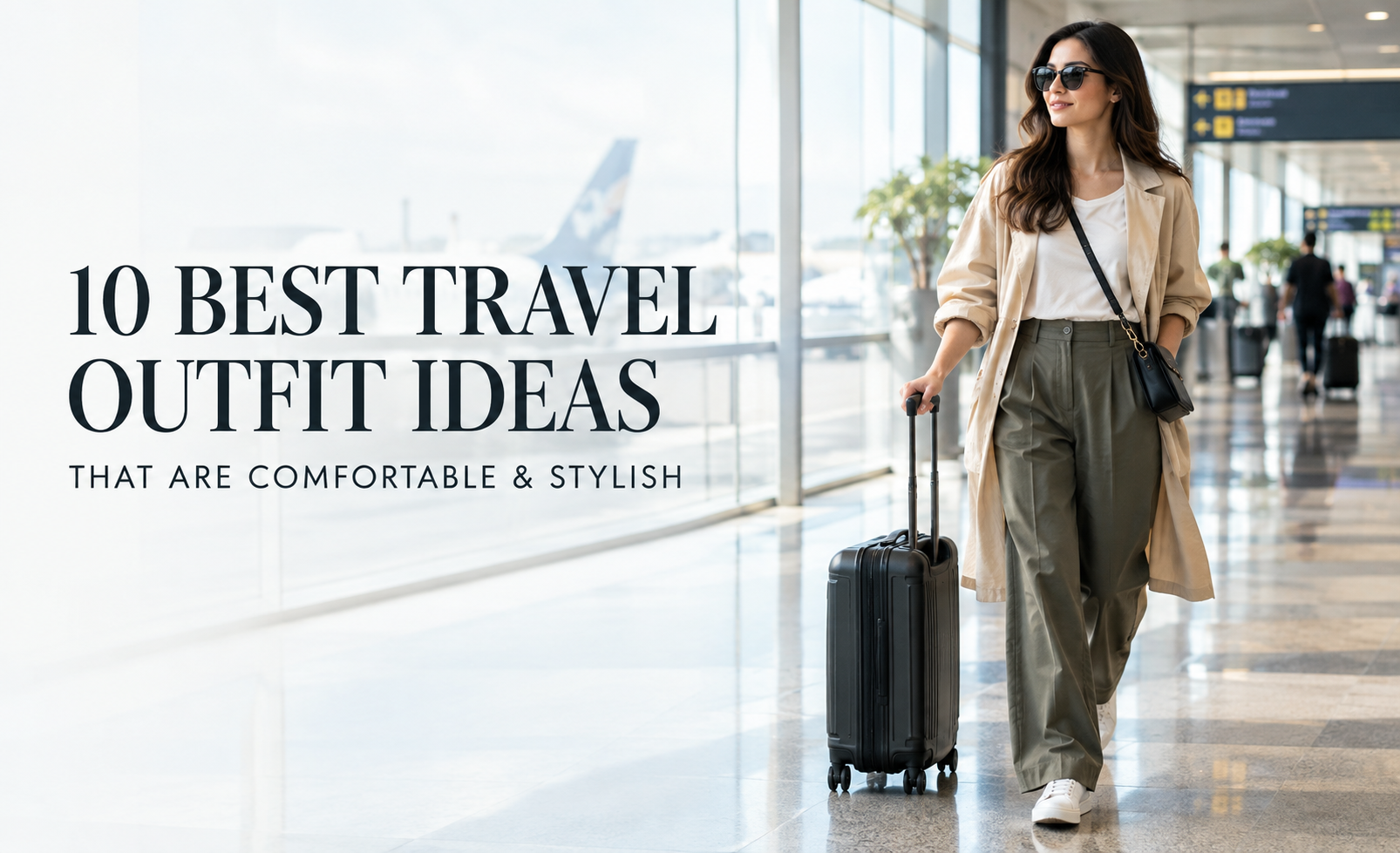


You want to step off the plane looking like yourself, not like someone who slept in their clothes. Then you spend six hours in stiff jeans, your shoes start pinching somewhere over the ocean, and the shirt you expected to look crisp has picked up a permanent crease across the middle.
The fix is not a closet full of special “travel clothes.” It’s choosing pieces that do several jobs at once: soft, breathable fabrics that move with you when you’re seated; easy layers you can add or remove as the cabin, the weather and the city change; versatile pieces that mix with everything else in your suitcase; shoes you can actually walk in; a bag that keeps essentials close; and a color palette that holds it all together.
Below you’ll find ten travel outfit ideas with formulas you can copy, plus guides for long flights, airports, weather, destinations and packing. Take what suits your body, budget and taste, and leave the rest.
People find waiting more tolerable when they can see the work being done on their behalf
“Labor Illusion” insight
What Should I Wear While Traveling?
A good travel outfit usually combines comfortable bottoms, a breathable top, a lightweight layer, shoes you can walk in, and a practical bag, with optional accessories such as a scarf or sunglasses. The exact mix depends on your destination, the weather, how long you’ll be in transit, and what you plan to do when you arrive. Start with comfort, then choose colors and shapes that feel like you.
10 Best Travel Outfit Ideas
Each idea below starts with a formula, explains why it works in real travel situations, and finishes with a quick reference table covering fabrics, shoes, layers, weather and packing. Treat the formulas as starting points: swap in pieces you already own.
1. Classic T-Shirt + Wide-Leg Pants + Sneakers
Outfit formula: Cotton tee + wide-leg pants in a neutral shade + clean sneakers + crossbody bag
This is the outfit many frequent travelers settle on, and it’s easy to see why. A cotton or cotton-blend tee breathes when the cabin warms up, while wide-leg pants leave room at the hips and knees, so sitting through a delayed connection feels less restrictive than it does in a slim cut. Sneakers cope with terminal corridors and cobblestones alike.
Neutral pairings, such as a white tee with sand or black pants, or gray with navy, keep every piece compatible with the rest of your bag and hide the odd smudge. If wide-leg cuts aren’t your thing, linen pants are a good swap for heat, relaxed trousers make the look slightly sharper, and joggers give you maximum softness on an overnight flight.
|
Why it works |
Loose bottoms and a soft top let you sit, stretch and walk without adjusting anything, and the pieces pair with most of your other clothes. |
|
Comfort level |
High, especially with an elastic or drawstring waist. |
|
Style level |
Relaxed and clean; looks deliberate when the colors are coordinated. |
|
Best for |
Airports, sightseeing, city trips, everyday travel days. |
|
Recommended fabrics |
Cotton or cotton-blend tee; wide-leg pants in cotton twill, lyocell, crepe or a linen blend. |
|
Shoe options |
Clean low-top sneakers, cushioned walking shoes, slip-on sneakers for security lines. |
|
Layering options |
Cardigan, overshirt, denim jacket, lightweight bomber. |
|
Accessories |
Crossbody bag, sunglasses, a simple watch. |
|
Weather suitability |
Mild to warm; add a layer for cool cabins and evenings. |
|
Packing advantage |
Neutral pieces recombine with most other tops and bottoms. |
|
Beginner styling tip |
Lightly tuck the front of the tee into the waistband to show your shape when the pants are voluminous. |
2. Leggings + Oversized Shirt + Sneakers
Outfit formula: Opaque leggings + oversized button-down + sneakers + lightweight jacket
For airports, long flights, road trips and casual travel days, this is the softest option in the lineup. Stretch fabric lets you shift, curl up or cross your legs without a waistband fighting back. An oversized shirt covers the hips and adds a bit of structure, and a lightweight jacket or unstructured blazer on top makes the whole thing look more considered than “I’m in leggings.”
Leggings vs. joggers: Leggings sit close to the body, fold flat, and work under longer tops or dresses, but thin pairs can feel cool in an air-conditioned cabin and may show seams. Joggers are roomier and warmer, and their pockets are handy for a phone or boarding pass, though they’re bulkier to pack and lean more sporty. Leggings suit layering under long shirts; joggers suit travelers who want pockets and extra room.
|
Why it works |
Stretch and softness make long sitting easy, and a longer shirt gives the outfit shape. |
|
Comfort level |
Very high. |
|
Style level |
Casual and sporty-leaning; more polished with a crisp shirt and a jacket. |
|
Best for |
Long flights, road trips, casual airport days. |
|
Recommended fabrics |
Opaque, medium-weight leggings (cotton blend or brushed knit); shirt in poplin, chambray or a linen blend. |
|
Shoe options |
Sneakers or slip-on trainers; ankle boots in cooler weather. |
|
Layering options |
Lightweight jacket, unstructured blazer, long cardigan. |
|
Accessories |
Tote or crossbody bag, a scarf. |
|
Weather suitability |
Cool to mild; in real heat even thin leggings can feel warm. |
|
Packing advantage |
Leggings fold small and can double as a base layer in cold weather. |
|
Beginner styling tip |
Choose a shirt that covers the hips and roll the sleeves to three-quarter length for shape. |
3. Midi or Maxi Dress + Lightweight Jacket
Outfit formula: Midi or maxi dress + denim or shirt jacket + sneakers or flat sandals + crossbody bag
A dress is one decision instead of two, and there’s no waistband to negotiate. In warm weather it’s cooler than trousers, it handles a day of sightseeing and dinner without a change, and a jacket takes care of cold cabins and evenings. Jersey and lyocell-blend dresses move with you; stiff fabrics tend to crease across the lap.
Midi vs. maxi: A midi (mid-calf) is easier on stairs, in wind and on busy sidewalks, and it takes up less room in a small airplane bathroom. A maxi offers more coverage, which helps with sun and with places where covered legs are expected, and it looks dramatic in motion, but the hem can catch on escalators and wet pavement. Choose based on your itinerary rather than a rule.
|
Why it works |
One piece, no waistband decisions, and the jacket covers temperature swings. |
|
Comfort level |
High when the cut is loose through the waist and hips. |
|
Style level |
Polished but relaxed; easy to dress up with jewelry. |
|
Best for |
Warm-weather sightseeing, flights to sunny places, dinners after arrival. |
|
Recommended fabrics |
Jersey, cotton, lyocell or viscose blends, linen blends. |
|
Shoe options |
Sneakers, strappy flat sandals, ankle boots in cool weather. |
|
Layering options |
Denim jacket, light cardigan, shirt jacket, unlined trench. |
|
Accessories |
Crossbody bag, sunglasses, scarf. |
|
Weather suitability |
Warm to mild; add tights or a longer coat for cooler days. |
|
Packing advantage |
One dress covers day and evening, and jersey styles roll small. |
|
Beginner styling tip |
Pick a dress with pockets, and sit down and climb a flight of stairs in it before you pack. |
4. Jeans + Basic Top + Cardigan
Outfit formula: Stretch or relaxed jeans + soft tee + cardigan + cushioned sneakers
Jeans are familiar, durable and go with almost everything, and you can wear them more than once, which helps in a carry-on. To make them travel-friendly, look for stretch denim with some give, a relaxed fit through the thigh, and a rise that doesn’t dig in when you sit. Pair them with a soft tee and a cardigan that you can peel off when the cabin warms up.
They do have limits. Denim is heavy, slow to dry and can feel restrictive after many hours in a seat, so jeans may not be the best choice for very long flights or for hot, humid destinations. On a short flight or a cool-weather city break, they’re an easy default.
|
Why it works |
Sturdy, familiar and easy to blend with the rest of your wardrobe; the cardigan handles cabin temperature. |
|
Comfort level |
Medium to high, depending on the denim. |
|
Style level |
Classic casual. |
|
Best for |
Short flights, cool-weather city trips, walking-heavy days in mild temperatures. |
|
Recommended fabrics |
Stretch or soft-washed denim; cotton or modal tee; cotton or merino cardigan. |
|
Shoe options |
Sneakers, ankle boots, loafers. |
|
Layering options |
Cardigan, trench, light puffer in cold weather. |
|
Accessories |
Tote or crossbody bag, scarf, belt only if you need one. |
|
Weather suitability |
Cool to mild; less comfortable in heat. |
|
Packing advantage |
Can be worn several times between washes, which reduces what you carry. |
|
Beginner styling tip |
Try jeans on and sit down in the fitting room; if they pinch seated, they’ll pinch on the plane. |
5. Matching Set + Sneakers
Outfit formula: Knit, cotton or sweatshirt set in one color + sneakers + light coat or overshirt
Matching sets look pulled together with almost no effort because the color and fabric are already coordinated. Options include knit sets (a sweater and pants or a knit skirt), cotton sets, sweatshirt-and-jogger sets, and coordinated neutral sets in cream, gray, navy or black. There’s little to decide on the morning of travel, and the outfit looks deliberate even when it’s as soft as loungewear.
A useful bonus: most sets can be split and worn with other pieces, so one purchase can stretch into several outfits. If you choose a color you’d wear separately, such as oatmeal or charcoal, the pieces work alone too.
|
Why it works |
Matching color and fabric read as a complete outfit without extra styling. |
|
Comfort level |
High. |
|
Style level |
Polished casual; knit sets look softer, cotton sets crisper. |
|
Best for |
Airports, long-haul days, relaxed city trips. |
|
Recommended fabrics |
Cotton jersey, French terry, soft knit, ribbed cotton blends. |
|
Shoe options |
Sneakers, slip-ons, flat sandals in warm weather. |
|
Layering options |
Long coat, overshirt, denim jacket. |
|
Accessories |
Small crossbody, cap or beanie, simple jewelry. |
|
Weather suitability |
Mild to cool; lighter cotton or linen-blend sets for warmth. |
|
Packing advantage |
Pieces work separately, so one set can become more than one outfit. |
|
Beginner styling tip |
Add one contrasting item, such as white sneakers or a colored bag, so the set doesn’t look like pajamas. |
6. Linen Pants + Tank/Top + Lightweight Layer
Outfit formula: Linen or linen-blend pants + cotton tank or tee + light cardigan or overshirt + breathable flats or sneakers
This is the warm-weather workhorse. Linen is airy and lightweight, so it’s cooler on a humid connection or a beach-town arrival. The layer matters more than it seems: airports and planes are often air-conditioned to a chill, and a light cardigan or overshirt fixes that without adding bulk. Expect wrinkles. Some people love the rumpled look; others prefer a linen-cotton or linen-viscose blend that creases less.
Linen vs. cotton: Linen breathes better, dries faster and softens with washing, but it wrinkles quickly. Cotton is smoother and holds its shape, but it feels heavier in humidity and dries more slowly. Blends give you some of each.
|
Why it works |
Breathable fabric keeps you cooler in heat, and the layer covers cold terminals and cabins. |
|
Comfort level |
High in warm weather; loose and airy. |
|
Style level |
Relaxed and textured. |
|
Best for |
Warm and humid destinations, tropical vacations, beach towns, summer sightseeing. |
|
Recommended fabrics |
Linen or linen-cotton/viscose pants; cotton tank or tee. |
|
Shoe options |
Supportive flat sandals, breathable sneakers, slip-ons. |
|
Layering options |
Light cardigan, cotton overshirt, unstructured linen shirt. |
|
Accessories |
Sunglasses, sun hat, canvas or straw tote. |
|
Weather suitability |
Warm to hot; needs the extra layer for cold cabins. |
|
Packing advantage |
Light, packs small and dries quickly after washing. |
|
Beginner styling tip |
Hang linen in a steamy bathroom to release creases, or choose a slightly textured weave that hides them. |
7. Relaxed Trousers + Blouse/Shirt + Loafers
Outfit formula: Relaxed trousers + silky blouse or shirt + cushioned loafers + structured crossbody or tote
When you land and go straight to a meeting, a dinner or a hotel lobby, this is the outfit that doesn’t need a change. Relaxed trousers with a stretch or elastic-back waist leave room to move, and a shirt or blouse with a collar or a soft drape looks put together. It suits business travel, city breaks, dinner on the first evening, and travelers who prefer a tidy airport look.
Loafers vs. sneakers: Loafers slip on and off easily at security and give a cleaner line with trousers, but most have thinner cushioning and less grip on wet surfaces, and they can rub if they haven’t been broken in. Sneakers absorb more impact and handle long walking days better, with a more casual look. On a heavy walking day, sneakers make sense; for meetings or dinner, loafers do. Leather or minimal sneakers sit in between.
|
Why it works |
Relaxed cuts leave room to move, while the collar and shoes give a clean line. |
|
Comfort level |
Medium to high, depending on the waistband and the shoe cushioning. |
|
Style level |
Polished. |
|
Best for |
Business travel, city breaks, dinners on arrival day, tidy airport looks. |
|
Recommended fabrics |
Crepe, lyocell, wrinkle-resistant polyester blends, lightweight wool blends; cotton or silky blouses. |
|
Shoe options |
Cushioned loafers, leather sneakers, flat ankle boots. |
|
Layering options |
Unstructured blazer, cardigan, lightweight coat. |
|
Accessories |
Structured crossbody or tote, belt, simple watch. |
|
Weather suitability |
Mild to cool; choose lighter fabrics in warm weather. |
|
Packing advantage |
The same trousers and shirt go from flight to meeting to dinner. |
|
Beginner styling tip |
Choose trousers with a stretch or elastic-back waist so you can sit comfortably for hours. |
8. Travel-Friendly Jumpsuit + Comfortable Shoes
Outfit formula: Soft jumpsuit + denim jacket or cardigan + sneakers or flat sandals + crossbody bag
A jumpsuit is a full outfit in one piece: nothing to match, nothing to tuck, and it packs as a single item. Add a jacket for the plane and it works for sightseeing and dinner. Fabric makes or breaks it. Jersey, crepe, lyocell and soft cotton blends drape and stretch; stiff fabrics feel restrictive when you’re seated.
The practical downside is bathroom logistics. In a cramped airplane lavatory, fitted, back-zip or strapless styles can be awkward. If you like the look, choose a style with a button front, side zip, wrap or elastic waist, and one you can manage in a small space.
|
Why it works |
One piece works as a complete outfit, with nothing to coordinate. |
|
Comfort level |
High with a stretchy fabric and forgiving waist. |
|
Style level |
Relaxed to polished, depending on fabric. |
|
Best for |
Warm-weather travel, day trips, flights to sunny places. |
|
Recommended fabrics |
Jersey, crepe, cotton blends, lyocell. |
|
Shoe options |
Sneakers, flat sandals, ankle boots. |
|
Layering options |
Denim jacket, cardigan, lightweight trench. |
|
Accessories |
Belt, crossbody bag, scarf. |
|
Weather suitability |
Warm to mild; long-sleeved versions work in cooler weather. |
|
Packing advantage |
One item replaces a top and bottom. |
|
Beginner styling tip |
Sit, bend and reach before you buy, and test the closure, since that’s what matters in a small bathroom. |
9. Cargo or Utility Pants + Basic Top + Sneakers
Outfit formula: Cargo or utility pants + fitted tee + sneakers + zip crossbody bag
Cargo pants are the most practical entry on this list. Pockets hold a phone, cards or a passport within easy reach, the fabric is usually sturdy, and the relaxed cut is comfortable for long days on foot. Keep valuables in zipped pockets in busy places, since anything in an open pocket is easy to lose in a crowd.
They aren’t right for every situation. Cargo pants can feel too casual for a nice dinner or a business setting, heavy twill runs warm and dries slowly, and full pockets can be uncomfortable when you’re seated. A fitted top or a cropped knit balances the volume of the pants and helps them look intentional.
|
Why it works |
Pockets, sturdy fabric and a relaxed cut suit long walking days. |
|
Comfort level |
High for walking; heavy twill can feel warm. |
|
Style level |
Casual and utilitarian. |
|
Best for |
Sightseeing, road trips, walking-heavy city days, casual weekend getaways. |
|
Recommended fabrics |
Cotton twill, nylon-blend ripstop, lightweight stretch cotton. |
|
Shoe options |
Sneakers, walking shoes, hiking shoes in mountain areas. |
|
Layering options |
Overshirt, fleece, lightweight jacket. |
|
Accessories |
Zip crossbody, cap, sunglasses. |
|
Weather suitability |
Mild to warm; lighter nylon blends in heat, layers in cold. |
|
Packing advantage |
Zip pockets keep small items handy and secure. |
|
Beginner styling tip |
Pair with a fitted or cropped top to balance the volume. |
10. Capsule-Style Neutral Outfit
Outfit formula: Neutral trousers + basic top + lightweight jacket + comfortable shoes + simple bag
Think of this as the outfit you build from a small palette of pieces that all work with each other. Trousers in stone, black or navy, a white or gray top, an unstructured blazer or chore jacket, clean sneakers or loafers, and a crossbody bag. On the travel day you wear it together; on day two, swap the top for a striped one; at dinner, add the blazer and change the bag. The same pieces come back in different combinations across the trip.
Variety comes from texture, layering and one accent color, not from packing more items.
The most useful travel wardrobe is not necessarily the biggest one. It is the one where the pieces work together.
|
Why it works |
A limited palette means each piece pairs with the rest, so you pack fewer things. |
|
Comfort level |
High when chosen with some stretch. |
|
Style level |
Minimal and clean. |
|
Best for |
Longer trips, carry-on-only travelers, mixed itineraries. |
|
Recommended fabrics |
Ponte, crepe, cotton knit, merino, lyocell. |
|
Shoe options |
Clean sneakers or cushioned loafers. |
|
Layering options |
Cardigan, blazer, lightweight coat. |
|
Accessories |
Crossbody bag, one scarf, simple jewelry. |
|
Weather suitability |
Adjustable: swap the layer for the climate. |
|
Packing advantage |
Each piece pairs with at least two others. |
|
Beginner styling tip |
Add interest with texture or one accent color rather than more outfits. |
Travel Bottoms Compared: Leggings, Joggers, Jeans and More
The right bottom depends on how long you’ll be seated, the temperature and what you’re doing on arrival. Here’s how the most common options compare.
|
Bottom |
Comfort |
Breathability |
Style |
Best for |
|
Leggings |
Stretchy and soft, with no pressure at the waist when seated. |
Varies: cotton blends breathe better than thick synthetics. |
Sporty and casual; a longer top makes them look more considered. |
Long flights, road trips, cold airports. |
|
Joggers |
Soft and roomy, with pockets. |
Moderate; French terry is cooler than fleece. |
Casual, athleisure-leaning. |
Overnight flights, cool weather, relaxed days. |
|
Jeans |
Depends on cut and stretch; stiff denim can feel tight after hours of sitting. |
Lower; heavier and slower to dry. |
Familiar and easy to pair with most tops. |
Short flights, cool-weather city trips. |
|
Wide-leg pants |
Plenty of room to move, no pressure at the knee. |
Good in lightweight fabrics. |
Relaxed and current. |
Airports, sightseeing, most seasons depending on the fabric. |
|
Linen pants |
Light and airy; can feel loose. |
Excellent. |
Relaxed and textured; they wrinkle. |
Hot or humid destinations, beach and tropical trips. |
|
Trousers |
Good in relaxed or stretch cuts. |
Depends on fabric. |
Polished and tidy. |
Business travel, city breaks, dinners. |
Best Shoes for Travel
For trips that involve a lot of walking, comfort usually deserves priority over looks. A pair that feels fine in a shop can feel very different after ten hours on your feet, so break shoes in before you go. Feet often feel a little fuller after hours of sitting, so shoes with some give are easier to live with. On travel day, wear the bulkiest pair so it isn’t taking up suitcase space.
|
Shoe |
Walking comfort |
Weather |
Packing space |
Versatility |
Style |
Best situation |
|
Sneakers |
Cushioned; suited to long days on foot. |
Mild to warm; water-resistant versions for rain. |
Medium; bulky, so wear them in transit. |
Very high. |
Casual; clean, minimal pairs look polished. |
Most trips, especially walking-heavy ones. |
|
Loafers |
Good if cushioned and broken in; less shock absorption. |
Dry, mild; smooth soles can slip on wet floors. |
Low to medium. |
High with trousers, dresses and jeans. |
Polished. |
Business travel, city breaks, dinners. |
|
Walking shoes |
Highest; built for distance. |
Varies; many have breathable or water-resistant uppers. |
Medium to bulky. |
Moderate; sportier. |
Functional, sporty. |
Sightseeing, big cities, cobblestones, theme parks. |
|
Sandals |
Depends: supportive strapped styles work for walking, flat thongs less so. |
Hot and dry. |
Very low. |
Moderate. |
Casual, resort-leaning. |
Beach, tropical and warm-weather sightseeing. |
|
Boots |
Good once broken in; ankle boots for cities, hiking boots for trails. |
Cold, wet or rough terrain. |
High; wear them on travel day. |
Moderate to high. |
Ranges from rugged to sleek. |
Cold weather, mountains, rain. |
|
Ballet flats |
Modest; often thin soles and little arch support. |
Dry, mild. |
Very low; fold flat. |
High with dresses and trousers. |
Neat and classic. |
Short walking days, evenings, business. |
Best Fabrics for Travel Clothes
No fabric wins every trip. What suits a humid week in Thailand won’t be ideal for a cold city break, so match the fabric to the climate and to how much you’ll be sitting. Check care labels too, since you may be washing in a hotel sink.
|
Fabric |
Breathability |
Wrinkle resistance |
Weight |
Drying speed |
Warmth |
Comfort notes |
|
Cotton |
Good. |
Low to moderate; blends fare better. |
Light to medium. |
Slow to moderate. |
Moderate. |
Soft and familiar; can feel damp in humidity. |
|
Linen |
Excellent. |
Low. |
Light. |
Fast. |
Cool. |
Textured, softens with washing; a rumpled look. |
|
Wool |
Good. |
Good; fibers spring back. |
Medium to heavy. |
Slow. |
High. |
Warm; coarser grades can itch. |
|
Merino wool |
Very good. |
Good. |
Light to medium. |
Moderate. |
Regulates; warm in cold, comfortable in mild weather. |
Fine and soft, resists odor; costs more. |
|
Polyester blends |
Lower unless engineered for airflow. |
Good. |
Light. |
Fast. |
Low to moderate. |
Smooth and durable; can trap heat and odor. |
|
Nylon |
Lower. |
Good. |
Very light. |
Very fast. |
Low. |
Strong and packs small; can feel slick. |
|
Knit fabrics |
Varies with fiber. |
Good; stretch hides creases. |
Light to medium. |
Varies. |
Varies. |
Soft with stretch; may pill or lose shape. |
|
Denim |
Low to moderate. |
Moderate; creases but hides them. |
Heavy. |
Slow. |
Moderate to warm. |
Durable but heavy to pack. |
What to Wear on a Long Flight
Long-haul comfort is mostly about temperature, room to move and how many hours you’ll be in the same clothes. Cabins can feel warm during boarding and cool once you’re at cruising altitude, so flexibility matters more than any single garment.
What tends to work well
- Soft waistband: elastic, drawstring or a stretch panel stays comfortable when you’re seated for hours.
- Stretchy trousers or leggings: they let you shift position without pulling at the knees or hips.
- Breathable top: cotton, modal or a light knit handles warm boarding and cooler cruising.
- Layers: a cardigan, hoodie or overshirt you can add or remove quickly.
- Comfortable shoes: slip-ons or lace-ups with some give, since feet often feel fuller after hours of sitting.
- Warm socks: a thicker pair is useful if you slip your shoes off; bring a fresh pair for arrival.
- Lightweight jacket: works as a top layer in the terminal and a blanket substitute on board.
- Scarf: doubles as a wrap for your shoulders or neck when the air conditioning is strong.
What may be less practical
- Very tight clothing: it can feel restrictive by the third hour.
- Hard shoes or new shoes: stiff soles and unfamiliar seams show up quickly on a long day.
- Heavy layers: bulky sweaters are hard to stow and can overheat you in a full cabin.
- Excessively complicated outfits: many buttons, ties or straps slow you down in security lines and small bathrooms.
- Uncomfortable fabrics: anything scratchy, stiff or clingy tends to bother you more when you can’t change.
Outfit formula: Relaxed or stretch trousers + breathable tee + cardigan + slip-on sneakers + warm socks + large scarf
If you’ll be landing straight into a meeting or a day of sightseeing, tuck a fresh top and a pair of socks into your carry-on so you can change before you leave the airport.
What to Wear to the Airport
There’s no single correct airport style. Some travelers want the softest thing they own; others prefer to arrive looking ready for their first meeting. These five formulas cover the range.
Casual Airport Outfit
T-shirt + wide-leg pants + sneakers. Easy to sit in, easy to walk in, and easy to layer. Add a cardigan or overshirt for the cabin.
Polished Airport Outfit
Relaxed trousers + shirt + loafers. Choose trousers with some stretch and loafers with a cushioned insole, and add a blazer if you’re headed straight to a meeting.
Comfortable Airport Outfit
Leggings + oversized shirt + sneakers. Maximum stretch, with the shirt providing coverage and shape. A light jacket keeps it from looking too gym-ready if that isn’t your goal.
Warm-Weather Airport Outfit
Linen pants + tank + cardigan. The linen keeps you cool in a hot terminal, and the cardigan covers the cold cabin. Breathable sneakers or supportive flat sandals finish it.
Cold-Weather Airport Outfit
Knit sweater + straight trousers or thermal leggings + coat + boots or leather sneakers. Wear the bulky pieces instead of packing them, and make sure the coat is easy to take off.
Security procedures vary by airport, airline and country, and rules about shoes, belts and jackets can differ, so check guidance for your departure airport. In general, slip-on shoes and fewer metal accessories make the line less fiddly wherever you are.
Travel Outfits by Weather
Hot Weather
Loose silhouettes and natural fibers let air move around your body. Bring a light layer for air-conditioned spaces, because indoor temperatures can be sharply different from the street.
- Linen or cotton tops and pants in light colors.
- Loose shirts, tanks and flowing dresses.
- Sandals with support or breathable sneakers.
- A lightweight layer, such as a cotton cardigan or overshirt.
- A hat and sunglasses for outdoor days.
Cold Weather
Layers give you control: you can add or remove them as you move between heated buildings, stations and cold streets. Wear your bulkiest items on the travel day.
- A thin base layer, such as merino or a synthetic tee.
- Knitwear on top, such as a sweater or fleece.
- A coat you can move in comfortably and take off easily.
- Boots with grip, ideally broken in and water-resistant.
- Scarf, hat and gloves that fit in your coat pocket.
Rainy Weather
Aim to stay dry without overheating. Fabrics that dry quickly are more forgiving than heavy cotton or denim.
- A water-resistant jacket or packable rain shell with a hood.
- Quick-drying trousers, such as nylon blends.
- Shoes with suitable traction and a water-resistant upper.
- A compact umbrella that fits in your bag.
- A bag that protects belongings, such as a zip tote or a water-resistant backpack.
Mild Weather
Mild weather is the easiest to dress for, but it can change during the day, so layers earn their place.
- T-shirts or lightweight long sleeves.
- A light jacket or overshirt for mornings and evenings.
- A cardigan for cooler indoor spaces.
- Sneakers that suit walking and a range of temperatures.
- Pieces that can be layered or removed depending on the hour.
Travel Outfits by Destination
The same basic pieces can be adapted to many destinations. Here’s how to shift them.
City Travel
Walking shoes matter most, especially in European cities with cobblestones and long distances between sights. Relaxed trousers or jeans with a soft top and a light jacket work in most places, and a scarf is useful for cooler mornings or for covering your shoulders at places where dress expectations vary. Check local norms for religious sites.
Beach Vacation
Think breathable and quick-drying: linen pants, a light dress over a swimsuit, and flat sandals. For a tropical trip, pack a light cover-up and something a little dressier for dinner, and bring a layer for air-conditioned indoor spaces.
Road Trip
Choose clothes that stay comfortable in the driver’s seat: soft waistbands, stretch fabrics and layers you can pull on and off when you stop. Slip-on or easy lace-up shoes help at gas stations and viewpoints, and a jacket within arm’s reach is useful.
Business Travel
Choose wrinkle-resistant fabrics in a small palette so tops and bottoms can be combined. Relaxed trousers, a shirt or blouse, a blazer and cushioned loafers can handle a flight and a meeting. Keep a spare shirt in your carry-on in case of spills.
Weekend Getaway
Pack light: two bottoms, two or three tops, one layer and one extra pair of shoes if needed. Wear the bulkiest items on the way, and choose colors that all match so you don’t need to think.
Sightseeing Trip
Comfort over distance counts most. Cushioned sneakers or walking shoes, breathable clothes, a crossbody bag with a zip and a light layer will get you through long days. Cargo pants or a soft dress with pockets keep small items close.
Mountain Vacation
Layers work best because temperatures can change quickly with altitude and time of day. Start with a base layer, add a fleece or knit, and finish with a wind- or water-resistant jacket. Sturdy shoes with grip are more useful than fashion sneakers on trails.
How to Build a Small Travel Capsule Wardrobe
A capsule is a small set of clothes that all work together. Here’s one example of a compact wardrobe. It isn’t a rigid packing rule: adjust it for the climate, the trip length and your own taste.
- 3 tops: a white tee, a striped or gray long-sleeve, and one dressier blouse or fine knit.
- 2 bottoms: relaxed trousers or wide-leg pants, and jeans or a skirt.
- 1 dress or jumpsuit: something that works with a jacket or on its own.
- 1 lightweight layer: a cardigan or overshirt.
- 1 jacket: a blazer, a light coat, or a rain shell, depending on the destination.
- 2 pairs of shoes: for example, sneakers and either loafers or sandals.
- 1 versatile bag: a crossbody or a zip tote.
- Simple accessories: a scarf, sunglasses and one or two pieces of jewelry.
How many outfits does that make? Three tops and two bottoms give six combinations; add the dress or jumpsuit and you have seven base outfits. Each can be worn with no layer, the lightweight layer or the jacket, for roughly 21 combinations before you count shoes. Not all of them will make sense (a heavy jacket over a beach dress, say), so treat the number as a sign of flexibility rather than a target.
The test of a good capsule: each piece works with at least two others, and you’ve tried the combinations at home before packing.
10 Easy Ways to Make a Comfortable Travel Outfit Look More Stylish
None of these needs a big budget or a new wardrobe. Most involve small choices you can make with clothes you already own.
- Coordinate your colors. Choose two or three that work together, such as cream, navy and tan, so everything you pack combines.
- Add a layer. A blazer, overshirt or long cardigan gives shape to soft basics and covers cold cabins.
- Play with proportions. Pair a roomy piece with a fitted one: wide-leg pants with a fitted tee, or an oversized shirt with leggings.
- Choose one statement accessory. A colorful scarf, a good pair of sunglasses or a bold bag is enough; more can start to look busy.
- Carry a structured bag. A bag that holds its shape, such as a leather or canvas crossbody, makes comfortable clothes look considered.
- Keep your shoes clean. Wipe sneakers before you leave; a tidy pair lifts the whole outfit.
- Wear simple jewelry. Small hoops, a thin chain or a watch add polish without fuss, and they’re easy to remove for security.
- Match your tones. Keep metals, leather and shoe colors in the same family, such as warm browns and gold or cool blacks and silver.
- Tuck or half-tuck. A partial tuck defines the waist and shows you meant the outfit.
- Choose intentional silhouettes. A relaxed shape looks deliberate when it’s cut to be loose; the same shape looks sloppy if the fit is just too big.
How to Balance Comfort and Style When Traveling
Comfort and style aren’t opposites. Most of the time you can keep the look and lose the discomfort by choosing a smarter version of the same piece.
|
Instead of |
Try |
Why it helps |
|
Stiff jeans |
Relaxed or stretch denim |
Keeps the familiar look with room to sit. |
|
Uncomfortable heels |
Polished loafers or clean sneakers |
Still tidy, but you can walk in them. |
|
A heavy sweater |
Lightweight layers |
Easier to adjust and to pack. |
|
A stiff blouse |
A drapey crepe or knit top |
Creases less and moves with you. |
|
A rigid tote |
A soft crossbody bag |
Keeps your hands and shoulders free. |
These are suggestions rather than rules. If you love your heels and know you’ll be in a car all day, wear them.
Travel Outfit Mistakes That Can Make a Trip Less Comfortable
|
Mistake |
Why it causes trouble |
Practical fix |
|
Shoes that haven’t been broken in |
New seams cause blisters over long walking days. |
Wear them at home for a few days first, and pack blister plasters. |
|
Clothing that is too restrictive |
Tight waists and sleeves feel worse after hours of sitting. |
Choose stretch fabrics or a slightly looser size. |
|
Fabrics that wrinkle excessively |
Creased clothes can look tired by the time you arrive. |
Choose blends, knits or crepe, or plan to steam. |
|
Too many bulky layers |
They eat up space and can overheat you. |
Use thin layers; wear the bulkiest item in transit. |
|
Weather-inappropriate clothes |
Cold or wet clothes spoil a day quickly. |
Check the forecast and pack a layer that can be removed. |
|
Uncomfortable waistbands |
Buttons and stiff bands dig in while seated. |
Choose elastic, drawstring or stretch panels. |
|
Carrying too many accessories |
More items are harder to keep track of. |
Limit yourself to one bag, one scarf and simple jewelry. |
|
Packing clothes that can’t be mixed and matched |
Single-use outfits take up space. |
Build around a shared color palette so pieces pair. |
Travel Outfit Ideas for Different Styles
The same comfortable pieces can be styled in different ways. These are starting points, not categories you need to fit into.
Minimalist Style
Stick to a tight palette of black, white, gray or beige, and let clean lines do the work. The neutral capsule outfit (idea 10) is a natural fit.
Casual Style
Tee, wide-leg pants or jeans, a cardigan and sneakers. Add a scarf or a cap for personality.
Sporty Style
Joggers or leggings, a sweatshirt, and running or walking shoes. Use a clean, structured jacket to keep it neat.
Classic Style
Relaxed trousers, a crisp shirt, a blazer and loafers. Choose timeless shapes in navy, camel or white.
Chic Style
A midi dress or matching set with a structured bag and simple gold or silver jewelry. Focus on fit and one considered accessory.
Boho Style
A flowing maxi dress or maxi skirt, or linen pants, a light knit or kimono layer, flat sandals and a woven bag. Keep the fabrics breathable and the layers light.
Travel Outfits for Different Trip Types
Weekend Trip
Two bottoms, two or three tops, one layer and a spare pair of shoes if needed. Wear the bulkiest pieces on the way there. A carry-on is enough for most weekend trips.
One-Week Vacation
Use the capsule approach: three tops, two bottoms, a dress or jumpsuit, and layers that mix. Rewear bottoms and outer layers, and plan a sink wash or laundry stop if the trip stretches longer. Add swimwear or a rain shell as needed.
Business Trip
Choose wrinkle-resistant trousers, two shirts or blouses that work with both, a blazer, and cushioned loafers. Wear the blazer and shoes that are hardest to pack on the flight, and keep a spare top in your carry-on.
Long-Haul International Trip
Dress for the flight in soft, layered clothes, and plan the rest around the destination’s climate. Check local dress norms, especially for religious sites, and pack a scarf that can cover shoulders. Bring a change of top and socks in your carry-on.
Road Trip
Soft, stretchy bottoms, breathable tops, a jacket within reach and shoes that are easy to slip on and off. There’s more room to pack, but a shared color palette still keeps the bag manageable.
City Break
Walking shoes are the priority. Choose pieces that work from a day of sightseeing to dinner: relaxed trousers, a dress with a jacket, or a matching set, plus a crossbody bag with a zip.
Best Travel Accessories for Style and Function
Accessories can improve a travel outfit or clutter it. The useful ones do a real job as well as look good; the decorative ones are fine, but they take up space and attention.
Useful and stylish
- Crossbody bag: keeps your hands free and your belongings in front of you. Look for a zip closure.
- Tote: handy as a personal item, ideally with a zip or a strap that closes.
- Scarf: works as a wrap, a blanket substitute, a sun cover or a neck warmer, and adds color.
- Sunglasses: protect your eyes and finish most outfits.
- Compact umbrella: takes little room and is more useful than it looks.
- Hat: provides sun protection and covers a rough hair day.
- Lightweight backpack: comfortable for long days, and it goes well with casual outfits.
Useful, but only sometimes
- Belt: helpful if your trousers need one, but it’s one more thing to remove at security and adds little if your waistband already fits.
Mostly decorative
- Large statement jewelry: pretty, but easy to lose and awkward to sleep in.
- Extra bags: a second or third bag is harder to keep track of.
- Multiple scarves: one usually covers the practical need.
Simple jewelry, such as small hoops or a thin chain, sits between the two. It weighs almost nothing and makes an outfit look finished, so it’s worth packing if you like wearing it.
Do You Need Expensive Clothes to Dress Well While Traveling?
No. Price doesn’t decide how well a piece travels. What matters is how it fits, what it’s made of, how comfortable it is after hours, and how it holds up to washing.
|
Tier |
What you may find |
What to check |
Works well when |
|
Budget |
Basic tees, leggings, knit sets and simple dresses; some are soft and durable, others thin or short-lived. |
Seams, fabric weight, pilling and shrinkage after washing. |
You need extra pieces for a single trip or a lower-cost trial of a new style. |
|
Mid-range |
A wider choice of fabrics, cuts and sizes, often with better finishing. |
Fiber content and care labels. |
You wear the pieces regularly and want them to last through many trips. |
|
Premium |
Often finer fibers such as merino or high-quality cotton, careful construction, and more consistent fit. |
Whether the piece suits your needs, since a high price doesn’t guarantee travel-friendliness. |
You value a particular fabric, cut or durability, and you’ll wear it often. |
Whatever your budget, ask the same questions: Does it fit well when seated? Is the fabric breathable or warm enough? Is it comfortable for long hours? Will it stay durable after washing? Can it pair with several other pieces (versatility)? Is the care simple enough for travel? A well-fitting, reasonably priced piece often beats an expensive one that pinches or needs ironing.
Travel Outfits for Different Age Groups
Age doesn’t dictate what to wear. People of the same age travel very differently, so these are practical considerations rather than rules.
Young Adults
Many young travelers pack light, walk a lot and stay in shared or budget accommodation, so easy-care fabrics, a small capsule and a bag that closes securely work well. Comfortable sneakers and layers cover most itineraries.
Adults
Adults often juggle work trips, family travel and leisure. A neutral capsule with a polished option, such as relaxed trousers and loafers, plus a casual set for downtime, can cover multiple situations. Pockets are useful when traveling with children.
Older Travelers
Mobility and temperature comfort often shape choices: slip-on or supportive shoes with good grip, easy fastenings such as elastic waists and front zips, and layers that are simple to add and remove. Style stays a personal choice; comfortable clothes can be as distinctive as any others.
Quick Answers to Common Travel Outfit Questions
Short answers for quick reference. The sections above go into more detail.
What should I wear while traveling?
Wear breathable, comfortable clothing in layers: soft bottoms with room to sit, a light top, and a jacket or cardigan for cool cabins. Choose shoes you can walk in and a bag that keeps essentials within reach. Adjust for your destination’s weather and how long you’ll be in transit, and pick colors that mix with the rest of your suitcase.
What is the best outfit for a long flight?
Stretchy or soft-waisted pants or leggings, a breathable top, and a cardigan or light jacket make a dependable long-flight outfit. Add warm socks and slip-on or lace-up shoes with some give. A scarf works as an extra layer if the cabin runs cold. You may want to skip restrictive waistbands and hard-soled shoes if you’ll be seated for many hours.
How can I look stylish while traveling?
Build the outfit around two or three coordinated colors, add one layer with some structure, such as a blazer or a chore jacket, and keep shoes clean. Choose one accessory that stands out and keep the rest simple. Fit matters more than price: clothes that skim rather than pull look intentional even when they’re soft.
What should women wear to the airport?
There isn’t one right answer. Many women choose wide-leg pants or leggings, a soft top, a layer for the cabin, and sneakers or loafers. Others prefer a midi dress with a jacket or a matching set. Pick whichever lets you sit, walk and move through security comfortably, and that suits the climate at both ends of your trip.
What clothes are most comfortable for travel?
Soft, breathable fabrics with a little stretch tend to be most comfortable: cotton and cotton blends, jersey knits, lyocell, and lightweight merino. Relaxed or elastic-waist bottoms, roomy tops, and easy layers help when you’re sitting for hours. Comfort is personal, so wear a new outfit for a few hours at home before relying on it.
What shoes are best for traveling?
Cushioned sneakers or walking shoes suit most trips because they handle long days on your feet, and they pair with most outfits. Loafers, ankle boots, or supportive sandals work when the weather or the occasion calls for them. Whatever you choose, break the shoes in before you leave and wear the bulkiest pair on travel day.
How do I create a travel capsule wardrobe?
Choose a base palette of two or three colors, then pick pieces that all work together: about three tops, two bottoms, a dress or jumpsuit, a light layer, a jacket, two pairs of shoes, and a versatile bag. Test the combinations before you pack. If most pieces pair with at least two others, the capsule is doing its job.
What should I wear on a 10-hour flight?
Wear loose or stretchy bottoms, a soft breathable top, and a layer you can remove, plus shoes that are easy to slip off and on. Bring warm socks and a scarf for cool cabin air. Because ten hours is a long time to sit, prioritize soft waistbands and fabrics that don’t itch or bind.
What fabrics are best for travel?
No single fabric wins every trip. Cotton and linen breathe well in heat, merino wool regulates temperature and resists odor, and polyester or nylon blends dry quickly and wrinkle less. Knits with some stretch are comfortable for long journeys. Match the fabric to the climate, and check care labels so laundry on the road stays simple.
How many outfits should I pack for a week?
Many travelers pack four to six outfits for a week and rewear bottoms and outer layers, since tops usually need washing sooner. A capsule of about three tops, two bottoms and one dress can produce far more looks. Laundry access, climate and activity level matter most, so treat any number as a starting point.
Frequently Asked Questions
What is the best outfit to wear on a plane?
There isn’t a single best outfit, but a reliable one is stretchy or relaxed bottoms, a breathable top, a light cardigan or jacket, and shoes with some give. That combination lets you sit comfortably, adjust to cabin temperature, and walk through the airport. Add socks and a scarf for long flights.
Should I wear jeans on a long flight?
You can, but they may not be the most comfortable choice. Denim is heavy and can feel restrictive after several hours. If jeans are your preference, choose a stretch or relaxed pair with a mid or high rise, and bring a layer. For very long or hot journeys, softer bottoms are usually easier.
Are leggings good for traveling?
Yes, for many travelers. They stretch, fold small and sit comfortably on long flights and drives. Choose an opaque, medium-weight pair, and layer them with a longer shirt or jacket if you want a more polished look. In hot weather, breathable cotton blends feel better than heavy synthetics.
How do you look chic while traveling?
Chic usually comes from small, deliberate choices: a coordinated palette, one good layer such as a blazer, clean shoes, a structured bag and simple jewelry. Fit matters more than price. Choose pieces that skim the body rather than cling or swamp it, and keep everything else quiet enough for one accessory to stand out.
What is the best travel outfit for hot weather?
Look for breathable fabrics such as linen or cotton in loose shapes: linen pants with a tank, or a midi dress with flat sandals. Light colors reflect heat more than dark ones. Carry a thin layer for air-conditioned airports and planes, and wear supportive sandals or breathable sneakers if you’ll be walking.
What should I wear for international travel?
Start with the climate at your destination and any local dress norms, particularly at religious sites, where covered shoulders or knees may be expected. Then choose comfortable layers for the flight and shoes for walking. A scarf helps with both cabin chill and coverage. Requirements vary by country, so check before you go.
What should I pack for a 7-day trip?
A capsule of about three tops, two bottoms, a dress or jumpsuit, a lightweight layer, a jacket and two pairs of shoes can cover many one-week trips, with laundry or rewearing if needed. Add underwear and socks for the number of days, sleepwear, and any weather-specific items such as a rain shell or swimsuit.
What are the best travel clothes that don’t wrinkle?
Knits, ponte, crepe, wool and wool blends, and polyester or nylon blends resist wrinkles well. Jersey cotton wrinkles less than woven cotton, and linen blends crease less than pure linen. Darker colors and textured weaves hide creases better. If something does crease, hanging it in a steamy bathroom often helps.
How can I pack stylish outfits without overpacking?
Choose a color palette first, then pick pieces that pair with at least two others. Wear your bulkiest shoes and layers on the travel day, plan to rewear bottoms, and pick fabrics that dry quickly if you’ll wash things. Laying out the combinations at home shows quickly which items aren’t earning their space.
Can I wear a dress or skirt on a plane?
Yes, if you’re comfortable in it. Midi lengths are easier in small seats and bathrooms than very short or very long styles. A jersey or knit fabric moves well, and leggings or bike shorts underneath add coverage if you like. Bring a layer, since cabin air can feel cool.
What should I wear if the flight is cold but the destination is hot?
Dress in removable layers: a breathable tee and light trousers as the base, with a cardigan and scarf on top for the plane. When you land, take off the extras and stow them in your bag. A change of top and sandals in your carry-on lets you switch quickly if it’s very hot.
Do my shoes matter at airport security?
Rules differ by airport, airline and country, and some travelers are asked to remove shoes while others aren’t. Because it can vary, slip-on or easy lace-up shoes are practical in either case. You may prefer to skip tall boots with many laces or buckles, and it’s worth checking the guidance for your departure airport.
What colors work best for travel clothes?
Neutrals such as black, white, navy, beige and gray combine easily and hide some marks, so they’re the base of most capsules. Add one or two accent colors in scarves or tops for variety. Very light colors show stains, while very dark ones show lint, so choose according to your trip.
How do I keep clothes from wrinkling in my suitcase?
Methods vary in effectiveness, and the results depend on the fabric. Many people roll soft knits, fold structured pieces flat and use packing cubes to stop shifting. Avoid stuffing the bag so tightly that clothes are compressed. When you arrive, hang items in the bathroom during a hot shower, or use a travel steamer.
What should I wear if I have a meeting right after landing?
Choose relaxed trousers with stretch, a wrinkle-resistant shirt or blouse, and cushioned loafers, then carry a blazer to add before you arrive. Sitting for hours in stiff, tailored pieces is what tends to cause creases, so softer fabrics help. Pack a spare top in your carry-on in case of spills.
What should I wear on a road trip?
Pick soft bottoms with stretch, breathable tops, and a jacket you can reach easily. Slip-on shoes or sneakers make it simple to get in and out of the car and walk at rest stops. Heavy denim and stiff waistbands can be uncomfortable on long drives, and a sweatshirt or large scarf helps on cooler evenings.
Is it worth buying special travel clothing?
Not necessarily. Many everyday pieces work well for travel if they’re breathable, comfortable and easy to care for. Specialized travel clothing with quick-drying fabric, hidden pockets or wrinkle resistance can be useful for frequent travelers or particular trips, but it isn’t required. Judge each piece by fit, fabric and how often you’d wear it.
What should I wear when the forecast is uncertain?
Build outfits from layers. A tee, a light knit or cardigan, and a packable rain jacket cover a wide temperature range and can be adjusted through the day. Choose quick-drying trousers and shoes that cope with damp, and check the forecast closer to departure, since it can change.
Final Thoughts
The best travel outfit is the one you forget you’re wearing, because it’s comfortable, suits the weather and looks like you. Start with one of the ten formulas above, swap in what you own, and test it at home for a few hours. A few well-chosen pieces that work together will do more for your trip than a heavier suitcase.